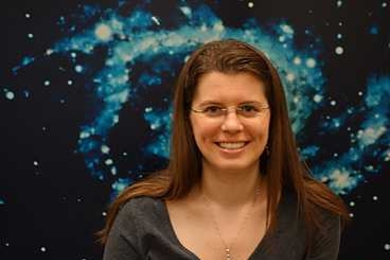
Anna Frebel receives NSF CAREER Award
Frebel will work on identifying large numbers of 12 to 13 billion-year-old stars in the galactic halo
Frebel will work on identifying large numbers of 12 to 13 billion-year-old stars in the galactic halo
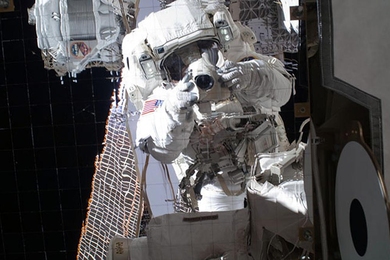
Physicists and astronaut discuss cosmic ray detector’s findings of possible signs of dark matter.
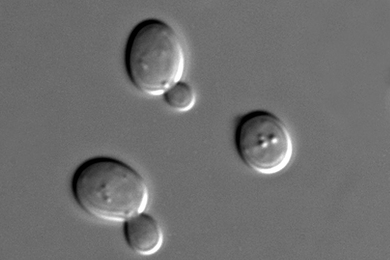
Spatial measurements of population density could reveal when threatened natural populations are in danger of crashing.
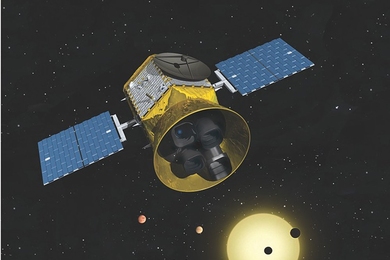
$200 million project will launch telescopes to perform full-sky search for transiting exoplanets.
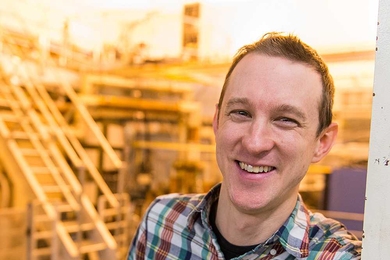
Zach Hartwig combines disciplines to help advance nuclear fusion as a practical energy source.

MIT physicist and AMS spokesman Samuel Ting presents results via webcast.

Simulations reveal that the formation of some glassy materials is like the setting of a bowl of gelatin.
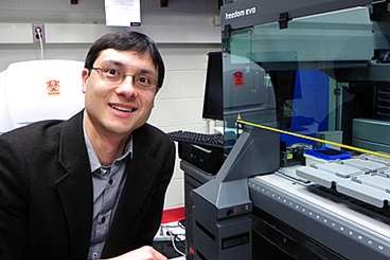
Award will fund study evolution of antibiotic-resistance in bacteria
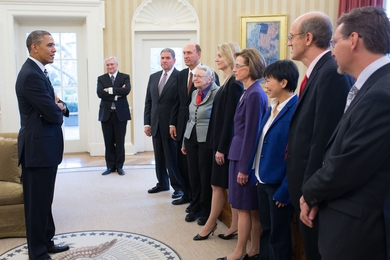
The three MIT scientists are among six winners of the 2012 Kavli Prizes to visit the White House.

Indian teen Tuhin Bagi uses MIT OpenCourseWare to enhance his studies and set his sights on future endeavors.

Model may be useful in improving the flow of grain in silos, and drug capsules in pharmaceutical manufacturing.
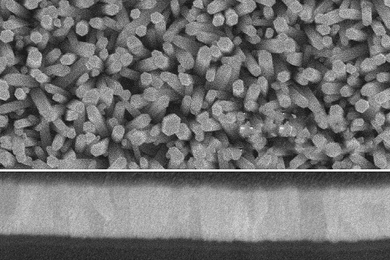
MIT researchers improve efficiency of quantum-dot photovoltaic system by adding a forest of nanowires.

Ragon Institute researchers develop a method to identify weak points in viral proteins that could be exploited for vaccine development.
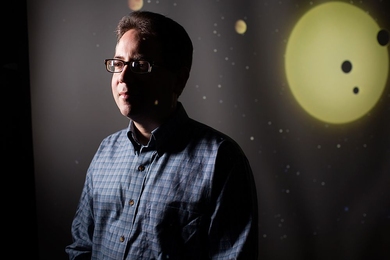
Josh Winn’s hunt for exoplanets may someday reveal habitable, Earth-like worlds.
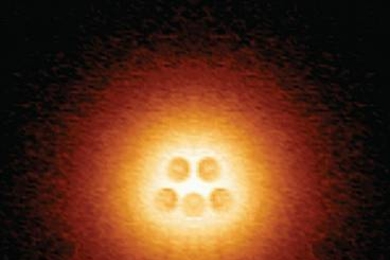
Researchers observe a basic quantum-mechanical phenomenon theorized decades ago by pioneers of atomic theory.