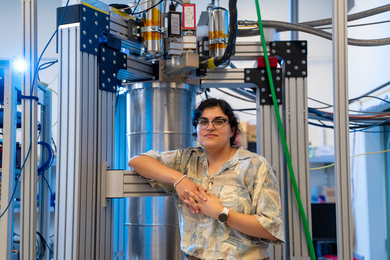
Scattering neutrinos to probe the fundamental laws of the universe
As she became integral to an international particle physics experiment, PhD student Faith Reyes found confidence in herself as a scientist.
As she became integral to an international particle physics experiment, PhD student Faith Reyes found confidence in herself as a scientist.

Due to physical and fundamental limitations, an earlier proposal for producing laserlike beams of neutrinos cannot be achieved, scientists report.
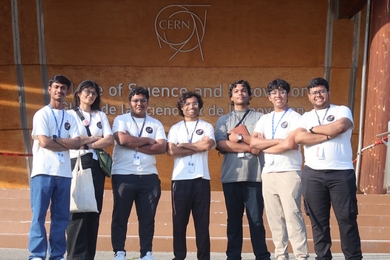
Physics PhD student Manu Srivastava helped high school students in India develop a test that could contribute to one of the world’s largest neutrino experiments.
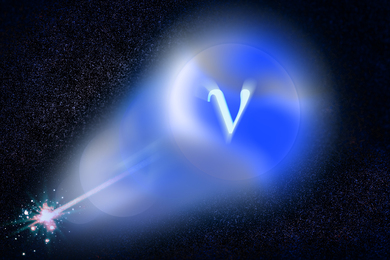
Super-cooling radioactive atoms could produce a laser-like neutrino beam, offering a new way to study these ghostly particles — and possibly a new form of communication.
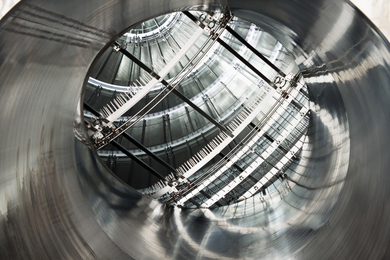
Researchers with the KATRIN experiment determine that neutrinos are lighter than 0.8 eV/c2.
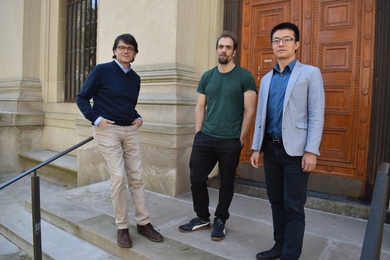
A National Science Foundation-funded team will use artificial intelligence to speed up discoveries in physics, astronomy, and neuroscience.
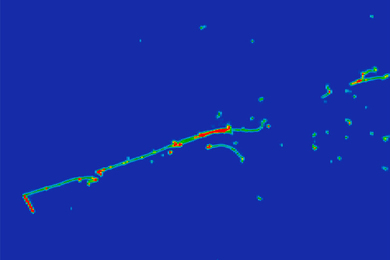
Graduate student Nicholas Kamp describes the MicroBooNE experiment and its implications for our understanding of fundamental particles.
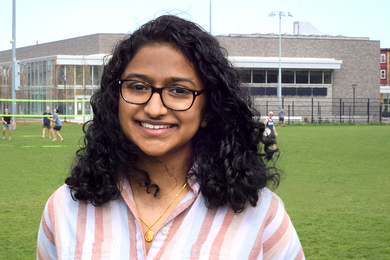
Senior Anjali Nambrath will graduate with majors in physics and mathematics, a minor in French — and a deep love for theater.
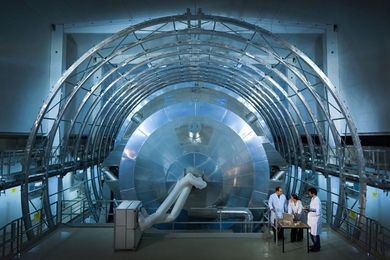
Joseph Formaggio explains the discovery that the ghostly particle must be no more than 1 electronvolt, half as massive as previously thought.
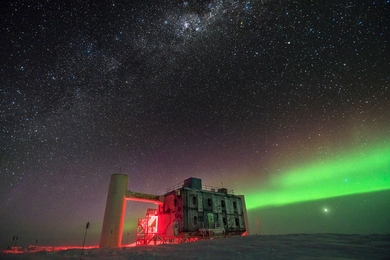
Most thorough test to date finds no Lorentz violation in high-energy neutrinos.
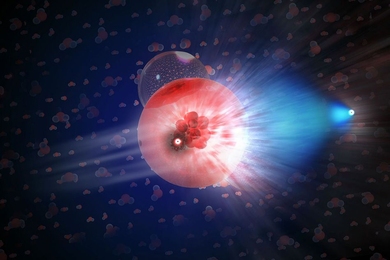
The “ghostly particle” is confirmed to have originated from a blazar, nearly 4 billion light years from Earth.
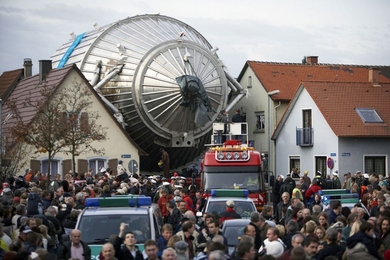
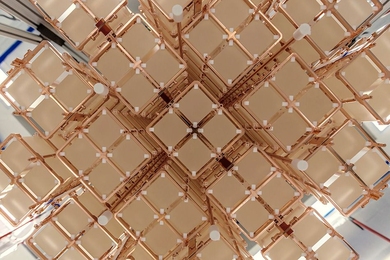
Data could shed light on why the universe has more matter than antimatter.
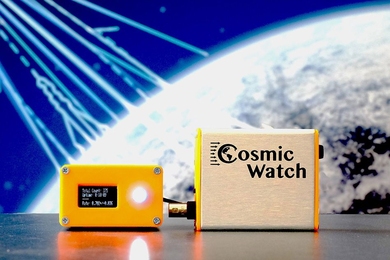
Pocket-sized device detects charged particles in surrounding air.
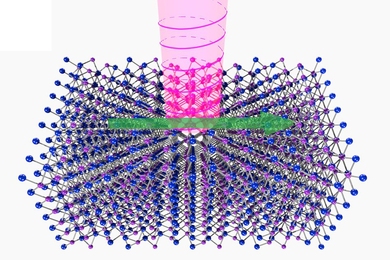
Exotic metal displays behavior that could lead to new infrared detectors.