More durable metals for fusion power reactors
MIT researchers have found a way to make structural materials last longer under the harsh conditions inside a fusion reactor.
The company that brought you no-stick toothpaste is moving into the medical space, with a lubricant for ostomy pouches and other products that could improve millions of lives.
The new design approach could be used to produce metals with exceptional combinations of strength and ductility, for aerospace and other applications.
The newly synthesized material could be the basis for wearable thermoelectric and spintronic devices.
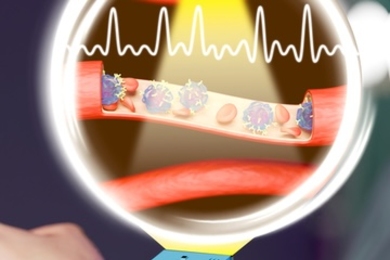
Leuko, founded by a research team at MIT, is giving doctors a noninvasive way to monitor cancer patients’ health during chemotherapy — no blood tests needed.
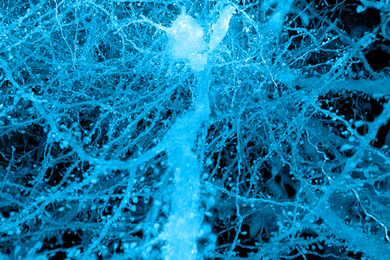
MIT scientists honored in each of the three Kavli Prize categories: neuroscience, nanoscience, and astrophysics, respectively.
Smaller than a coin, this optical device could enable rapid prototyping on the go.
The work could lead to ultra-efficient electronics and more.
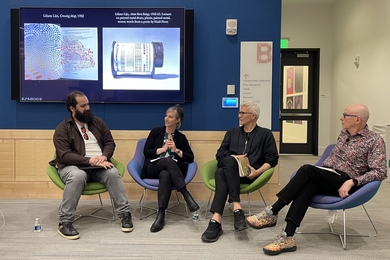
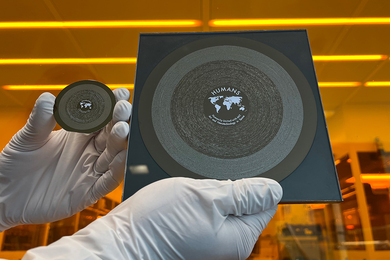
MIT.nano inscribes 340,000 names on a single silicon wafer in latest version of One.MIT.
Research sheds light on the properties of novel materials that could be used in electronics operating in extremely hot environments.
The unexpected finding could be important for designing spacecraft shielding or in high-speed machining applications.
The doctoral student will use the prize to find novel phases of matter and particles.
The MIT physicist is honored for pioneering work in photonics that helped to advance tools for telecommunications and biomedicine.
The chip-scale device could provide sensitive detection of lead levels in drinking water, whose toxicity affects 240 million people worldwide.
MIT Department of Mechanical Engineering grad students are undertaking a broad range of innovative research projects.