
Ultrasmall optical devices rewrite the rules of light manipulation
Nanophotonic devices developed at MIT are compact, efficient, reprogrammable, adaptive, and able to dynamically respond to external inputs.
Nanophotonic devices developed at MIT are compact, efficient, reprogrammable, adaptive, and able to dynamically respond to external inputs.
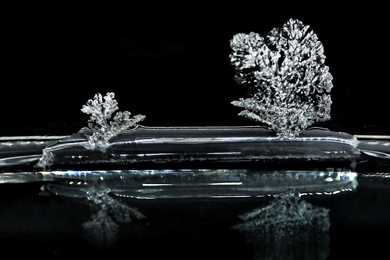
Device Research Lab study uncovers mechanisms behind a phenomenon that can impact civil engineering, desalination, coatings, membrane design, art conservation, and more.

The faculty members’ work comprises multifaceted research and scholarship across a wide range of disciplines.
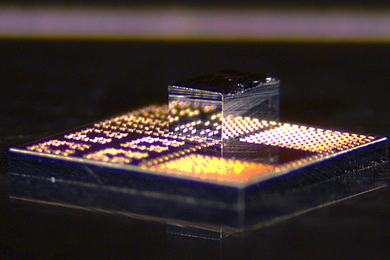
The low-cost, scalable technology can seamlessly integrate high-speed gallium nitride transistors onto a standard silicon chip.

Longtime MIT electrical engineer receives SPIE Frits Zernike Award for Microlithography in recognition of outstanding accomplishments in microlithographic technology.
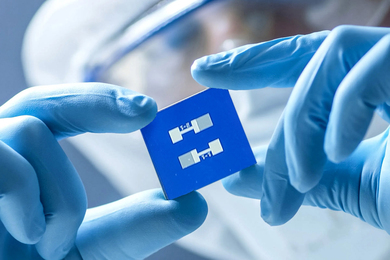
Protein sensor developed by alumna-founded Advanced Silicon Group can be used for research and quality control in biomanufacturing.
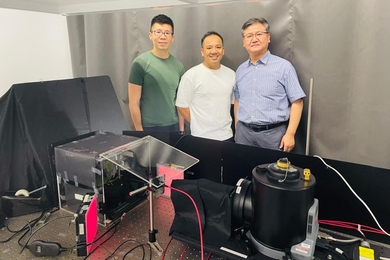
Researchers from SMART DiSTAP developed the world’s first near-infrared fluorescent nanosensor capable of monitoring a plant’s primary growth hormone in real-time and without harming the plant.
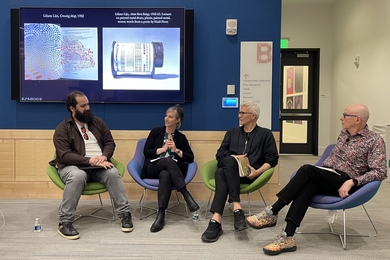
In the inaugural STUDIO.nano Resonance Lecture, the Brown University assistant professor traced how artists in the 1960s delved into early computer science, cybernetics, and AI.

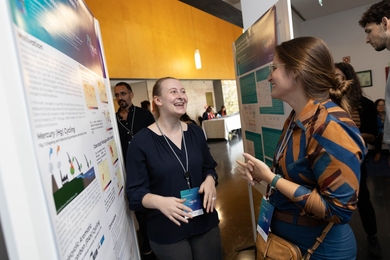
New phase will support continued exploration of ideas and solutions in fields ranging from AI to nanotech to climate — with emphasis on educational exchanges and entrepreneurship.
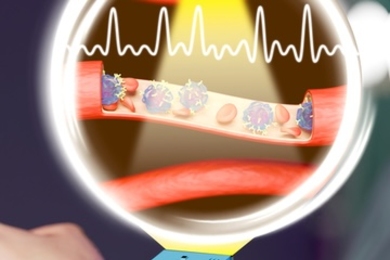
The technology, which achieves single-cell resolution, could help in continuous, noninvasive patient assessment to guide medical treatments.
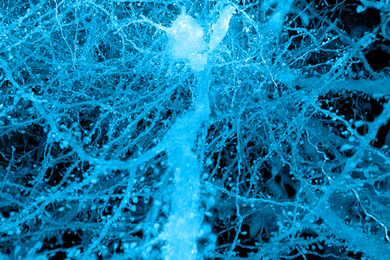
Since an MIT team introduced expansion microscopy in 2015, the technique has powered the science behind kidney disease, plant seeds, the microbiome, Alzheimer’s, viruses, and more.

MIT engineers developed ultrathin electronic films that sense heat and other signals, and could reduce the bulk of conventional goggles and scopes.
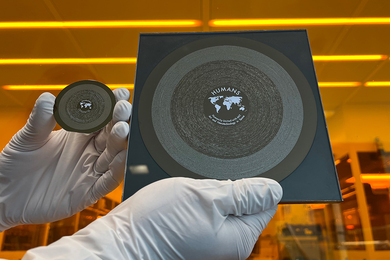
Professor Craig Carter’s precision design for a student-led project now on the moon encodes messages from around the world on a silicon wafer.
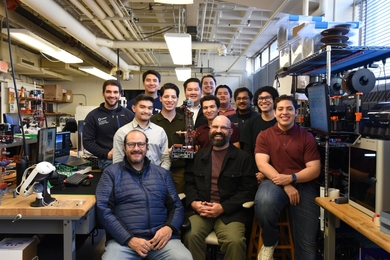
Inaugural cohort of Tecnológico de Monterrey undergraduates participate in immersive practicum at MIT featuring desktop fiber-extrusion devices, or FrEDs.