
Q&A: Dolapo Adedokun on computer technology, Ireland, and all that jazz
MIT EECS student and Mitchell Scholar hopes to play music in Dublin while working on his MS in intelligent systems.
MIT EECS student and Mitchell Scholar hopes to play music in Dublin while working on his MS in intelligent systems.
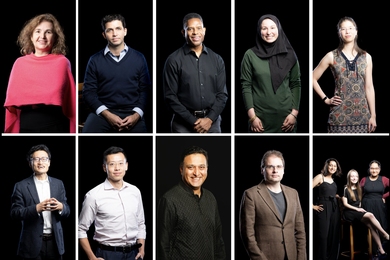
MIT scientists discuss the future of AI with applications across many sectors, as a tool that can be both beneficial and harmful.
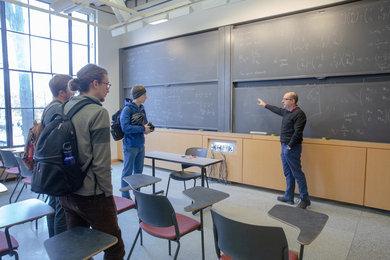
In 2.C01, George Barbastathis demonstrates how mechanical engineers can use their knowledge of physical systems to keep algorithms in check and develop more accurate predictions.

David Gamarnik has developed a new tool, the overlap gap property, for understanding computational problems that appear intractable.
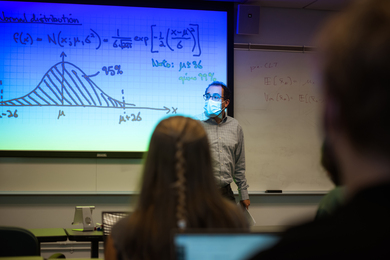
A new course teaches students how to use computational techniques to solve real-world problems, from landing a spacecraft to placing cell phone towers.
MIT community members made headlines around the world for their innovative approaches to addressing problems local and global.
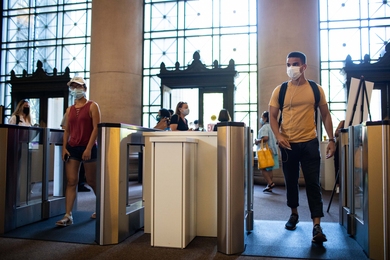
Top Institute stories dealt with the return to campus and continued response to Covid-19, MIT’s commitments to climate action, its support of a diverse community, and more.
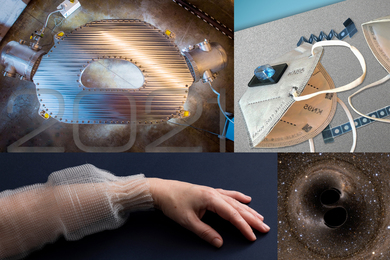
The year’s popular research stories include a promising new approach to cancer immunotherapy, the confirmation of a 50-year-old theorem, and a major fusion breakthrough.
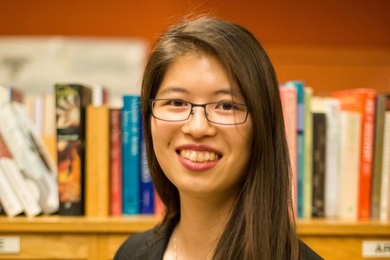
Assistant professor of civil engineering describes her career in robotics as well as challenges and promises of human-robot interactions.
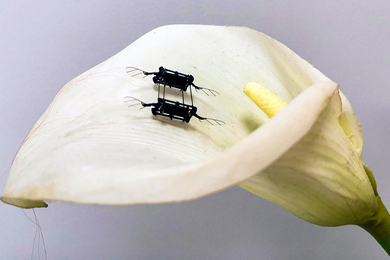
A new fabrication technique produces low-voltage, power-dense artificial muscles that improve the performance of flying microrobots.

SENSE.nano symposium highlights the importance of sensing technologies in medical studies.
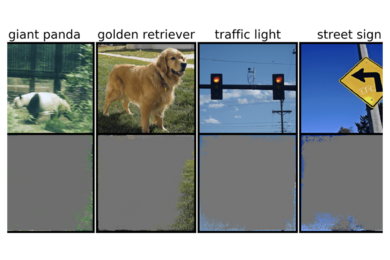
Deep-learning methods confidently recognize images that are nonsense, a potential problem for medical and autonomous-driving decisions.

A new model shows that the more polarized and hyperconnected a social network is, the more likely misinformation will spread.

Gift will help establish the Vamasundari Devi Fellowship Fund to provide financial support to graduate students and the SuperUROP program, which provides undergraduates with two-semester research opportunities.

Political scientist Nazli Choucri discusses challenges and hopes for global coordination on climate issues — and the role of political science in the process.