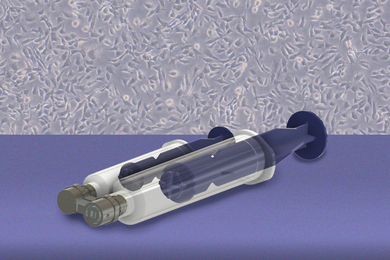
New cell-collection device could improve early cancer detection
MIT researchers developed a handheld system that gently collects living cells from patient samples to aid cancer testing and development of personalized medicines.
MIT researchers developed a handheld system that gently collects living cells from patient samples to aid cancer testing and development of personalized medicines.

A new device uses reconfigurable motion to mimic the firing behavior of a neuron, which could lead to more efficient computing.
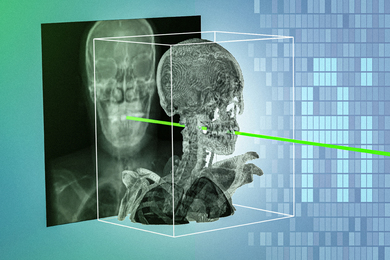
This patient-specific method, called xvr, helps doctors use X-rays for surgical navigation in fields such as orthopedics and neurosurgery.
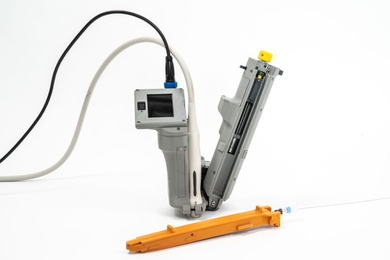
The handheld catheterization device AI-GUIDE, created by Lincoln Laboratory and Massachusetts General Hospital, promises improved health outcomes for injured service members and civilians.

MIT researchers show implanted nanoantennas can be activated wirelessly to kill brain cancer cells without damage to healthy tissue.
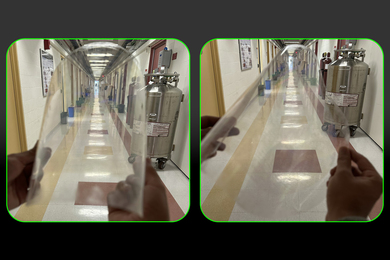
This scalable process produces high-performance chips for applications like discreet wearables or pliable augmented-reality displays.

The Materials Research Science and Engineering Center unites researchers across disciplines to develop technologies for medical imaging, sustainable metals production, and next-generation electronics.
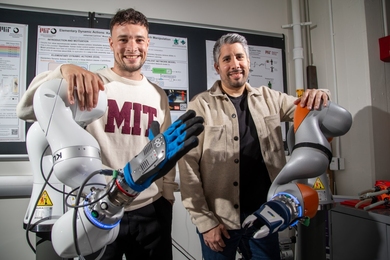
MIT engineers introduce an adaptive physical therapy system that uses generative AI to learn from physical therapists and interactively support stroke patients.
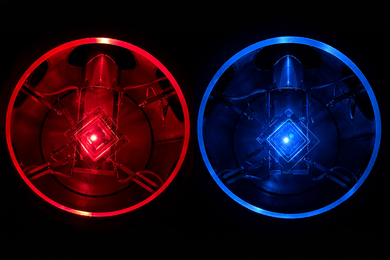
Researchers found a simple solution for extending the lifespans of LEDs made from glowing microscopic particles called quantum dots.

The new aerated material could enable longer-lasting bandages, implants, and wearable sensors.
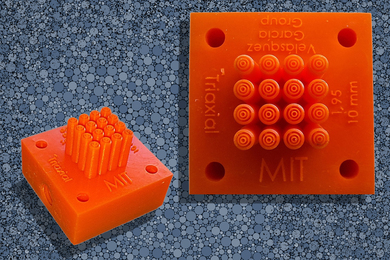
The cost-effective devices, which can be built in hours, leverage electrospray emitter technology to efficiently produce three-layered particles at scale.

Ultra-efficient chip design enables extremely strong cryptography algorithms to run on energy-constrained edge devices.

The Hood Pediatric Innovation Hub brings together clinicians, researchers, and industry to bridge the gap between discovery and care.
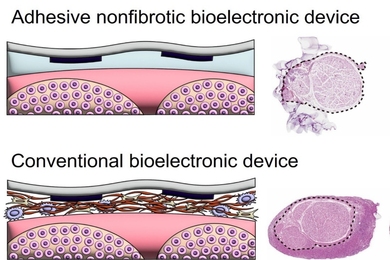
Inspired by traditional acupuncture, the approach has potential to impact all implantable bioelectronic devices, enabling applications such as hypertension mitigation.

MIT researchers created microscopic wireless electronic devices that travel through blood and implant in target brain regions, where they provide electrical stimulation.