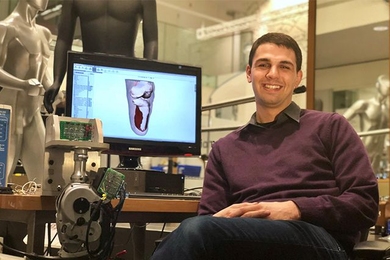
Three MIT graduate students awarded 2018 Lemelson-MIT Student Prize for Invention
Award honors top collegiate inventors in the United States.
Award honors top collegiate inventors in the United States.
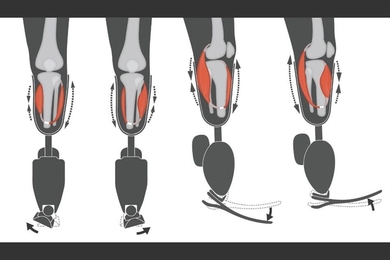
New study describes first human implementation of novel approach to limb amputation.

School of Architecture and Planning professors receive national recognition for excellence, innovation, and impact through design.
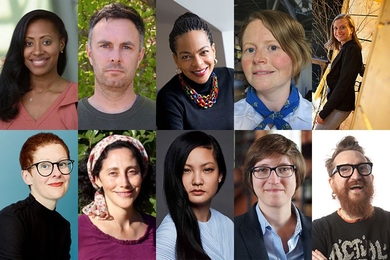
New cohort brings social, scientific, and creative experience to extend the lab’s reach beyond academia.

MIT faculty members are among 19 top scientists selected from across the nation.
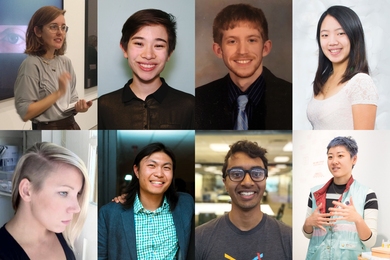
Graduating students and alumni will conduct research abroad in 2018-19 academic year.
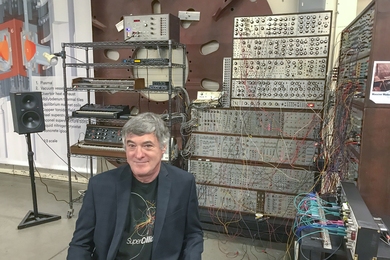
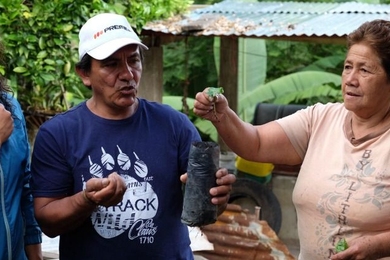
Education Innovation Grant program for pK-12 and higher education awards $400,000 to MIT faculty to support education innovation both at MIT and globally.
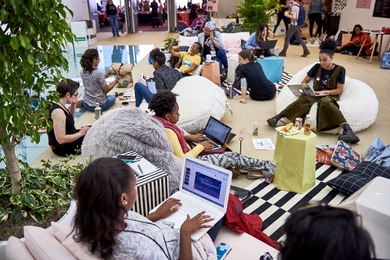
Make the Breast Pump Not Suck hackathon at the Media Lab emphasizes social and political issues over engineering.

Faculty, students, and alumni contribute as curators and exhibitors at the world’s premier forum for architecture and design.
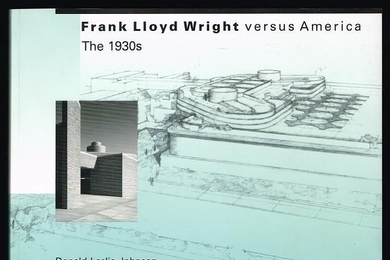
National Endowment for the Humanties-Mellon Foundation Open Book Program grant will support the digitization and open accessibility of key MIT Press titles.
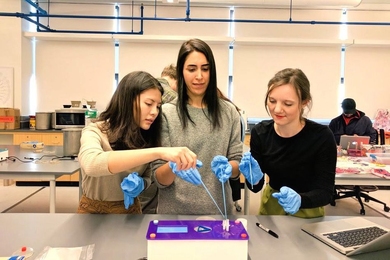
Alumna’s mini-lab kits include all necessary tools and materials for anyone to start engineering microbes.

Ambitious new piece in his “City Symphony” series features the birthplace of American democracy.
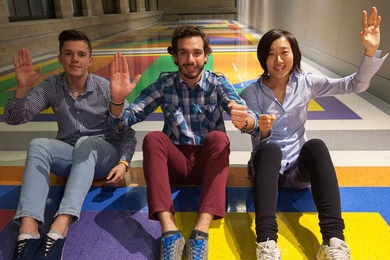
A mercurial snapshot of the myriad ways in which MIT community members can express themselves through the arts
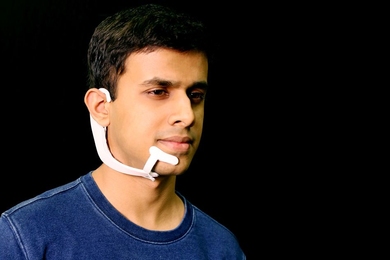
Electrodes on the face and jaw pick up otherwise undetectable neuromuscular signals triggered by internal verbalizations.