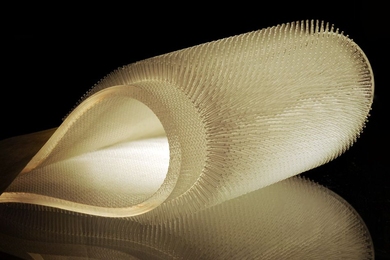
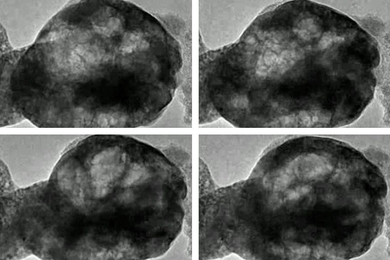
Water vapor sets some oxides aflutter
Newly discovered phenomenon could affect materials in batteries and water-splitting devices.
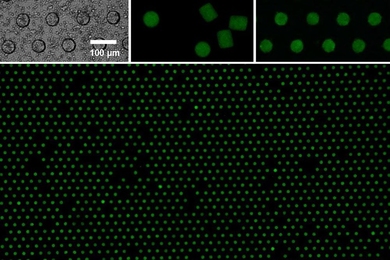
A better way to assay
New design of large-scale microparticle arrays can make materials science and bioengineering applications more scalable, precise, and versatile.
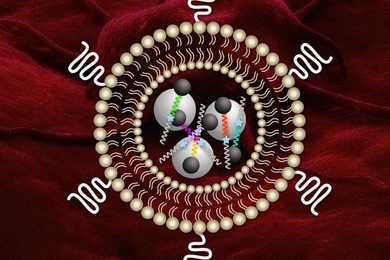
Nanosensors could help determine tumors’ ability to remodel tissue
Measuring enzyme levels could help doctors select appropriate treatments.
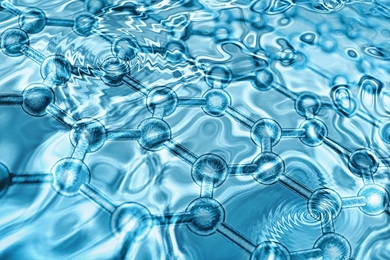
How to power up graphene implants without frying cells
New analysis finds way to safely conduct heat from graphene to biological tissues.

MIT and French research institutions collaborate on climate-conscious materials
MultiScale Material Science for Energy and Environment research partnership could reduce the carbon footprint of materials such as concrete.

Tiny gold grids yielding secrets
Summer Scholar Justin Cheng explores process in Berggren group for making ordered metal nanostructures that display interesting new properties.

QS ranks MIT the world’s top university for 2016-17
Ranked No. 1 for the fifth straight year, the Institute also places first in 12 of 42 disciplines.
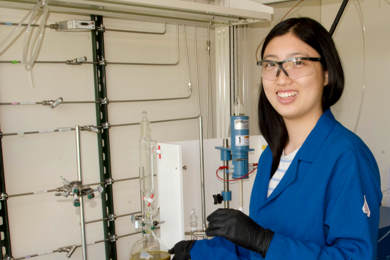
Designing safe, cheap batteries for grid level storage
Summer Scholar Victoria Yao experiments with water-based, flow-driven battery concept in Brushett Lab.
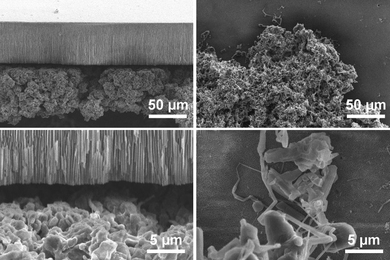
In batteries, a metal reveals its dual personality
Branchlike deposits grow on lithium electrode surfaces in two ways, one much more damaging.

Modeling how colloidal particles spin through a fixed array
Summer Scholar Jennifer Coulter works on computer simulations with associate professor of materials science Alfredo Alexander-Katz.
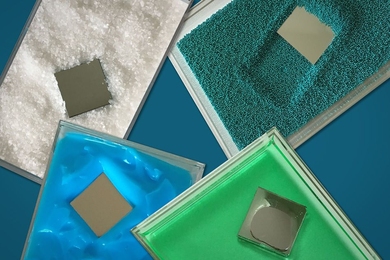
Pushing through sand
Simple equation predicts force needed to push objects through granular and pasty materials.

New solar cell is more efficient, costs less than its counterparts
Exposed in step-like formation, layers of new photovoltaic cell harvest more of sun’s energy.
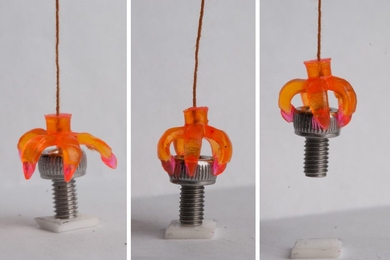
3-D printed structures “remember” their shapes
Heat-responsive materials may aid in controlled drug delivery and solar panel tracking.
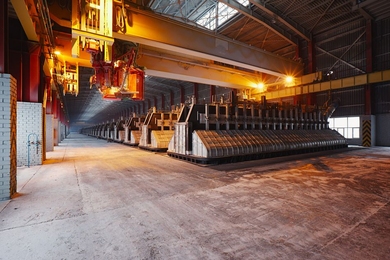
New method developed for producing some metals
Using electricity rather than heat can reduce both energy costs and greenhouse gas emissions.