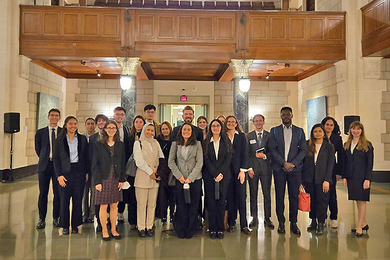
MIT’s Science Policy Initiative holds 15th annual Executive Visit Days
Students and postdocs traveled to Washington to learn about federal science and technology policymaking.
Students and postdocs traveled to Washington to learn about federal science and technology policymaking.
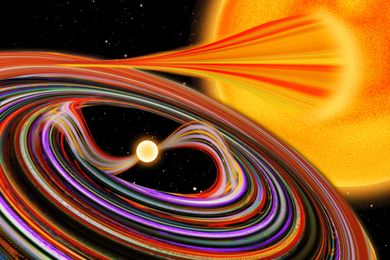
X-ray observations reveal surprising features of the dying star’s most energetic environment.
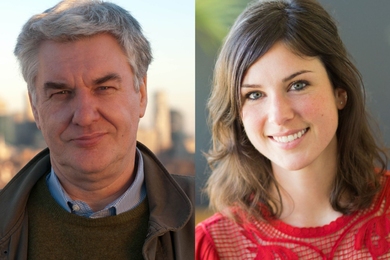
Faculty recognized for the exceptional professional and personal guidance they provide postdocs.
Professors Michael McDonald and Kristala Prather are honored as “Committed to Caring.”

The major public-private partnership is expected to strengthen MIT research and US leadership in astronomy and engineering.
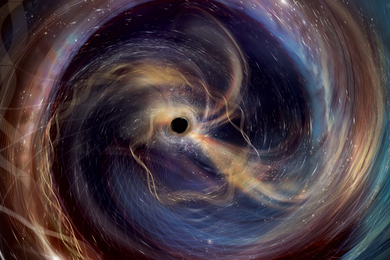
LIGO, Virgo, and KAGRA celebrate the anniversary of the first detection of gravitational waves and announce verification of Stephen Hawking’s black hole area theorem.
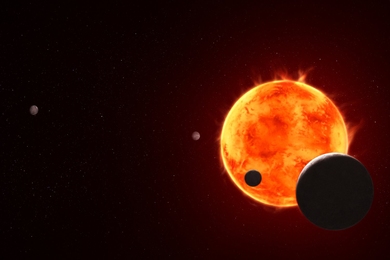
Astronomers led by EAPS postdoc Ana Glidden ruled out several atmospheric scenarios for the planet, narrowing ideas of what habitability there might look like.
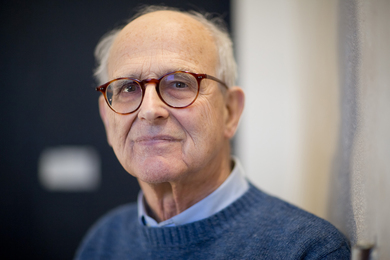
The longtime MIT professor shared a Nobel Prize for his role in developing the LIGO observatory and detecting gravitational waves.
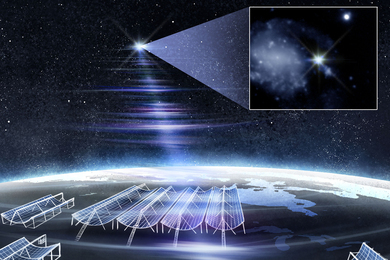
The dazzling “RBFLOAT” radio burst, originating in a nearby galaxy, offers the clearest view yet of the environment around these mysterious flashes.
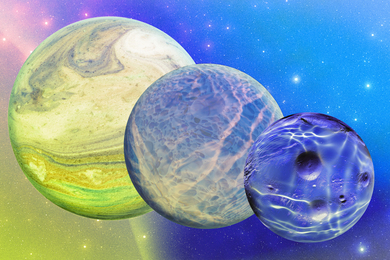
Lab experiments show “ionic liquids” can form through common planetary processes and might be capable of supporting life even on waterless planets.
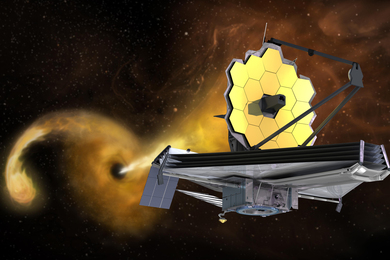
Unlike active galaxies that constantly pull in surrounding material, these black holes lie dormant, waking briefly to feast on a passing star.
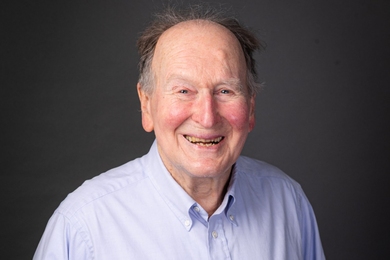
Longtime MIT electrical engineer receives SPIE Frits Zernike Award for Microlithography in recognition of outstanding accomplishments in microlithographic technology.

The small and rocky lava world sheds an amount of material equivalent to the mass of Mount Everest every 30.5 hours.
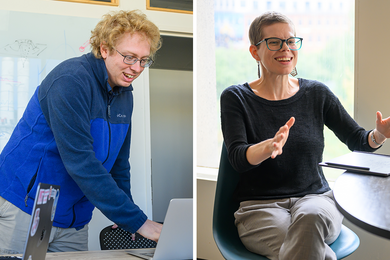
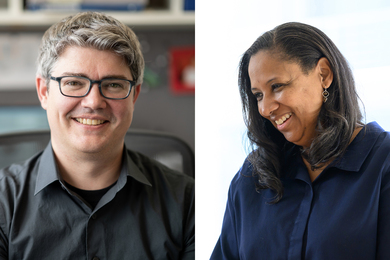
Professors Andrew Vanderburg and Ariel White are honored as “Committed to Caring.”
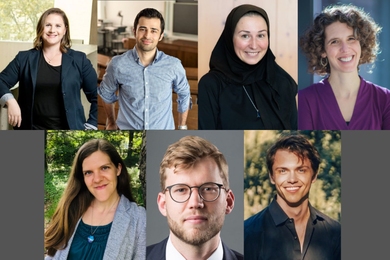
Annual award honors early-career researchers for creativity, innovation, and research accomplishments.