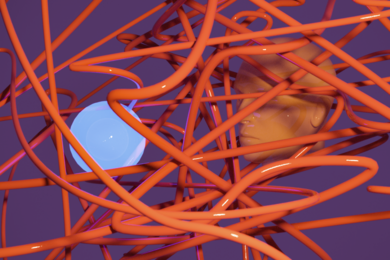
Artificial intelligence is smart, but does it play well with others?
Humans find AI to be a frustrating teammate when playing a cooperative game together, posing challenges for "teaming intelligence," study shows.
Humans find AI to be a frustrating teammate when playing a cooperative game together, posing challenges for "teaming intelligence," study shows.
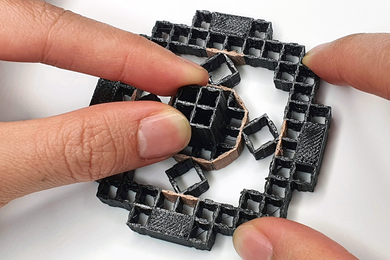
Advance incorporates sensing directly into an object’s material, with applications for assistive technology and “intelligent” furniture.
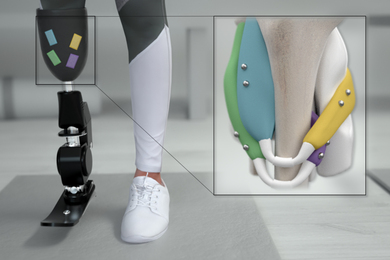
System uses tiny magnetic beads to rapidly measure the position of muscles and relay that information to a bionic prosthesis.
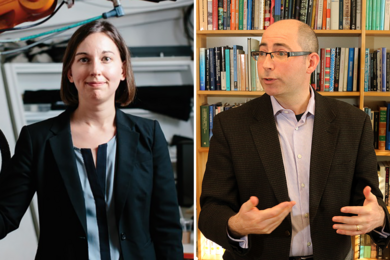
Advancing the study and practice of thinking responsibly in computing education, research, and implementation.
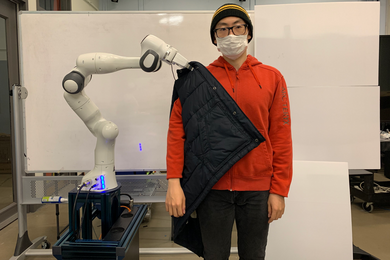
A human-aware motion planning algorithm addresses the safety gap in collaboration between robots and humans.

MIT student Eeshan Tripathii is working with his sister to engineer an intuitive brain-controlled interface for upper-limb prosthetics.
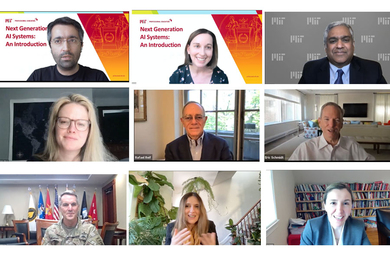
Nearly 300 government and military members participated in a new course designed to explore the next generation of artificial intelligence and related technologies.
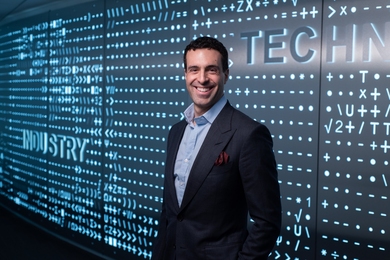
Blade Kotelly is a senior lecturer on design thinking and innovation, bringing expertise to the world's top brands to better innovate in complex product and service environments.
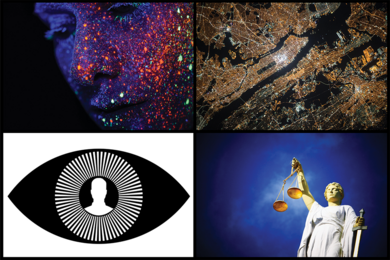
New case studies series examines social, ethical, and policy challenges of present-day computing activities.
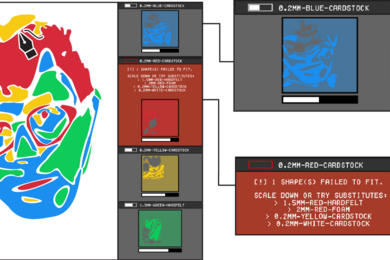
Fabricaide, developed at MIT CSAIL, provides live design feedback to help users reduce leftover material.
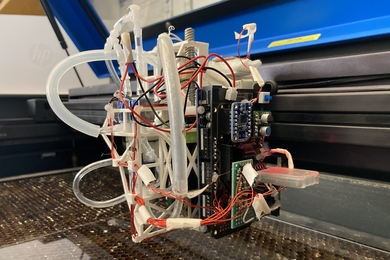
CSAIL's “LaserFactory” system automates the full process for making functional devices in one system.

At Open Learning Talks, Cynthia Breazeal and Eric Klopfer discuss artificial intelligence education.

A new deep-learning algorithm could provide advanced notice when systems — from satellites to data centers — are falling out of whack.

MIT study shows the power of adaptive training tools, like a basketball hoop that shrinks and raises as you make shots.
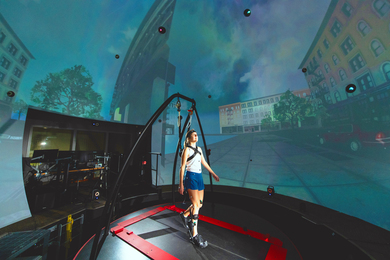
Will focus on responding to disasters and humanitarian crises, defending against biothreats, addressing climate change, and improving human health and performance.