
A new way to “paint with light” to create radiant, color-changing items
“MorphoChrome,” developed at MIT, pairs software with a handheld device to make everyday objects iridescent.
“MorphoChrome,” developed at MIT, pairs software with a handheld device to make everyday objects iridescent.
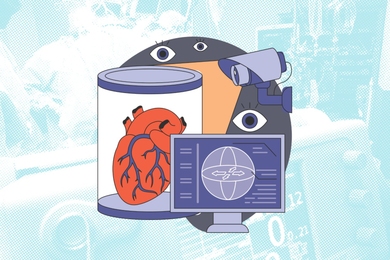
New research demonstrates how AI models can be tested to ensure they don’t cause harm by revealing anonymized patient health data.
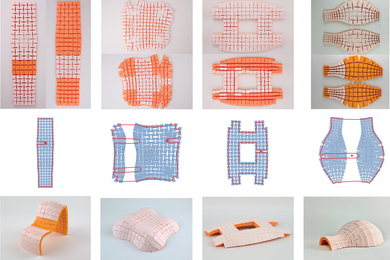
A new method could enable users to design portable medical devices, like a splint, that can be rapidly converted from flat panels to a 3D object without any tools.

Nineteen-year-old Freesia Gaul built a VR prototype thanks to MIT OpenCourseWare classes that provided “a solid foundation of knowledge and problem-solving abilities.”

The speech-to-reality system combines 3D generative AI and robotic assembly to create objects on demand.

Large language models can learn to mistakenly link certain sentence patterns with specific topics — and may then repeat these patterns instead of reasoning.
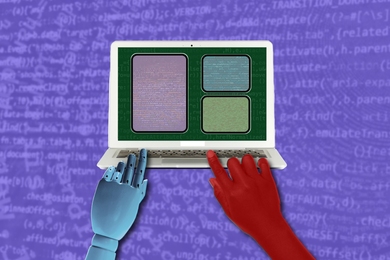
The coding framework uses modular concepts and simple synchronization rules to make software clearer, safer, and easier for LLMs to generate.

Researchers find that design elements of data visualizations influence viewers’ assumptions about the source of the information and its trustworthiness.
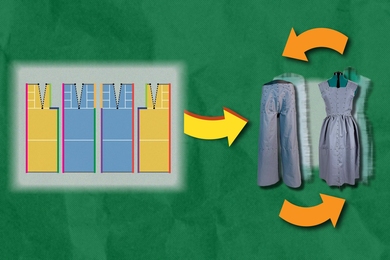
To reduce waste, the Refashion program helps users create outlines for adaptable clothing, such as pants that can be reconfigured into a dress. Each component of these pieces can be replaced, rearranged, or restyled.

Optimized for generative AI, TX-GAIN is driving innovation in biodefense, materials discovery, cybersecurity, and other areas of research and development.

By enabling users to easily create social apps that serve communities’ needs, the Graffiti framework aims to promote healthier online interactions.
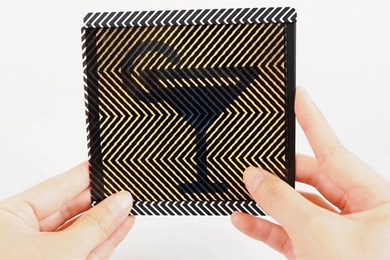
The FabObscura system helps users design and print barrier-grid animations without electronics, and can help produce dynamic household, workplace, and artistic objects.
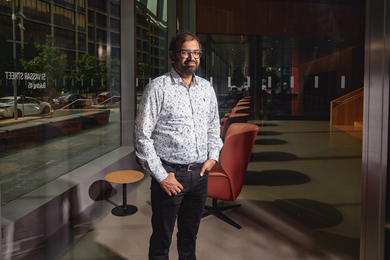
Balancing automation and agency, Associate Professor Arvind Satyanarayan develops interactive data visualizations that amplify human creativity and cognition.
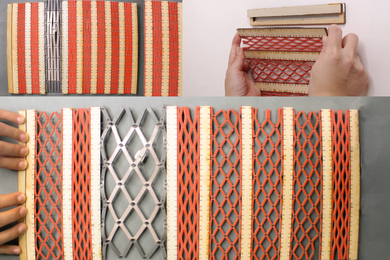
You can adjust the frequency range of this durable, inexpensive antenna by squeezing or stretching its structure.

Four new professors join the Department of Architecture and MIT Media Lab.