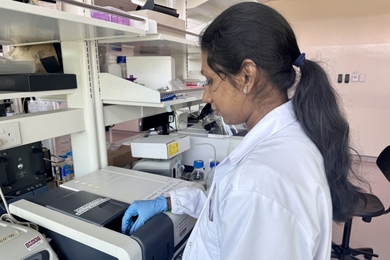
Novel method detects microbial contamination in cell cultures
Ultraviolet light “fingerprints” on cell cultures and machine learning can provide a definitive yes/no contamination assessment within 30 minutes.
Ultraviolet light “fingerprints” on cell cultures and machine learning can provide a definitive yes/no contamination assessment within 30 minutes.
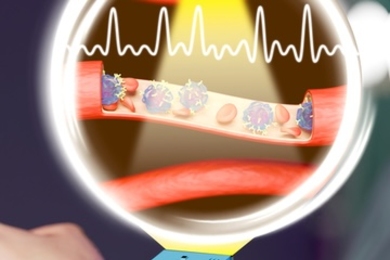
The technology, which achieves single-cell resolution, could help in continuous, noninvasive patient assessment to guide medical treatments.
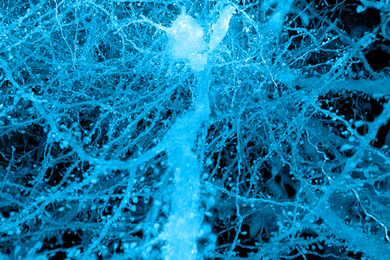
Since an MIT team introduced expansion microscopy in 2015, the technique has powered the science behind kidney disease, plant seeds, the microbiome, Alzheimer’s, viruses, and more.

Through workshops based on an MIT class, students in Kenya and Uganda gained hands-on experience engineering medical hardware.
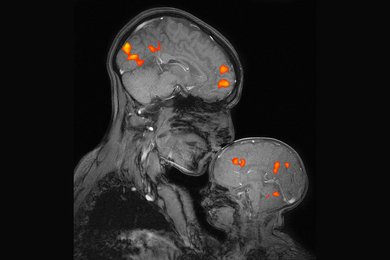
A quarter century after its founding, the McGovern Institute reflects on its discoveries in the areas of neuroscience, neurotechnology, artificial intelligence, brain-body connections, and therapeutics.

The Hood Pediatric Innovation Hub aims to break down barriers to pediatric innovation and foster transformative research to improve children’s health outcomes.
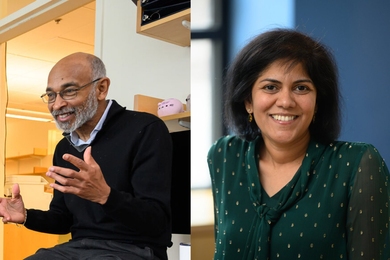
Professors Emery Brown and Hamsa Balakrishnan are honored as “Committed to Caring” for their guidance of graduate students.
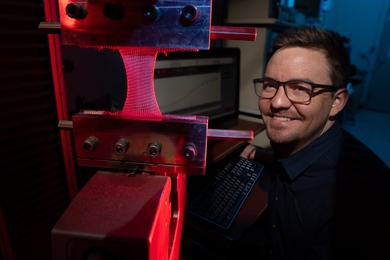
Lincoln Laboratory and MIT researchers are creating new types of bioabsorbable fabrics that mimic the unique way soft tissues stretch while nurturing growing cells.
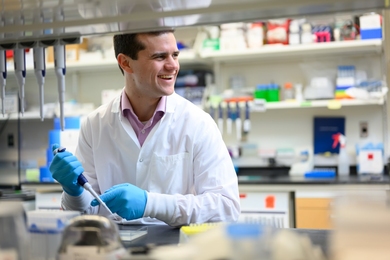
Graduate student and MathWorks Fellow Louis DeRidder is developing a device to make chemotherapy dosing more accurate for individual patients.
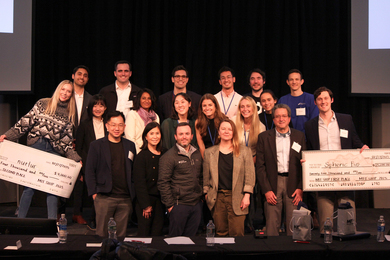
Spheric Bio’s implants are designed to grow in a channel of the heart to better fit the patient’s anatomy and prevent strokes.
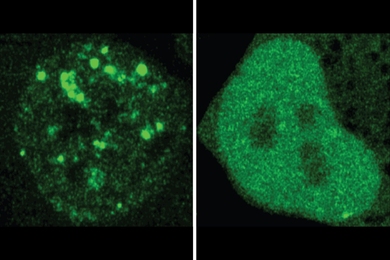
Whitehead Institute and CSAIL researchers created a machine-learning model to predict and generate protein localization, with implications for understanding and remedying disease.

A deep neural network called CHAIS may soon replace invasive procedures like catheterization as the new gold standard for monitoring heart health.
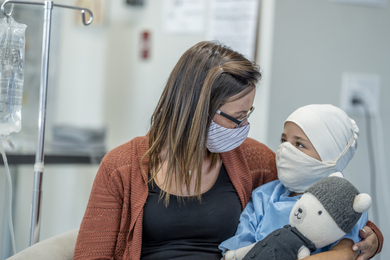
When his son received a devastating diagnosis, Fernando Goldsztein MBA ’03 founded an initiative to help him and others.
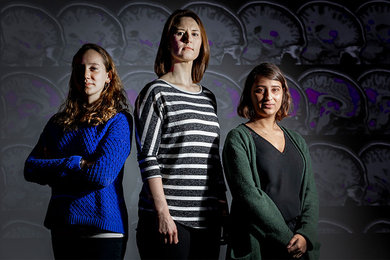
McGovern Institute neuroscientists use children’s interests to probe language in the brain.

Researchers at MIT, NYU, and UCLA develop an approach to help evaluate whether large language models like GPT-4 are equitable enough to be clinically viable for mental health support.