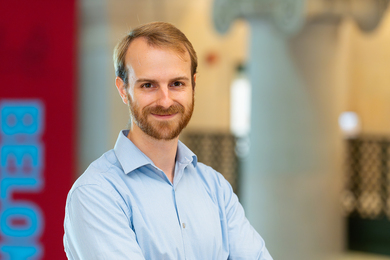
Working to advance the nuclear renaissance
Dean Price, assistant professor in the Department of Nuclear Science and Engineering, sees a bright future for nuclear power, and believes AI can help us realize that vision.
Dean Price, assistant professor in the Department of Nuclear Science and Engineering, sees a bright future for nuclear power, and believes AI can help us realize that vision.
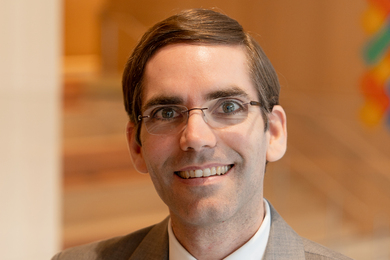
The electrical engineering and nanotechnology leader will guide the US Army-sponsored research center as it advances next-generation materials, electronics, and photonics for national security.
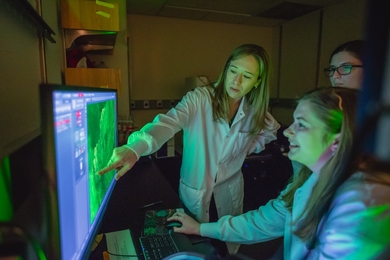
“We cannot be effective scientists if we are unhappy or unhealthy outside of the lab,” says “Committed to Caring” honoree Sara Prescott.
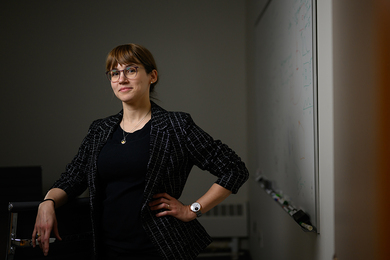
Sophia Henneberg, assistant professor in the Department of Nuclear Science and Engineering, is developing stellarators to harness fusion energy.
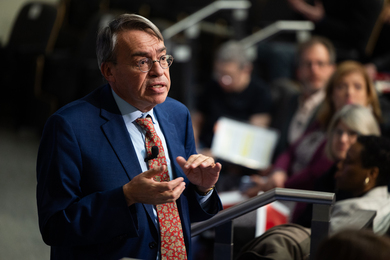
Operations research expert Dimitris Bertsimas delivered the annual Killian Lecture, providing a look at the past and future of his work.

Anthropologist Amy Moran-Thomas studies overlooked insights from people health care is meant to reach.
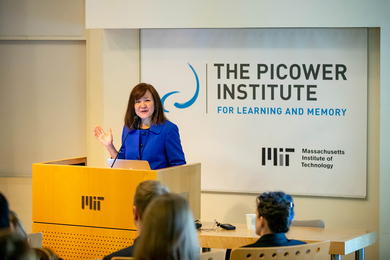
Tsai, who has grown the MIT neuroscience institute, will increase focus on research including Alzheimer’s disease and Down syndrome.

Fourth Power, founded by Professor Asegun Henry, is developing thermal batteries for efficiently storing excess electricity from utility grids and power producers.
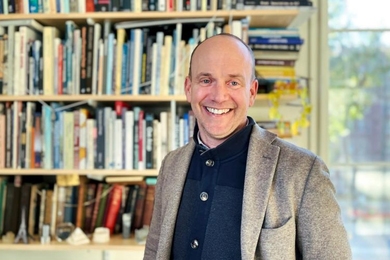
The newly created role will shape the infrastructure needed to nurture the school’s growing research goals.
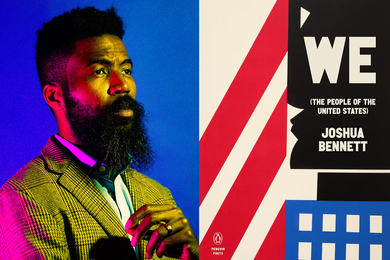
For the 250th anniversary of the US, Joshua Bennett’s epic poem set celebrates unexpected lives forged across the nation.

MIT professors Amos Winter and Nikolai Zeldovich are honored for exceptional undergraduate teaching.

Professor Jesse Thaler describes a vision for a two-way bridge between artificial intelligence and the mathematical and physical sciences — one that promises to advance both.
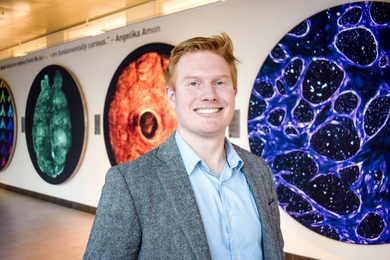
Assistant Professor Matthew Jones is working to decode molecular processes on the genetic, epigenetic, and microenvironment levels to anticipate how and when tumors evolve to resist treatment.
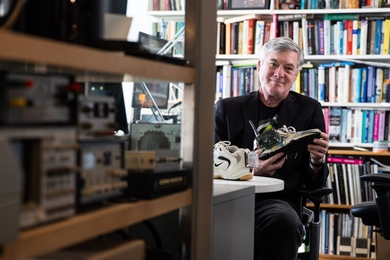
From early motion-sensing platforms to environmental monitoring, the professor and head of the Program in Media Arts and Sciences has turned decades of cross-disciplinary research into real-world impact.
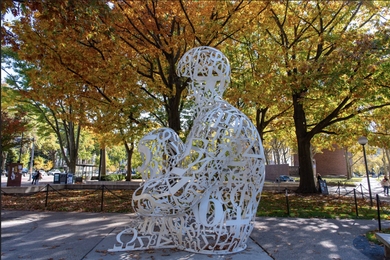
Faculty members and researchers were honored in recognition of their scholarship, service, and overall excellence.