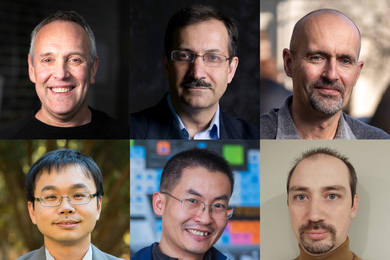
MIT faculty, alumni receive 2025-26 American Physical Society honors
Two faculty and six additional alumni win top APS awards and prizes; four faculty and 12 additional alumni named APS Fellows.
Download RSS feed: News Articles / In the Media / Audio
Two faculty and six additional alumni win top APS awards and prizes; four faculty and 12 additional alumni named APS Fellows.
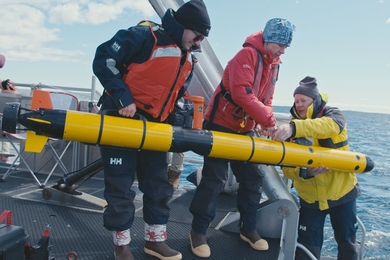
Researchers are developing hardware and algorithms to improve collaboration between divers and autonomous underwater vehicles engaged in maritime missions.
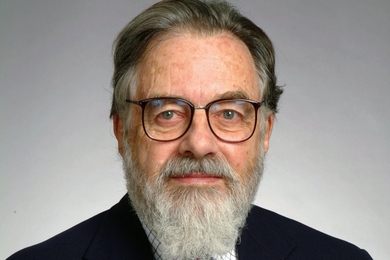
The influential first leader of the Computation Structures Group at MIT played a key role in the development of asynchronous computing.

Researchers use control theory to shed unnecessary complexity from AI models during training, cutting compute costs without sacrificing performance.
Graduate engineering program is No. 1 in the nation; MIT Sloan is No. 6.

Researchers developed a system that intelligently balances workloads to improve the efficiency of flash storage hardware in a data center.

Co-founded by Dan Sobek ’88, SM ’92, PhD ’97, 1s1 Energy has developed electrochemical cell materials for hydrogen electrolyzers that it says reduces energy use by 30 percent.

MIT researchers developed a testing framework that pinpoints situations where AI decision-support systems are not treating people and communities fairly.
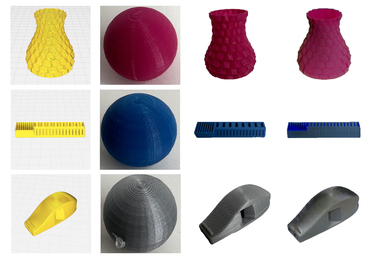
By quickly generating aesthetically accurate previews of fabricated objects, the VisiPrint system could make prototyping faster and less wasteful.
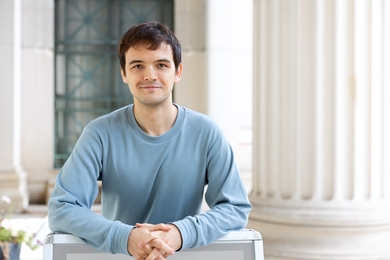
Computational biologist Sergei Kotelnikov is working to develop new methods in protein modeling as part of the School of Science Dean’s Postdoctoral Fellowship.
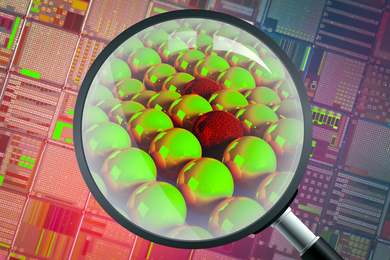
A new model measures defects that can be leveraged to improve materials’ mechanical strength, heat transfer, and energy-conversion efficiency.
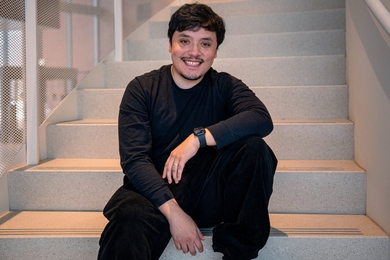
Mariano Salcedo ’25, a master’s student in the new Music Technology and Computation Graduate Program, is designing an AI to visualize and express music and other sounds.
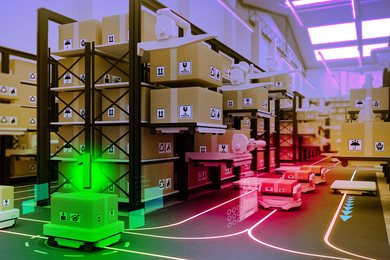
This new approach adapts to decide which robots should get the right of way at every moment, avoiding congestion and increasing throughput.
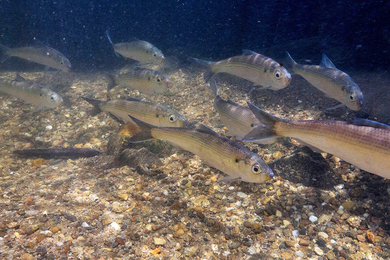
MIT Sea Grant works with the Woodwell Climate Research Center and other collaborators to demonstrate a deep learning-based system for fish monitoring.
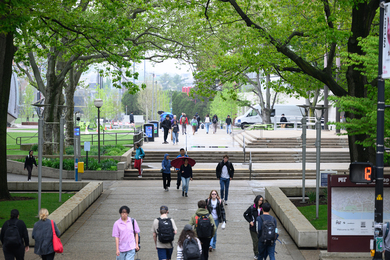
The Institute also ranks second in seven subject areas.