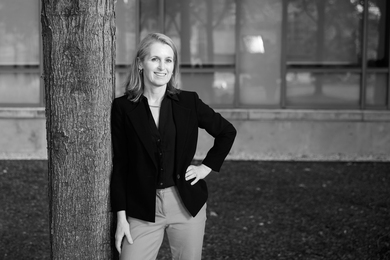
Catherine Wolfram: High-energy scholar
The MIT Sloan professor has become a leading energy economist through original studies that can inform our global climate response.
The MIT Sloan professor has become a leading energy economist through original studies that can inform our global climate response.

Selected LEVER collaborators will work with the organization to develop an evaluation of their respective programs that alleviate poverty.

Researchers show that even the best-performing large language models don’t form a true model of the world and its rules, and can thus fail unexpectedly on similar tasks.
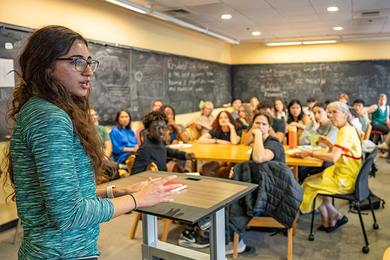
Through the Civil Discourse Project at MIT, scholarly debate serves as a model for productive discussions among MIT Concourse students.

The late-in-life health care option reduces patient costs, even as for-profit organizations expand in the sector.

The noninvasive screening procedure can reduce pregnancy risks and lower costs at the same time, but only when targeted effectively.

Along with James Robinson, the professors are honored for work on the relationship between economic growth and political institutions.
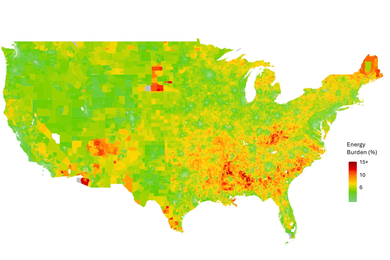
Study of the U.S. shows homes in the South and Southwest could use more aid for energy costs, due to a growing need for air conditioning in a warming climate.

A new study shows that belonging to age-based groups, common in some global regions, influences finances and health.

The spending increases were particularly pronounced for businesses within 100 yards of charging stations, and for businesses in low-income areas.
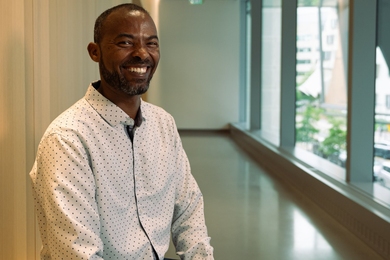
Saeed Miganeh’s work at MIT is helping him answer important questions about designing effective programs for poverty mitigation and economic growth in African countries.

Historian Caley Horan studies commerce and uncertainty in modern American life.
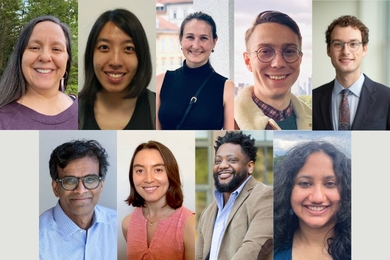
New professors join anthropology, economics, history, linguistics, music and theater arts, and philosophy departments, as well as the Program in Science, Technology, and Society.
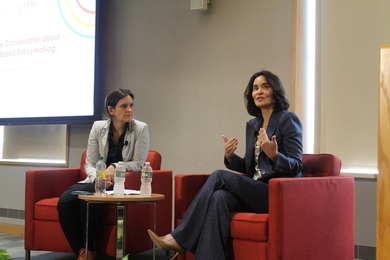
Shared commitment to data-driven approach will help identify new policy solutions to reduce poverty and increase economic mobility in the US.
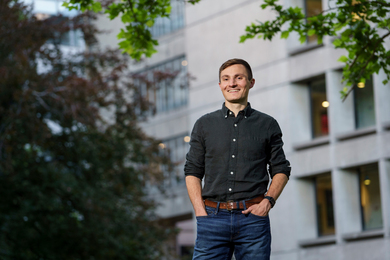
From scallop fishing in New Bedford to deforestation in the tropics, “our goal is to get some empirical traction on the problem,” says PhD student Aaron Berman.