
Study: Preschool gives a big boost to college attendance
Research using a Boston admissions lottery shows striking effects for children throughout their student lives.
Research using a Boston admissions lottery shows striking effects for children throughout their student lives.
MIT Professor Esther Duflo honored as Committed to Caring for fostering graduate student skills and ambition.
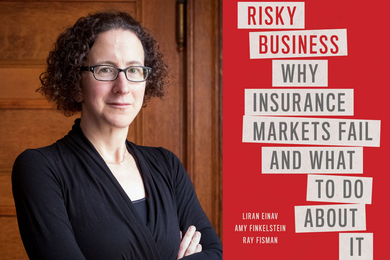
In a new book, “Risky Business,” Amy Finkelstein examines the core issue of the insurance industry: Who gets to be a customer?
Notowidigdo will guide J-PAL North America in developing rigorous research on economic mobility and advise the creation of a racial equity research agenda.

J-PAL North America and the University of Chicago’s Behavioral Insights and Parenting Lab will evaluate two approaches to text-based parental engagement programs that motivate two distinct kinds of learning interactions.

Study suggests a robot levy — but only a modest one — could help combat the effects of automation on income inequality in the U.S.

Research shows doctors and their families are less likely to follow guidelines about medicine. Why do the medically well-informed comply less often?
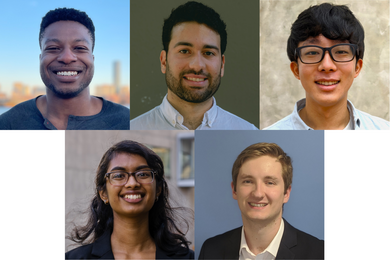
The new fellowship from the governments of Australia, India, Japan, and the United States, administered by Schmidt Futures, supports graduate education in STEM fields.

New data suggest most of the growth in the wage gap since 1980 comes from automation displacing less-educated workers.
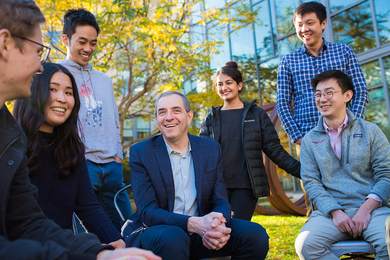
Committed to Caring program honors David Autor for his unique approach to graduate student mentorship and advocacy.
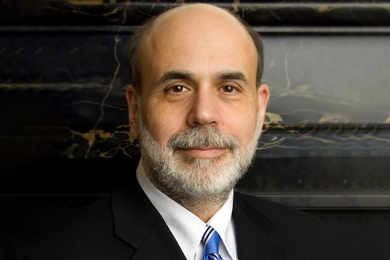
MIT alumnus and two others honored for research on the role of banks in the economy, including during financial crises.

Deeply respected advisor, educator, mentor, and former department head was a founding member of the MIT Joint Program on the Science and Policy of Global Change and committed to helping others rise out of poverty.
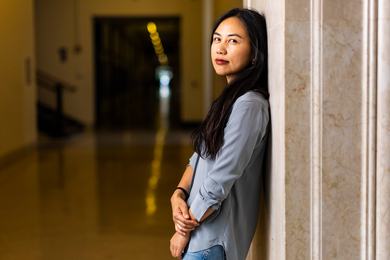
Danielle Li takes a close look at scientific practices and organizational decisions — and provides data about improving them.
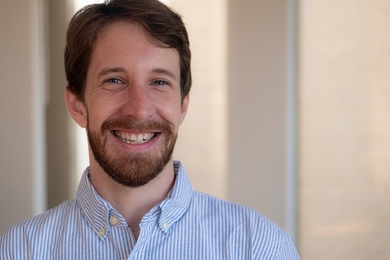
John David Minnich seeks to understand how trade policies fueled China’s rise and continue to determine geopolitical winners and losers.

The alumni-founded GiveDirectly has delivered over $500 million in cash to impoverished people, letting recipients decide how best to meet their needs.