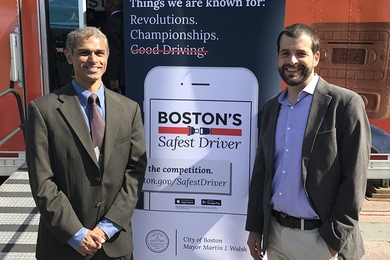
Rewarding Boston’s safest driver
Mayor Martin Walsh announces a competition aimed at improving Boston driving with an app developed by an MIT spinout.
Mayor Martin Walsh announces a competition aimed at improving Boston driving with an app developed by an MIT spinout.
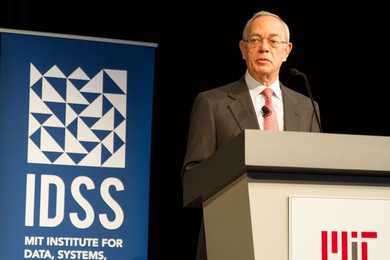
At IDSS celebration, speakers explore how data can be brought to bear on global challenges.

“Electome” project charts the national conversation in unique detail.

Event and new IDSS projects will provide insights into some of society's most pressing data challenges.
Financial-modeling software for sustainable-infrastructure projects could boost investment in sector.
New programming language delivers fourfold speedups on problems common in the age of big data.
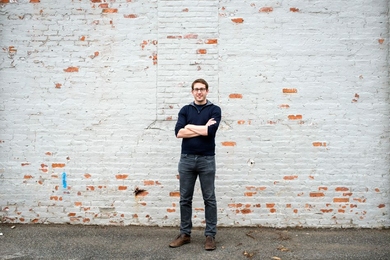
PhD student Nils Wernerfelt deploys the tools of economics to address his many questions about the world.
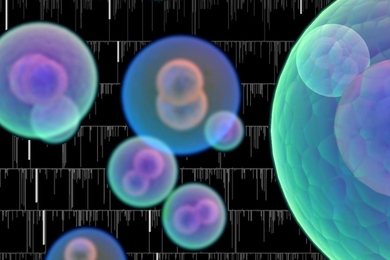
Device that measures growth of many individual cells simultaneously could lead to rapid tests for antibiotics.

Mobile-phone data helps researchers study an urban problem in greater detail.

Big-data analysis could give city planners timelier, more accurate alternatives to commuter surveys.
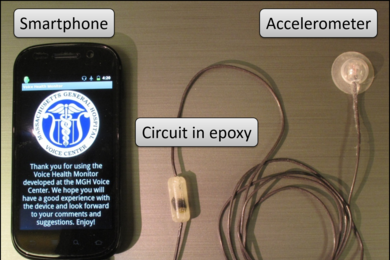
By detecting signs of vocal misuse, system from CSAIL and Mass General could eventually be used to help diagnose voice disorders.
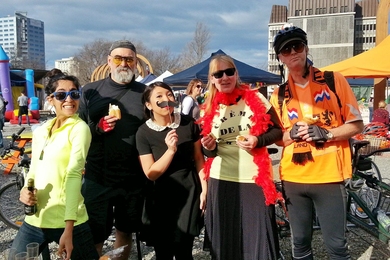
Lily Bui draws upon science, art, and public advocacy to enrich urban design.

New design should enable much more flexible traffic management, without sacrificing speed.

Wearable sensor for athletes detects potential head injuries, gathers data on hard hits.
System helps ensure databases used in medical research will not leak patients’ personal information.