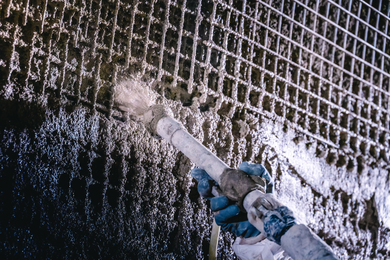
Startup brings ancient Roman concrete technology to modern construction
Dmat is commercializing findings from the lab of Associate Professor Admir Masic to make concrete longer-lasting and more sustainable.
Dmat is commercializing findings from the lab of Associate Professor Admir Masic to make concrete longer-lasting and more sustainable.
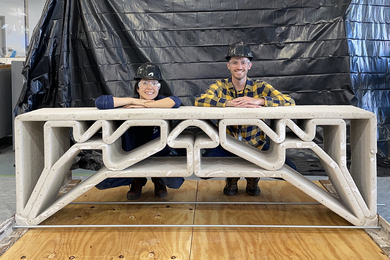
MIT researchers developed a framework that folds a printer’s real-world limits into the optimization, while revealing that better hardware could sharply reduce material use.
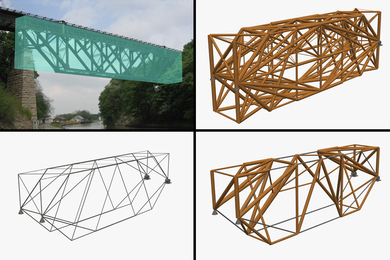
MIT researchers developed an approach for generating more buildable structures, bridging the gap between optimized design and real-world construction.
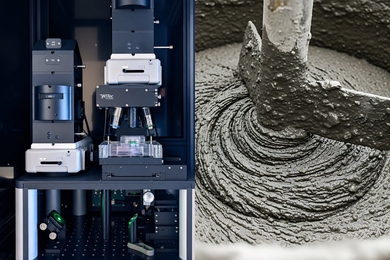
New research reveals the chemical sequence triggered by CO₂ injection in cement paste, capturing a fleeting intermediate reaction for the first time using real-time Raman spectroscopy.
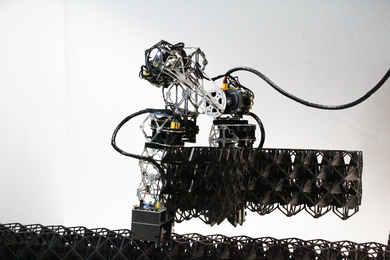
New research suggests constructing a simple building from interlocking subunits should be mechanically feasible and have a much smaller carbon footprint.

New analysis provides the first national, bottom-up estimate of cement’s natural carbon dioxide uptake across buildings and infrastructure.

MIT researchers analyzed a recently discovered ancient construction site to shed new light on a material that has endured for thousands of years.
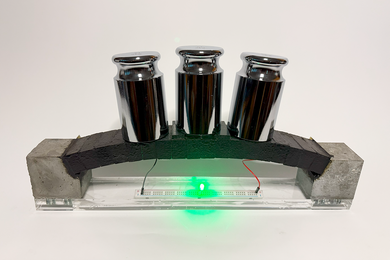
Improved carbon-cement supercapacitors could turn the concrete around us into massive energy storage systems.

Device Research Lab study uncovers mechanisms behind a phenomenon that can impact civil engineering, desalination, coatings, membrane design, art conservation, and more.

With demand for cement alternatives rising, an MIT team uses machine learning to hunt for new ingredients across the scientific literature.

Postdoc Haoran Li describes how the Concrete Sustainability Hub is enabling accessible, fast, and robust pavement decision-making.

Speakers described challenges and potential solutions for producing materials to meet demands associated with data centers, infrastructure, and other technology.
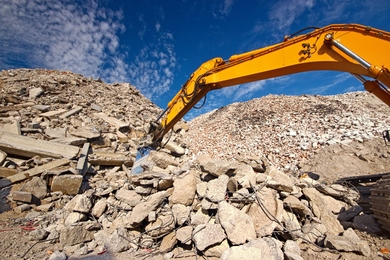
A better understanding of construction industry stakeholders’ motivations can lead to greater adoption of circular practices.
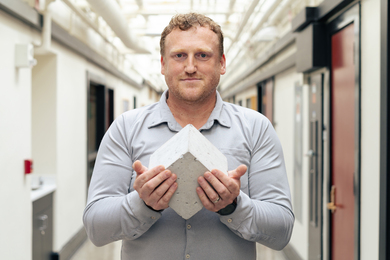
The associate professor of civil and environmental engineering studies ancient materials while working to solve modern problems.

MIT Concrete Sustainability Hub research presents a streamlined pavement life-cycle assessment framework to enable a large set of stakeholders to conduct environmental analysis of pavements.