
Solve launches new challenges on climate, education, and health care
MIT’s open innovation platform for tackling global problems seeks solutions from near and far.
MIT’s open innovation platform for tackling global problems seeks solutions from near and far.

New technique predicts frequency of heavy precipitation with global warming.

Bacteria can survive in marine environments that are almost completely starved of oxygen.
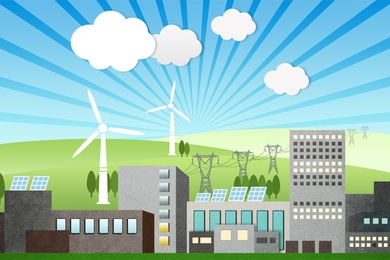
Experts call for regulatory, policy, and market transformation to realize potential of distributed energy technologies.
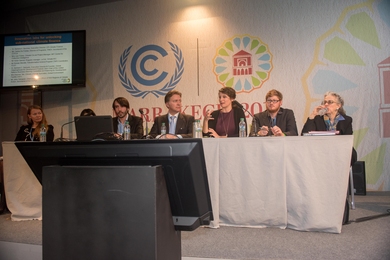
MIT Climate CoLab presents an innovative approach at the UN international climate talks in Marrakech, Morocco.
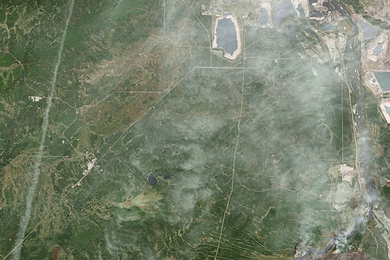
Study finds accounting for year-to-year variability enables more accurate projections of climate change and its impacts.
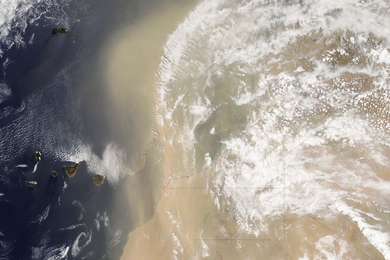
Scientists find huge reduction in African dust plume led to stronger Saharan monsoons 11,000 years ago.
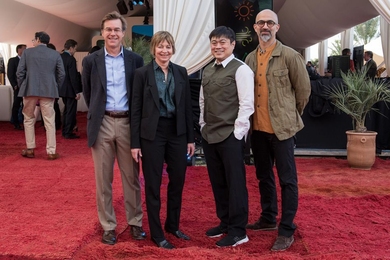
At UN Climate Change Conference, MIT researchers share insights on implementing climate commitments.

Why is it so hard for human beings to address climate change? What can motivate effective action?
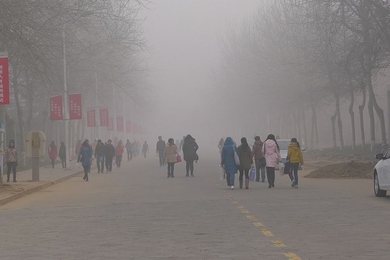
How an enhanced cap-and-trade system can help the world’s top carbon emitter cut emissions and improve air quality.
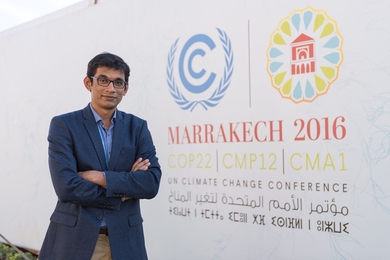
Tata Center graduate fellow Arun Singh shares energy-economic modeling research at UN Climate Change Conference.
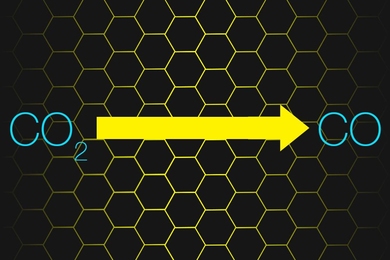
New catalyst provides design principles for producing fuels from carbon dioxide emissions.

Richard Alley delivers 2016 Carlson Lecture on the physics of glaciers and how ice sheets capture a history of the world’s climate.
Emissions trading would be more effective than mileage standards, new study shows.

Solve and HUBweek bring together cutting-edge thinkers and doers, from Greater Boston and beyond.