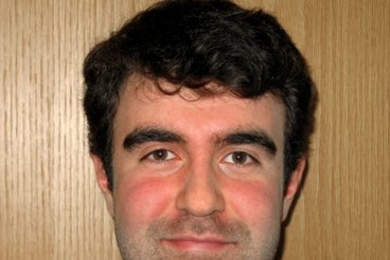
John Mikhael ’13 wins Rhodes Scholarship
Recent MIT graduate in mathematics, who has also conducted research in neuroscience, will study at Oxford next year.

Chemistry Education Office named for Robert J. Silbey
Speakers at the office’s ribbon-cutting ceremony praised the late chemistry professor for his contributions to science education.
Resistance is futile
Chemists develop new way to kill cancer cells resistant to the chemotherapy drug cisplatin.
Seeing through silicon
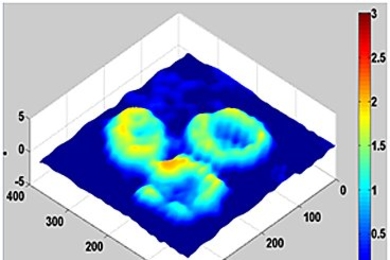
New microscopy technique allows scientists to visualize cells through the walls of silicon microfluidic devices.
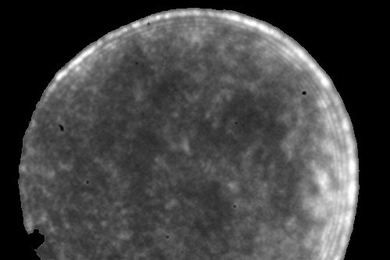
Nanosensors could aid drug manufacturing
Chemical engineers find that arrays of carbon nanotubes can detect flaws in drugs and help improve production.
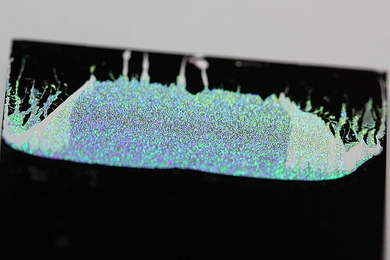
A layer of tiny grains can slow sound waves
Layer of microscopic spheres offers new approach to controlling acoustic waves.
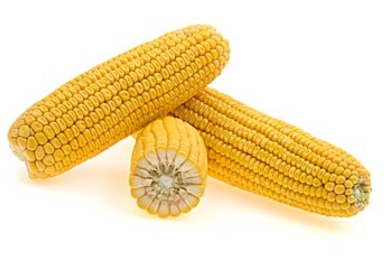
Making alternative fuels cheaper
Chemical engineers’ new synthesis could make biofuel more appealing for mass production.
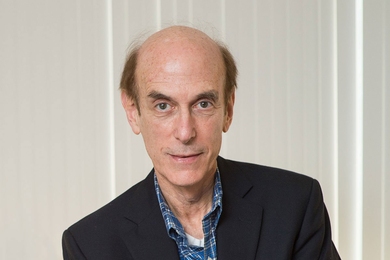
Lippard named Priestley Medal recipient
MIT professor Stephen J. Lippard honored for pioneering research, mentorship
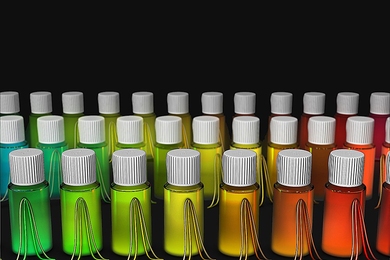
Fine-tuning emissions from quantum dots
New MIT analysis should enable development of improved color displays and biomedical monitoring systems.
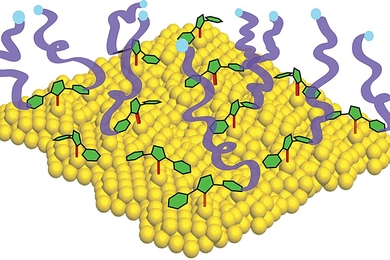
A new kind of chemical ‘glue’
Method for attaching molecules to metal surfaces could find applications in medicine, electronics and other fields.
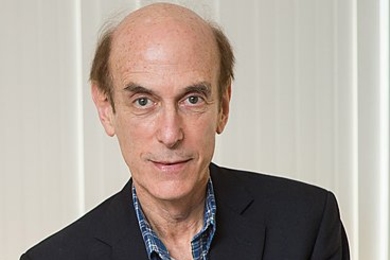
Stephen Lippard wins faculty’s Killian Award
Chemist recognized for groundbreaking studies of inorganic molecules.
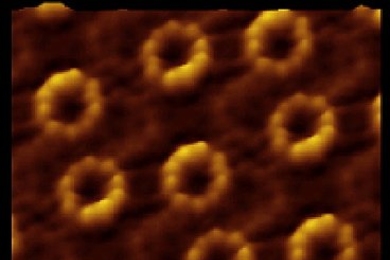
Secret of efficient photosynthesis is decoded
MIT researchers find that the key to purple bacteria’s light-harvesting prowess lies in highly symmetrical molecules.
Four MIT professors elected to the National Academy of Sciences
Field, Kac, Vogan and Walker bring to 76 the number of Institute faculty who are NAS members.