
Multi-university effort will advance materials, define the future of mobility
With support from the Toyota Research Institute, MIT faculty will focus on next-generation energy storage.
With support from the Toyota Research Institute, MIT faculty will focus on next-generation energy storage.
Researchers program RNA nanoparticles that could protect against the virus.

Self-assembly technique could lead to long-awaited, simple method for making smaller microchip patterns.
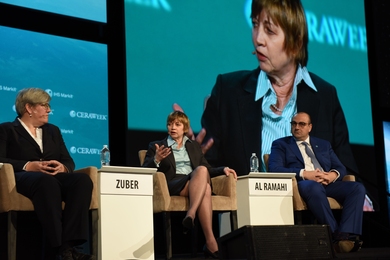
MIT energy and climate thought leaders play integral part in discussions at CERAWeek 2017.

A trailblazing industrial and environmental chemist, Ellen Swallow Richards was MIT’s first female graduate and first female instructor.
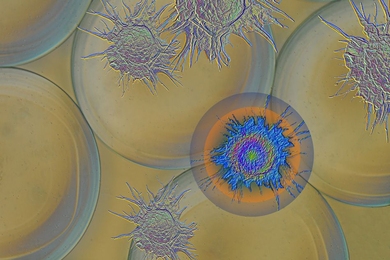
Selectively blocking immune cells can prevent formation of scar tissue around medical devices.
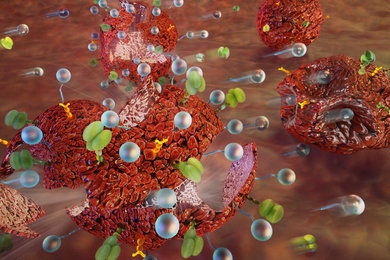
New strategy could improve performance of some immune-based drugs.
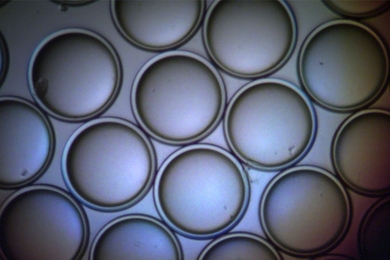
With chemistry and light, researchers can tune the focus of tiny beads of liquid.
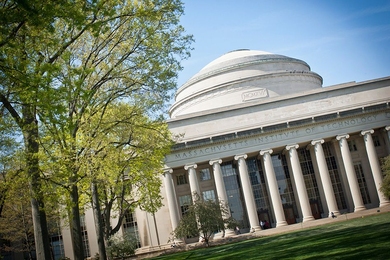
MIT ranked within the top 5 for 19 of 46 subject areas.
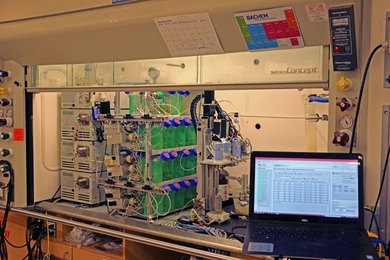
Automated manufacturing could make it easier to develop and test new peptide drugs.
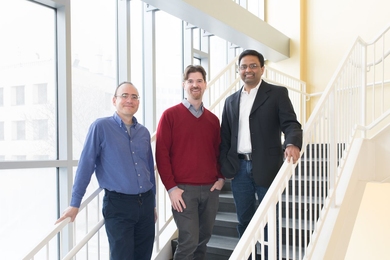
Bill and Melinda Gates Foundation awards MIT, University College London, and University of Kansas $17.6M for development and production of low-cost vaccines.
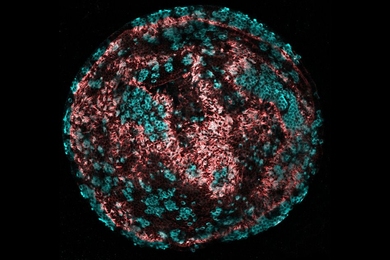
Researchers discover a drug combination that can regenerate hair cells in the inner ear.
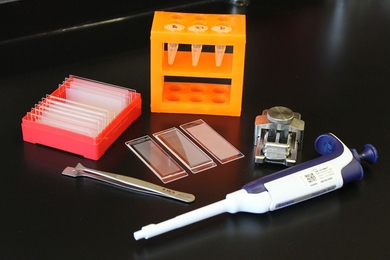
Portable tool could help scientists learn more about cells’ roles in many diseases.

New members have made advances in artificial skin, wireless communications, nanotechnology, hydrology, and cancer treatment.