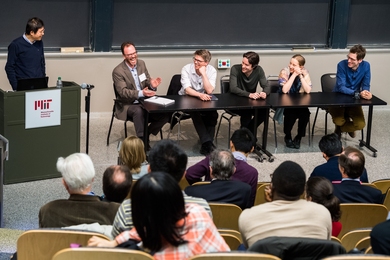
Center for Theoretical Physics celebrates 50 years
Symposium explores how novel ideas and experiments are advancing many areas of theoretical physics in newly interconnected ways.
Symposium explores how novel ideas and experiments are advancing many areas of theoretical physics in newly interconnected ways.
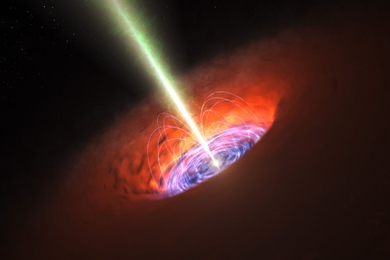
Signals suggest black hole emits a jet of energy proportional to the stellar material it gobbles up.
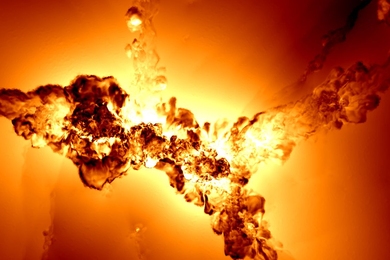
MIT's Mark Vogelsberger and an international astrophysics team have created a new model pointing to black holes’ role in galaxy formation.
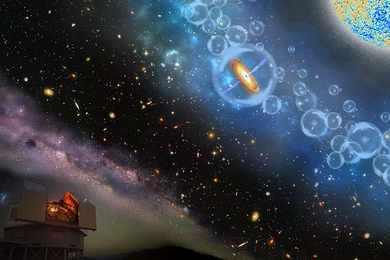
Findings present a puzzle as to how such a huge object could have grown so quickly.
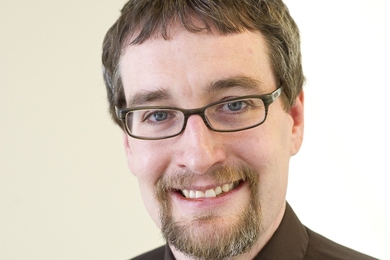
Professor of physics describes our understanding of the expansion of the universe through “standard sirens.”
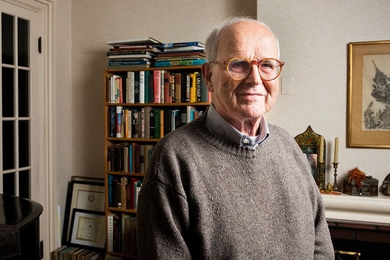
LIGO inventor and professor emeritus of physics recognized “for decisive contributions to the LIGO detector and the observation of gravitational waves.”
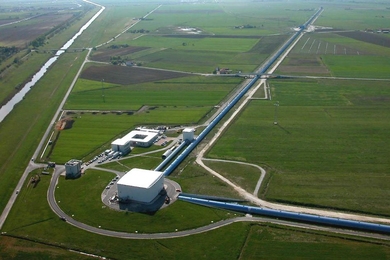
Finding represents first joint detection of gravitational waves with both detectors.
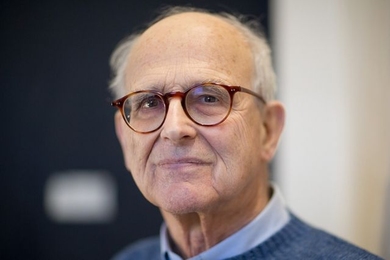
Prestigious Spanish award shared with Caltech's Kip Thorne and Barry Barish and the LIGO Scientific Collaboration for work in detecting gravitational waves.
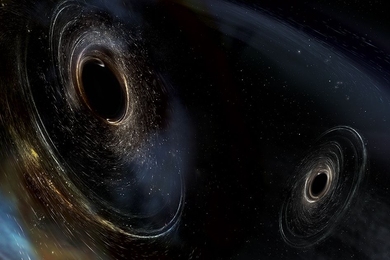
Nearly 3 billion light years from Earth, the black holes are the farthest ever detected.
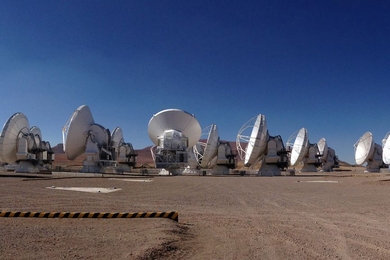
Through an international effort led by MIT Haystack Observatory, the ALMA array in Chile has joined a global network of radio telescopes.
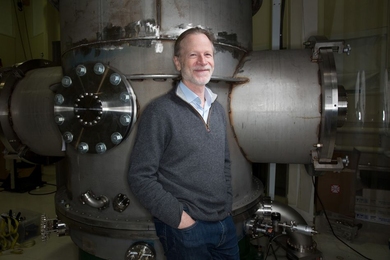
Senior MIT research scientist to speak for international collaboration for gravitational wave detection research.
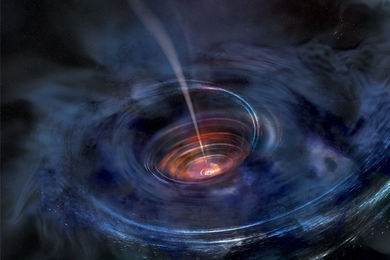
Data suggest black holes swallow stellar debris in bursts.
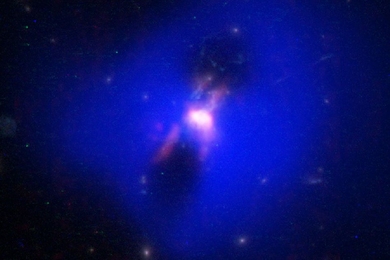
Astronomers observe black hole producing cold, star-making fuel from hot plasma jets and bubbles.
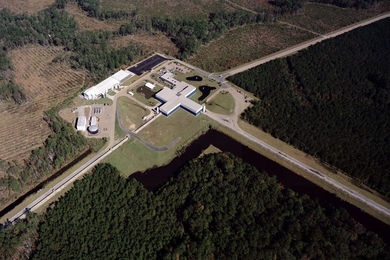
Upgrades make detectors more sensitive to gravitational waves.
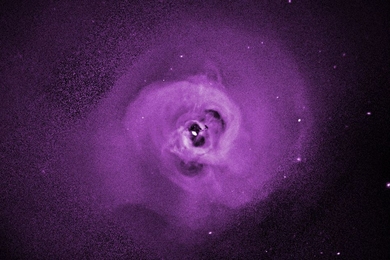
Scientists find gas at center of Perseus cluster travels much more slowly than expected.