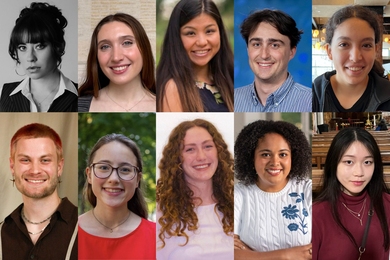
Eleven from MIT accept 2026 Fulbright awards
This year, over half of MIT’s Fulbright applicants won awards. The current students and alumni will embark on research projects and teaching abroad in 2026-27.
This year, over half of MIT’s Fulbright applicants won awards. The current students and alumni will embark on research projects and teaching abroad in 2026-27.
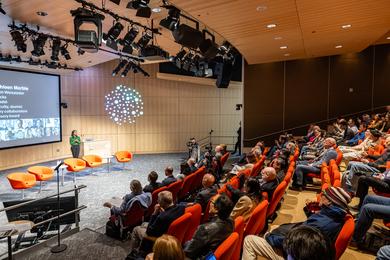
The MIT Marble Center for Cancer Nanomedicine looks back at 10 years of turning big ideas about nanotechnology into transformative advances for cancer patients.
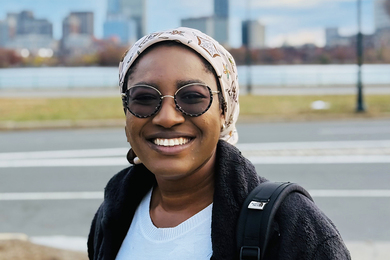
Akorfa Dagadu, an MIT senior in chemical engineering, learns the importance of community-engaged research and innovation through the PKG Center for Social Impact.
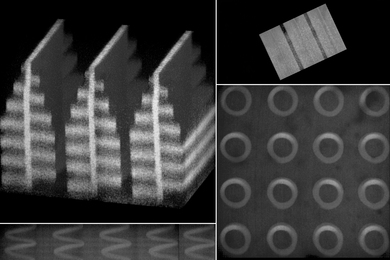
MIT researchers created tiny 3D photonic devices with features small enough to channel visible light.
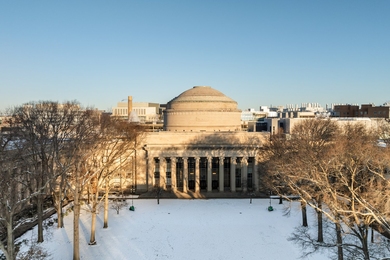
Faculty members and researchers were honored in recognition of their scholarship, service, and overall excellence.
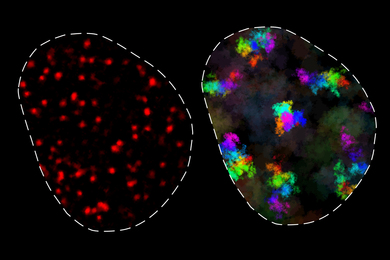
By monitoring these chromosomal structures over many timescales, MIT researchers found that chromatin helps bring genes closer to their regulatory elements.
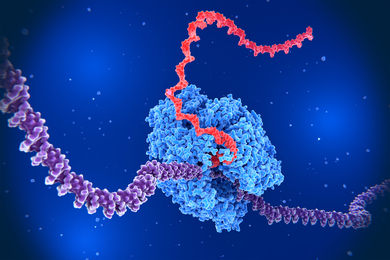
When genes are transcribed, they suppress or activate their neighbors, coupling expression between the two genes.

A new study reveals cellular pathways that appear to underlie some differences in physical fitness.
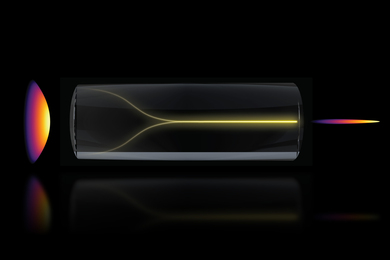
MIT researchers leveraged a surprise discovery to devise a faster and more precise biomedical imaging technique.
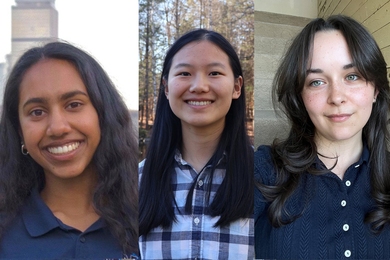
Rising seniors Deeksha Kumaresh, Anna Liu, and Charlotte Myers are honored for their academic achievements.
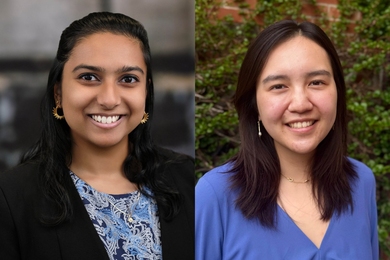
Mitali Chowdhury ’24 and Christina Kim ’24 will pursue graduate studies at Cambridge University in the UK.
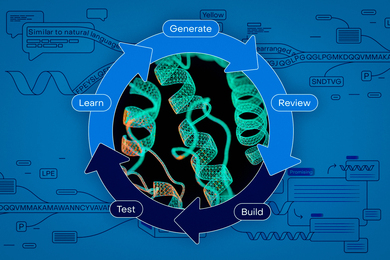
Founded by Tristan Bepler PhD ’20 and former MIT professor Tim Lu PhD ’07, OpenProtein.AI offers researchers open-source models and other tools for protein engineering.

A new study suggests that the chemical NDMA is much more likely to cause cancerous mutations after exposure early in life.
Graduate engineering program is No. 1 in the nation; MIT Sloan is No. 6.

Computational biologist Sergei Kotelnikov is working to develop new methods in protein modeling as part of the School of Science Dean’s Postdoctoral Fellowship.