
ChoKyun Rha, professor post-tenure of biomaterials sciences and engineering, dies at 87
Mentor to many worked to develop natural medicinal and industrial products.
Mentor to many worked to develop natural medicinal and industrial products.
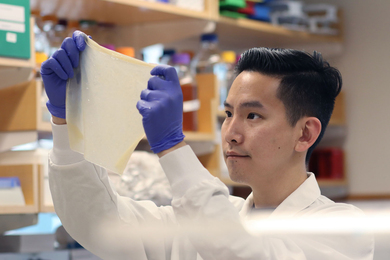
PhD student and 2017 J-WAFS graduate fellow Tzu-Chieh Tang designs living materials to solve environmental challenges, with an emphasis on safety and scalability.
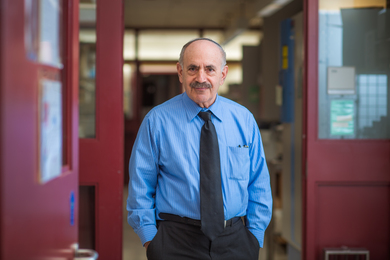
The award recognizes Weinberg’s pioneering achievements in the field of cancer biology.
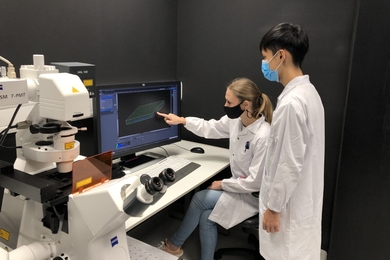
Scalable CRISPRi system from SMART allows scientists to identify and tackle causes of E. faecalis-related diseases and drug resistance.

The patch, which can be folded around surgical tools, may someday be used in robotic surgery to repair tissues and organs.

MIT researchers grow structures made of wood-like plant cells in a lab, hinting at the possibility of more efficient biomaterials production.
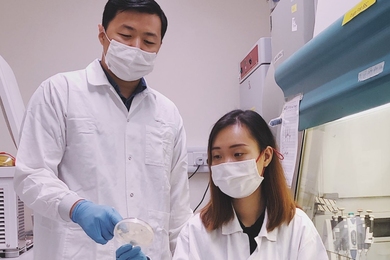
The discovery can help to cure bacterial infections without inducing resistance or causing harm to good bacteria.

Will focus on responding to disasters and humanitarian crises, defending against biothreats, addressing climate change, and improving human health and performance.
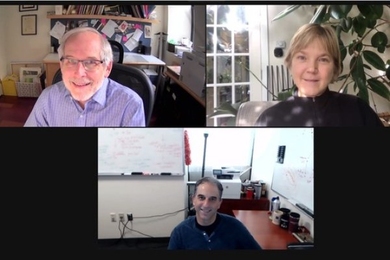
M-CELS are purpose-driven living systems with multiple interacting living components.
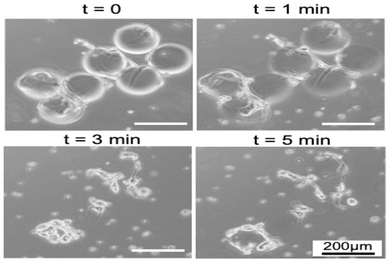
Gelatin-based microcarriers offer higher yield and scalability compared to existing commercial microcarriers.
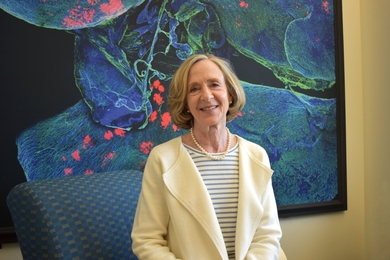
Author Susan Hockfield, MIT president emerita and professor of neuroscience, receives 2020 Science Communication Award.
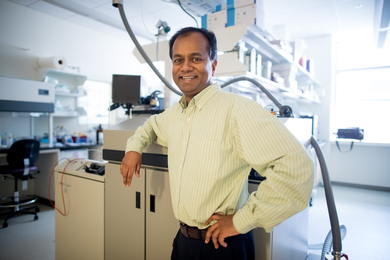
Biological engineer discusses condensing the time taken to develop therapeutics down from many years to a matter of months.
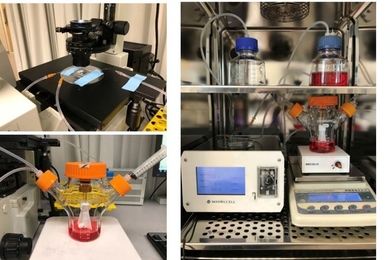
New technology cuts cell culture time by half and uses more targeted cell sorting and purification methods.
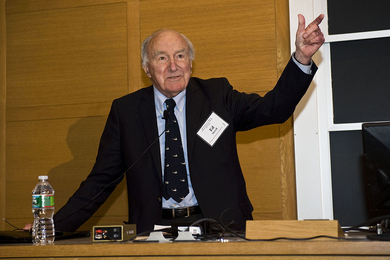
Biomaterials pioneer considered “the premier biomedical engineer of the 20th century.”
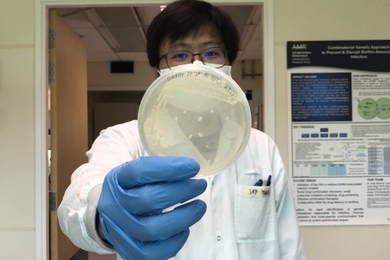
SMART researchers find exposing bacteria to hydrogen sulfide can increase antimicrobial sensitivity in bacteria that do not produce H2S.