J-PAL North America launches Initiative for Effective US Crime Policy
The IECP will generate rigorous evidence for fair and effective public safety solutions.
An analysis of social media in 157 countries finds hotter weather is associated with more negative sentiments.
A new computational model makes sense of the cognitive processes humans use to evaluate punishment.
Study shows humans flexibly deploy different reasoning strategies to tackle challenging mental tasks — offering insights for building machines that think more like us.
Forget optimists vs. Luddites. Most people evaluate AI based on its perceived capability and their need for personalization.
Sendhil Mullainathan brings a lifetime of unique perspectives to research in behavioral economics and machine learning.
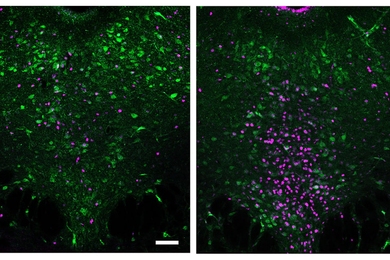
Study shows how a dopamine circuit enables mice to extinguish fear after a peril has passed, opening new avenues for understanding and potentially treating fear-related disorders.
A study on ride-sharing opens a window into consumer behavior, measuring the benefits for businesses.
Upon infection, the C. elegans worm reshuffles the roles of brain cells and flips the functions of some of the chemicals it uses to regulate behavior.
MIT Sloan’s Christopher Palmer has produced new insights about household finance, thanks to razor-sharp empirical studies.
Experiments find debate training boosts careers by enhancing assertiveness and communications techniques.
Philosopher Kevin Dorst’s work examines how we apply rational thought to everyday life.
New research adds evidence that learning a successful strategy for approaching a task doesn’t prevent further exploration, even if doing so reduces performance.
An MIT affiliate for some 60 years, Schneider was an authority on the relationships between brain structure and behavior.
By studying the roundworm C. elegans, neuroscientist Steven Flavell explores how neural circuits give rise to behavior.