Improving understanding with language
MIT senior Olivia Honeycutt investigates how the ways we communicate can shape our views of the world.
Philosopher Sam Berstler explains why we have social norms that let people engage in open deception.
MIT scientists create a detailed map of exactly what happens in the brains of C. elegans worms when they “follow their nose” to savor attractive odors or avoid unappealing ones.
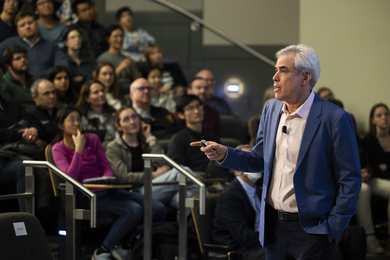
In Compton Lecture at MIT, social psychologist Jonathan Haidt warns of dramatic global decay in cognition, attention spans, and civic life, and urges curbs to tech use.
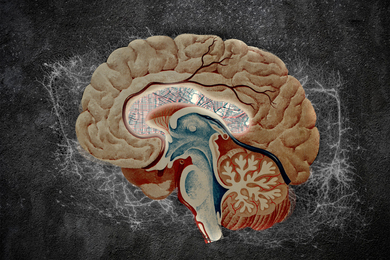
New “biomimetic” model of brain circuits and function at multiple scales produced naturalistic dynamics and learning, and even identified curious behavior by some neurons.
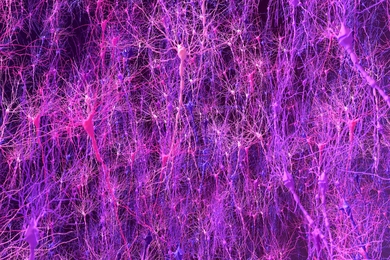
MIT researchers tested their theory of spatial computing, which holds that the brain recruits and controls ad hoc groups of neurons for cognitive tasks by applying brain waves to patches of the cortex.
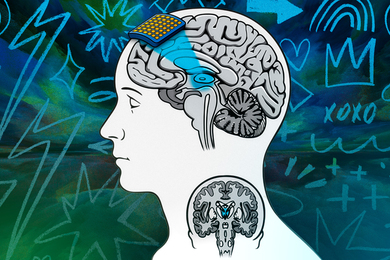
Researchers propose a roadmap for using transcranial focused ultrasound, a noninvasive way to stimulate the brain and see how it functions.
Research shows direct flights and links to key airports help multinational firms expand globally and decide where to invest.
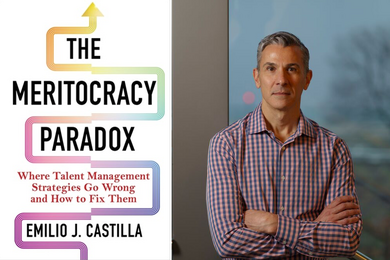
Professor Emilio Castilla explains how bias can creep into employers’ talent management processes — and what leaders can do to make their organizations fairer and more meritocratic.
Research illustrates how areas within the brain’s executive control center tailor messages in specific circuits with other brain regions to influence them with information about behavior and feelings.
MIT researchers discover how an immune system molecule triggers neurons to shut down social behavior in mice modeling infection.
Seven speakers from around the country convened at MIT to describe some of the latest research on the neural mechanisms that we need to survive.
An international collaboration of neuroscientists, including MIT Professor Ila Fiete, developed a brain-wide map of decision-making at cellular resolution in mice.
The IECP will generate rigorous evidence for fair and effective public safety solutions.
An analysis of social media in 157 countries finds hotter weather is associated with more negative sentiments.