Using synthetic biology and AI to address global antimicrobial resistance threat
Driven by overuse and misuse of antibiotics, drug-resistant infections are on the rise, while development of new antibacterial tools has slowed.
Professor James Collins discusses how collaboration has been central to his research into combining computational predictions with new experimental platforms.
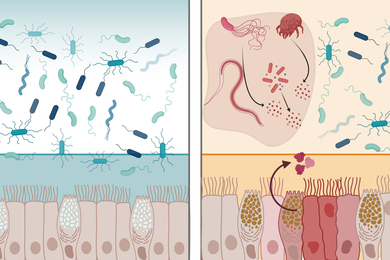
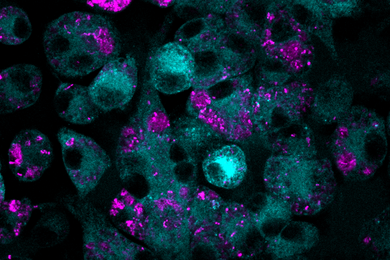
The protein, known as intelectin-2, also helps to strengthen the mucus barrier lining the digestive tract.
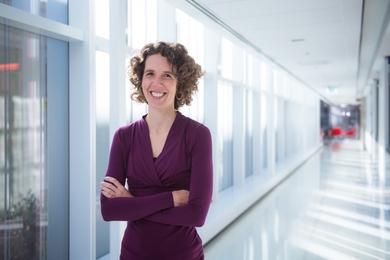
McRose, an environmental microbiologist, is recognized for researching the ecological roles of antibiotics in shaping ecosystems, agriculture, and health.
MIT CSAIL and McMaster researchers used a generative AI model to reveal how a narrow-spectrum antibiotic attacks disease-causing bacteria, speeding up a process that normally takes years.
The team used two different AI approaches to design novel antibiotics, including one that showed promise against MRSA.
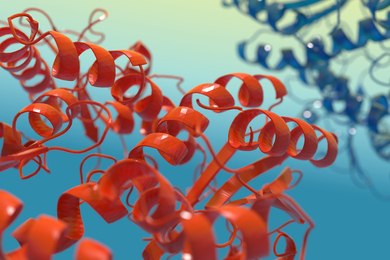
Researchers created a water-soluble version of an important bacterial enzyme, which can now be used in drug screens to identify new antibiotics.
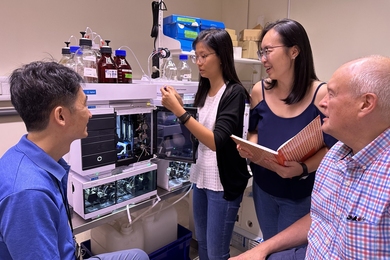
SMART researchers find a cellular process called transfer ribonucleic acid (tRNA) modification influences the malaria parasite’s ability to develop resistance.
Most antibiotics target metabolically active bacteria, but with artificial intelligence, researchers can efficiently screen compounds that are lethal to dormant microbes.
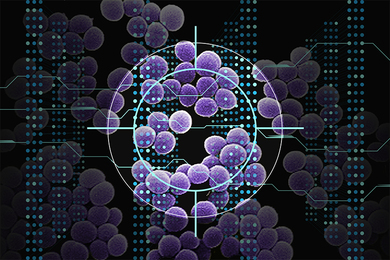
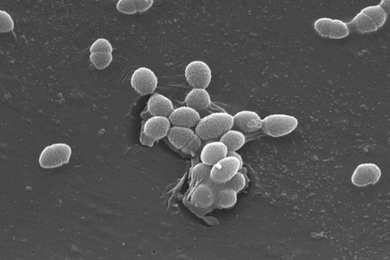
These compounds can kill methicillin-resistant Staphylococcus aureus (MRSA), a bacterium that causes deadly infections.
SMART researchers find the enzyme RlmN, which directly senses chemical and environmental stresses, can be targeted in drug development.
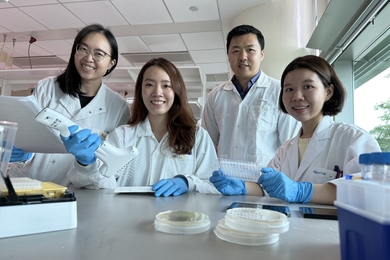
SMART researchers combine rifaximin and clarithromycin to effectively restore the latter drug's efficacy.
The machine-learning algorithm identified a compound that kills Acinetobacter baumannii, a bacterium that lurks in many hospital settings.
Developed at SMART, the therapy stimulates the host immune system to more effectively clear bacterial infections and accelerate infected wound healing.
Beloved professor and “titan of chemical biology” spent 15 years on the MIT faculty, leading the Department of Chemistry from 1982 to 1987.