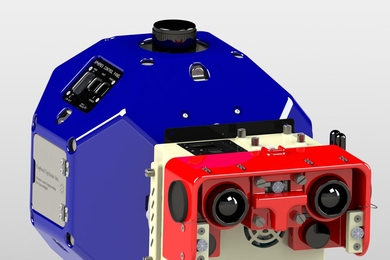
Research update: SPHERES to get powerful magnets and goggles
New wireless power and camera setups will expand the mini-satellites’ vision and navigation capabilities.
New wireless power and camera setups will expand the mini-satellites’ vision and navigation capabilities.

A new programming language for image-processing algorithms yields code that’s much shorter and clearer — but also faster.
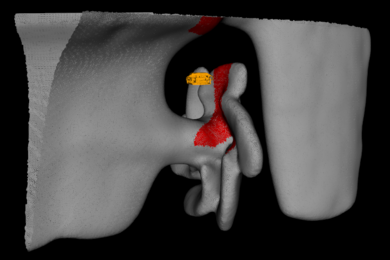
Algorithms enable robot to navigate and view propellers and other complex structures.
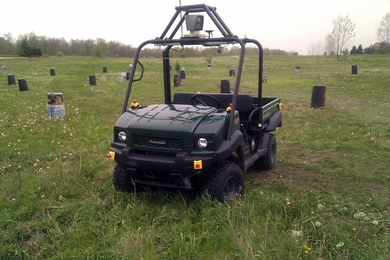
Semiautonomous system takes the wheel to keep drivers safe.
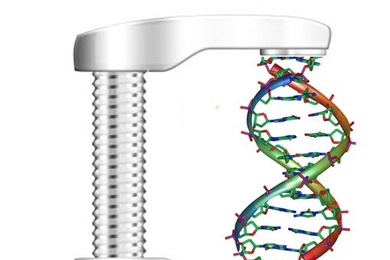
Biologists’ capacity for generating genomic data is increasing more rapidly than computing power. A new algorithm will help them keep up.

A new algorithm lets networks of Wi-Fi-connected cars, whose layout is constantly changing, share a few expensive links to the Internet.

New algorithm allows robots and humans to work side by side.
New approach uses mathematics to reach a compromise between accuracy, speed.

Professor honored for advances in distributed systems that enable dependable Internet and wireless network applications.
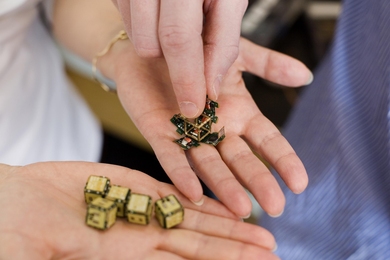
New algorithms could enable heaps of ‘smart sand’ that can assume any shape, allowing spontaneous formation of new tools or duplication of broken mechanical parts.
Third annual Zero Robotics competition pits robots against each other on the International Space Station.
A new technique for finding relationships between variables in large datasets makes no prior assumptions about what those relationships might be.
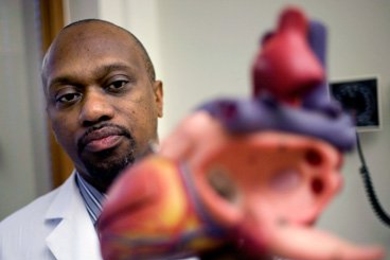
A computational biologist and physician, Collin Stultz takes a unique approach to studying diseases that could lead to new treatments.

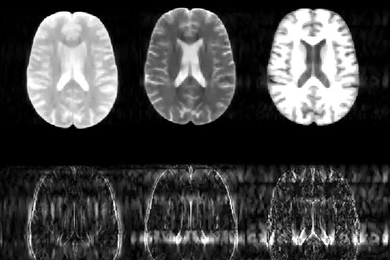
Faster scans could reduce the time patients spend in the machine from 45 to 15 minutes.