
CEE students model the world and invent the future
Computational thinking and problem solving form the basis for new educational initiatives
Computational thinking and problem solving form the basis for new educational initiatives
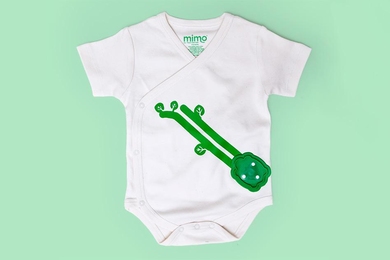
With a sensor-based onesie that tracks a baby’s health, MIT spinout Rest Devices is bringing innovation to baby monitoring.
A new system combines simple control programs to enable fleets of robots — or other “multiagent systems” — to collaborate in unprecedented ways.
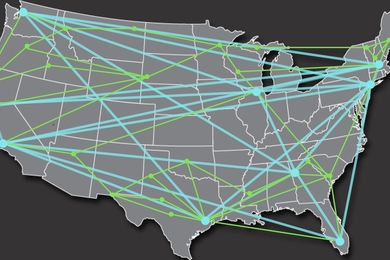
Research could boost the efficiency even of huge networks like the Internet.

Technique advances understanding of a basic concept in graph theory, paralleling advances in edge connectivity.
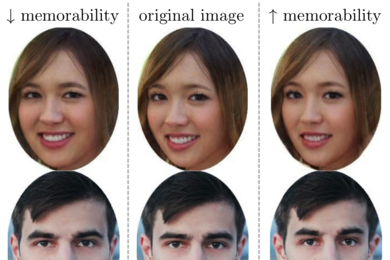
New algorithm uses subtle changes to make a face more memorable without changing a person’s overall appearance.

New algorithm can separate signals into their individual frequencies using a minimal number of samples.

If integrated into adaptive cruise-control systems, a new algorithm could mitigate the type of freeway backup that seems to occur for no reason.

A new model of wireless networks that better represents the real world could lead to more robust communications protocols.

New algorithm quickly identifies the most dangerous risks in a power grid amid millions or billions of possible failures.

The most efficient car-sharing, researchers find, also includes shuttle services.

With a recently released programming framework, researchers show that a new machine-learning algorithm outperforms its predecessors.

A combination of crowdsourcing and computer vision could identify individuals within endangered populations.
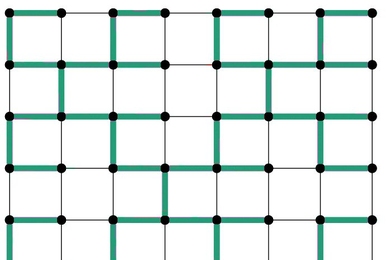
A new technique for solving ‘graph Laplacians’ is drastically simpler than its predecessors, with implications for a huge range of practical problems.
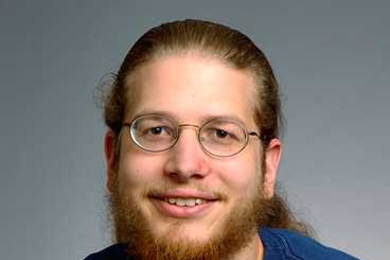
Professor Erik Demaine was cited for his contributions to computational geometry and data structures.