
Faster optimization
New general-purpose optimization algorithm promises order-of-magnitude speedups on some problems.
New general-purpose optimization algorithm promises order-of-magnitude speedups on some problems.

Giving machine-learning systems “partial credit” during training improves image classification.
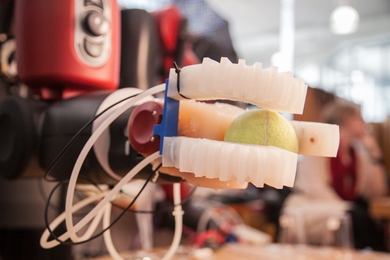
Team from Computer Science and Artificial Intelligence Lab develops silicone rubber gripper and advanced object-identification algorithms.
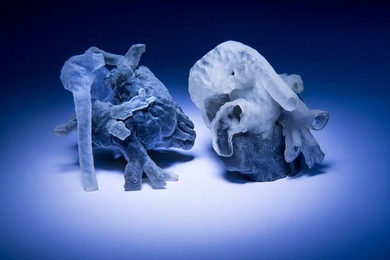
System can convert MRI scans into 3D-printed, physical models in a few hours.

Startup’s platform analyzes data from multiple sources to better predict buying preferences.

System learns to distinguish words’ phonetic components, without human annotation of training data.

More efficient memory-management scheme could help enable chips with thousands of cores.

A pair of Class of 2010 roommates, entrepreneurial buddies while on campus, recently teamed up to launch a wine club based on big data.

Autonomous vehicles share sidewalk space with pedestrians in six-day trial in Singaporean public garden.
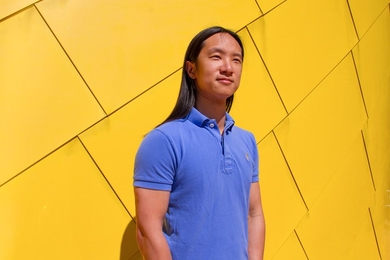
PhD student Justin Chen magnifies minuscule vibrations in structures to detect damage.

Theoretical analysis could expand applications of accelerated searching in biology, other fields.
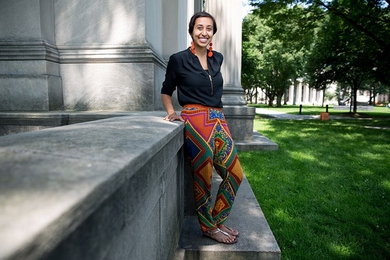
Mitali Thakor works with tech companies and police to understand what sex trafficking looks like today.
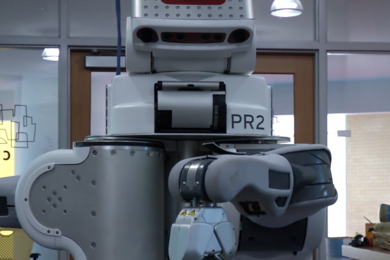
Bots from the MIT Computer Science and Artificial Intelligence Lab work together more effectively in the face of uncertainty.
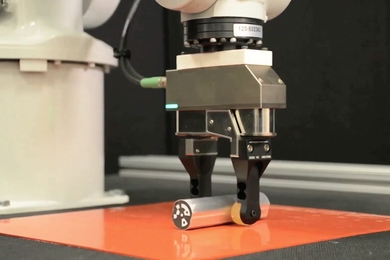
Engineers use the environment to give simple robotic grippers more dexterity.

MIT professors’ choice-modeling software predicts customer preferences for retailers.