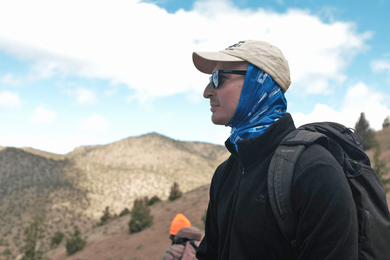
3 Questions: How AI is helping us monitor and support vulnerable ecosystems
MIT PhD student and CSAIL researcher Justin Kay describes his work combining AI and computer vision systems to monitor the ecosystems that support our planet.
MIT PhD student and CSAIL researcher Justin Kay describes his work combining AI and computer vision systems to monitor the ecosystems that support our planet.

The FSNet system, developed at MIT, could help power grid operators rapidly find feasible solutions for optimizing the flow of electricity.

How the MIT-IBM Watson AI Lab is shaping AI-sociotechnical systems for the future.

After being trained with this technique, vision-language models can better identify a unique item in a new scene.
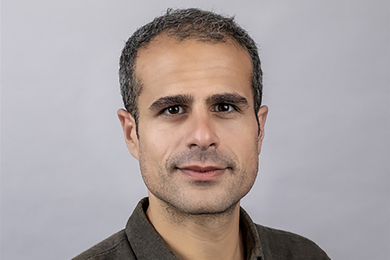
An algorithm can change the face of food assistance policy in the Global South, says MIT assistant professor and J-WAFS researcher Ali Aouad.
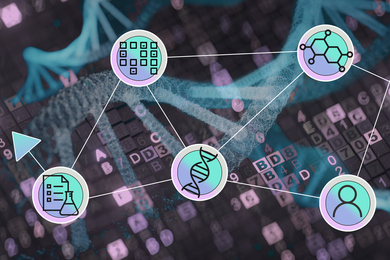
Co-founded by an MIT alumnus, Watershed Bio offers researchers who aren’t software engineers a way to run large-scale analyses to accelerate biology.
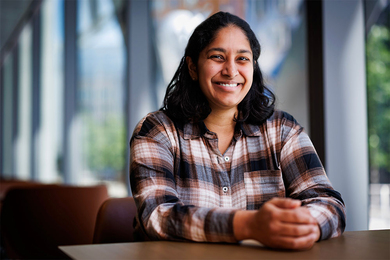
Assistant Professor Priya Donti’s research applies machine learning to optimize renewable energy.

MIT CSAIL and McMaster researchers used a generative AI model to reveal how a narrow-spectrum antibiotic attacks disease-causing bacteria, speeding up a process that normally takes years.
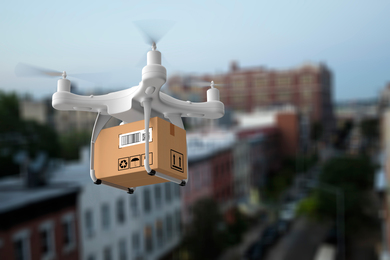
The approach could enable autonomous vehicles, commercial aircraft, or transportation networks that are more reliable in the face of real-world unpredictability.

Explosive growth of AI data centers is expected to increase greenhouse gas emissions. Researchers are now seeking solutions to reduce these environmental harms.

Department of Mathematics researchers David Roe and Andrew Sutherland seek to advance automated theorem proving; four additional MIT alumni also awarded.

MIT-IBM Watson AI Lab researchers have developed a universal guide for estimating how large language models will perform based on smaller models in the same family.

MIT CSAIL researchers developed a tool that can model the shape and movements of fetuses in 3D, potentially assisting doctors in finding abnormalities and making diagnoses.

System developed at MIT could provide realistic predictions for a wide variety of reactions, while maintaining real-world physical constraints.

Artificially created data offer benefits from cost savings to privacy preservation, but their limitations require careful planning and evaluation, Kalyan Veeramachaneni says.