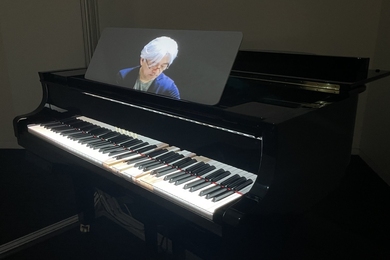
MIT researchers lay out design principles behind the TeleAbsence vision, how it could help people cope with loss and plan for how they might be remembered.
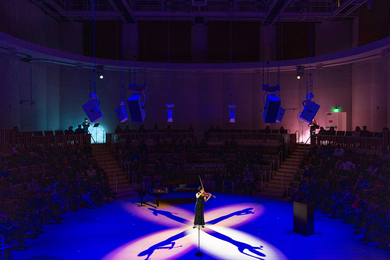
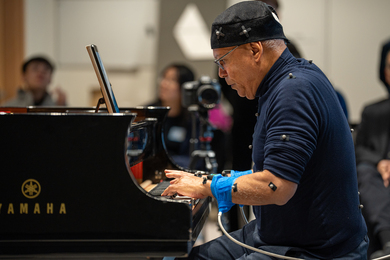
An exuberant performance included five premieres by MIT composers, a fitting tribute to open the new home of MIT Music and launch the MIT arts festival Artfinity.
A new method from the MIT-IBM Watson AI Lab helps large language models to steer their own responses toward safer, more ethical, value-aligned outputs.
New research finds liquid air energy storage could be the lowest-cost option for ensuring a continuous power supply on a future grid dominated by carbon-free but intermittent sources of electricity.
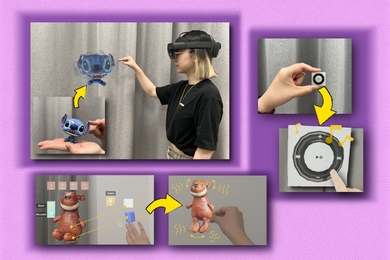
“InteRecon” enables users to capture items in a mobile app and reconstruct their interactive features in mixed reality. The tool could assist in education, medical environments, museums, and more.
Connected by the MIT Human Insight Collaborative, Lecturer Mi-Eun Kim and Research Scientist Praneeth Namburi want to develop an understanding of musical expression and skill development.
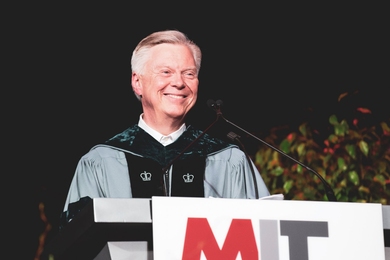
In his 17 years as dean, Schmittlein led the transformation of MIT Sloan into a management school uniquely positioned for the future and “the best version of its distinctive self.”
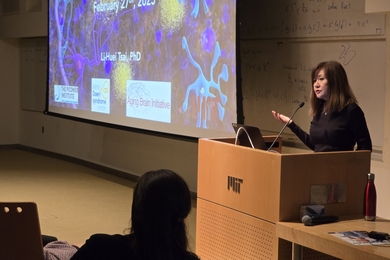
A decade of studies provide a growing evidence base that increasing the power of the brain’s gamma rhythms could help fight Alzheimer’s, and perhaps other neurological diseases.