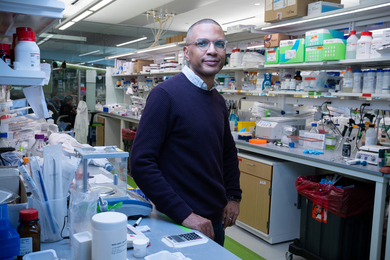
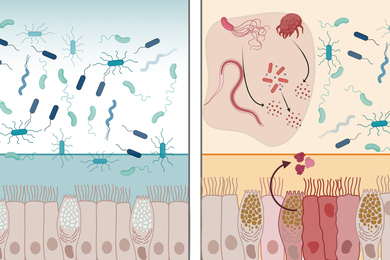
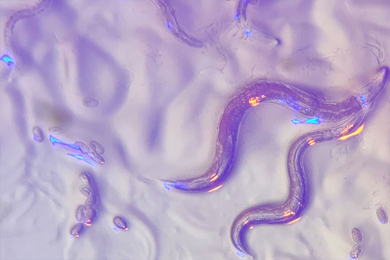
By analyzing how Myobacterium tuberculosis interacts with the immune system, the associate professor hopes to find new vaccine targets to help eliminate the disease.
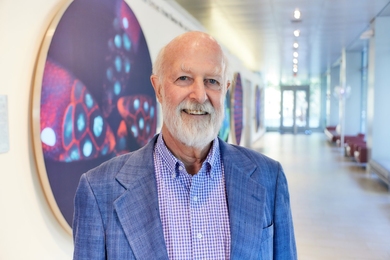
Professor, mentor, and leader at MIT for more than 50 years shaped fundamental understandings of cell adhesion, the extracellular matrix, and molecular mechanisms of metastasis.
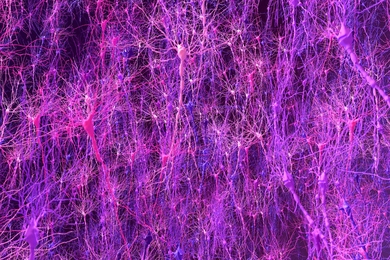
New “biomimetic” model of brain circuits and function at multiple scales produced naturalistic dynamics and learning, and even identified curious behavior by some neurons.
MIT researchers tested their theory of spatial computing, which holds that the brain recruits and controls ad hoc groups of neurons for cognitive tasks by applying brain waves to patches of the cortex.
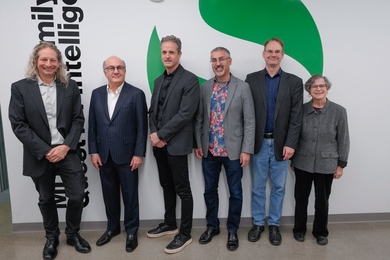
With support from the Siegel Family Endowment, the newly renamed MIT Siegel Family Quest for Intelligence investigates how brains produce intelligence and how it can be replicated to solve problems.
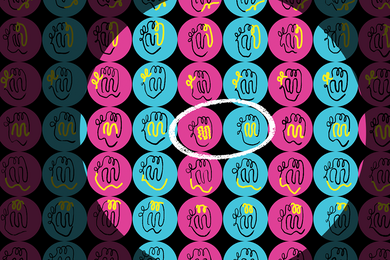
MIT-IBM Watson AI Lab researchers developed an expressive architecture that provides better state tracking and sequential reasoning in LLMs over long texts.