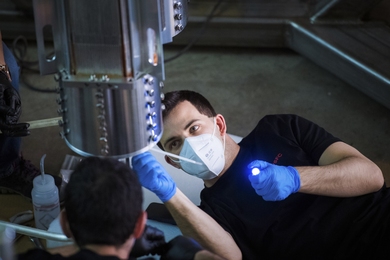
Vinny Fry: Wired for success
MIT engineer oversees design and testing of key magnet components for the Institute's SPARC fusion project.
MIT engineer oversees design and testing of key magnet components for the Institute's SPARC fusion project.
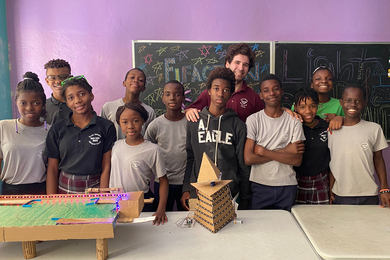
During six months at an orphanage in Haiti, senior Eli Brooks introduced children to engineering product design, and uncovered a passion for teaching and life.
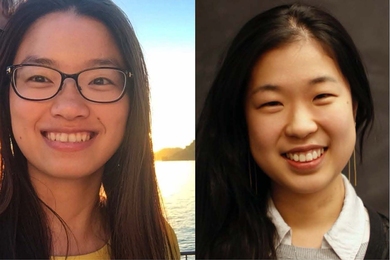
Instructor Yilin Wang and alumna Hong Wang PhD ’19 are honored by the Breakthrough Prize Foundation.
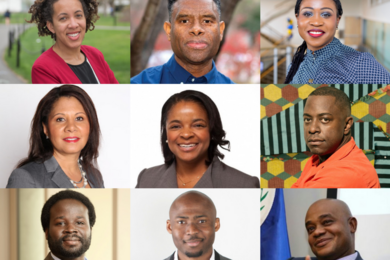
Record number of honorees will engage in the life of the Institute through teaching, research, and other interactions with the MIT community.
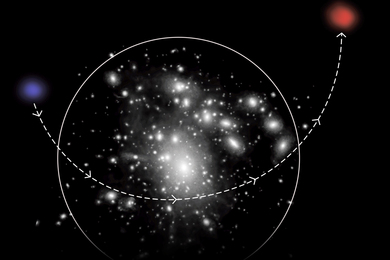
The results provide a blueprint for finding such systems in the universe’s quieter, emptier regions.
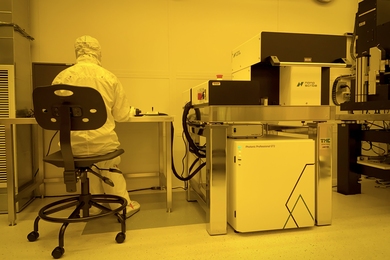
3D lithography tool will provide ultra-precise creation of complex 3D structures at the micro- and nanoscale.
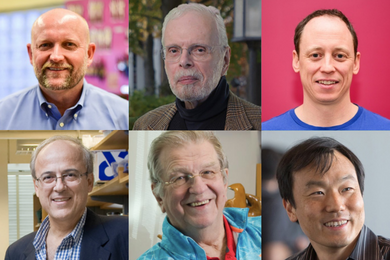
This year’s projects address mobile evaporative vegetable preservation, portable water filtration, and dairy waste reduction.
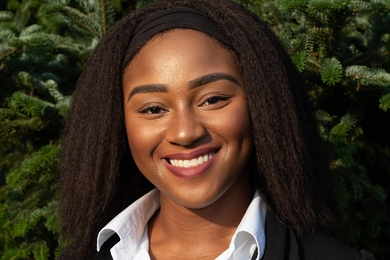
Obiageli Nwodoh ’21 repurposed her STEM skills to pave a pre-law path at MIT and pursue social justice.
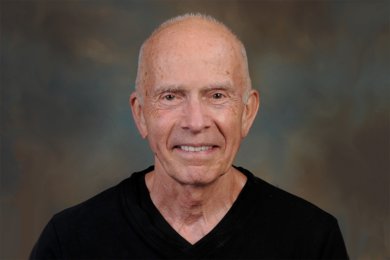
Schimmel Family Program for Life Sciences will benefit graduate students and research.
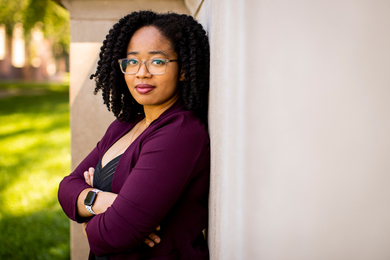
The PhD student uses machine learning as a tool for studying pain and consciousness — and as subject matter for her popular videos.
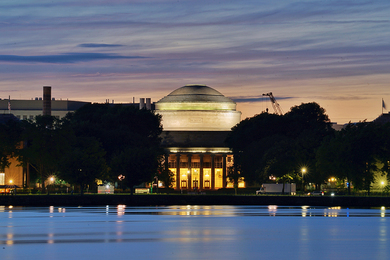
Postdoc Tianyi Han, a condensed-matter physicist and shutterbug, captures a tranquil river view in front of the Great Dome.
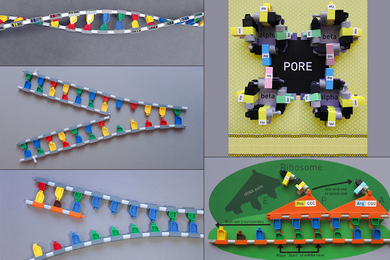
At the MIT Edgerton Center, educators are quietly transforming the way biology is taught in schools.
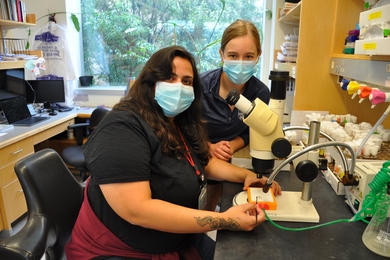
Through a summer research program at MIT, Patricia Pujols explored the neuromuscular junction, and a future in science.
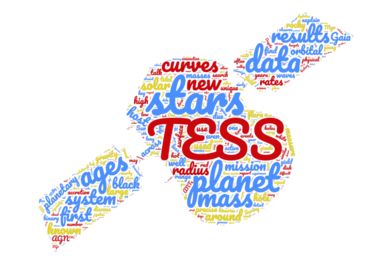
Not just an exoplanet-finder anymore, TESS yields diverse astrophysics results at second science conference.
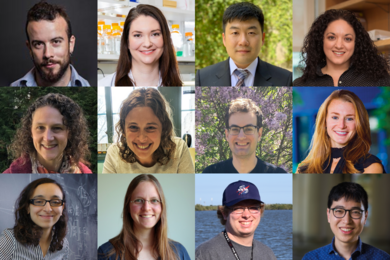
Twelve professors begin in the departments of Biology; Brain and Cognitive Sciences; Chemistry; Earth, Atmospheric and Planetary Sciences; Mathematics; and Physics.