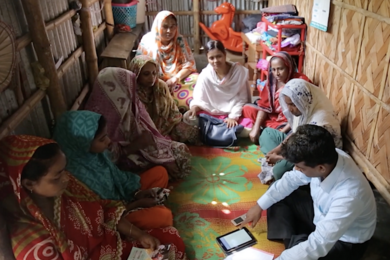
Empowering people to adapt on the frontlines of climate change
A new platform will unite climate models, impact predictions, random control trial evaluations, and humanitarian services to bring cutting-edge tools to Bangladeshi communities.
A new platform will unite climate models, impact predictions, random control trial evaluations, and humanitarian services to bring cutting-edge tools to Bangladeshi communities.
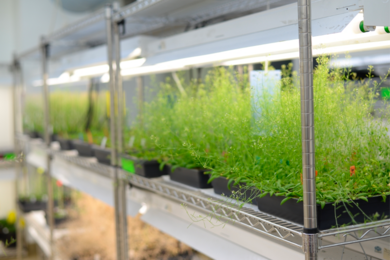
A Climate Grand Challenges flagship project aims to reduce agriculture-driven emissions while making food crop plants heartier and more nutritious.

Seven staff members are recognized for their dedication to the School of Science and to MIT.
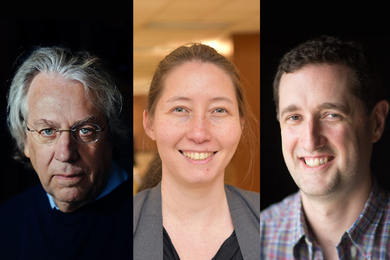
To better inform local policy in the face of changing weather extremes, MIT researchers seek to advance the modeling of long-term weather risks.

Fellowship funds graduate studies for outstanding immigrants and children of immigrants.
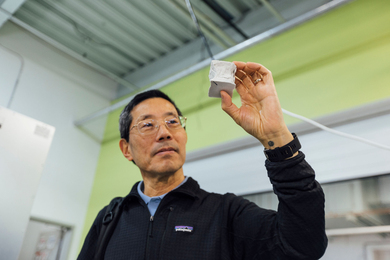
The Center for Electrification and Decarbonization of Industry unites MIT climate researchers to create scalable clean energy solutions under one roof.
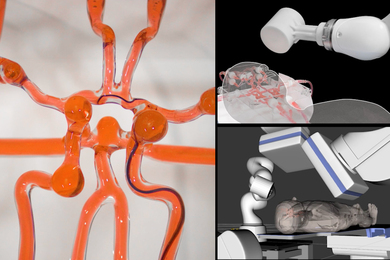
The system could provide teleoperated endovascular treatment to patients during the critical time window after a stroke begins.

To put global climate modeling at the fingertips of local decision-makers, some scientists think it’s time to rethink the system from scratch.
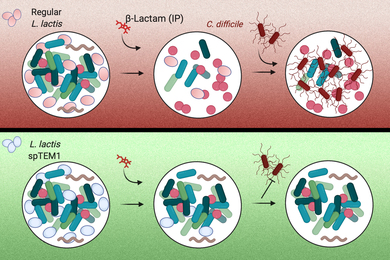
Microbes that safely break down antibiotics could prevent opportunistic infections and reduce antibiotic resistance.
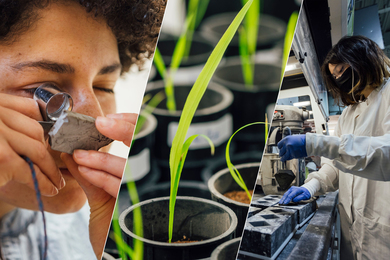
The portfolio of multiyear projects focuses on delivering breakthrough solutions.

After four decades at the Plasma Science and Fusion Center, Deputy Director Martin Greenwald embodies a brief history of fusion at MIT.

The fellowship supports research contributing to the field of planetary science and astronomy.
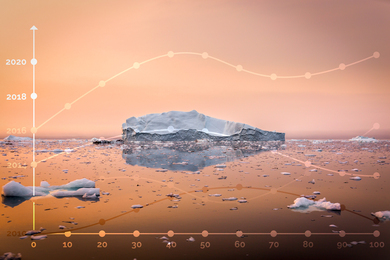
Faculty leaders highlight innovations that can close longstanding knowledge gaps and reimagine how the world responds to the climate crisis.
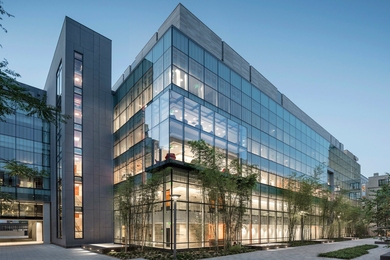
Su is the first MIT alumna to make a gift for a building that will bear her own name.
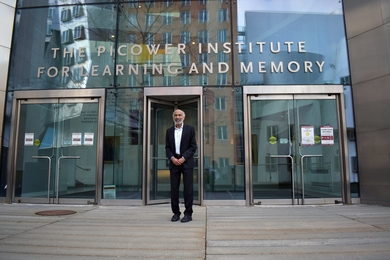
AIMBE's highest honor recognizes MIT professor's contributions to neural signal processing, anesthesiology advances.