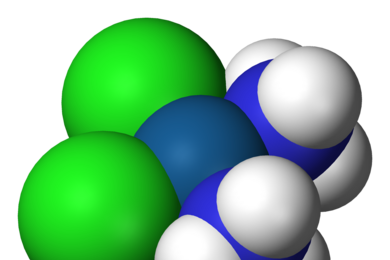
Delivering a potent cancer drug with nanoparticles can lessen side effects
The new nanoparticle, which delivers the drug in a form activated when it reaches its target, also treats tumors more effectively than the unadorned drug in mice.
The new nanoparticle, which delivers the drug in a form activated when it reaches its target, also treats tumors more effectively than the unadorned drug in mice.
On eve of the Institute's anniversary, MIT president talks with On Point's Tom Ashbrook

In white paper, MIT scientists discuss potential for revolutionary advances in biomedicine and other fields.

Biologist Jeroen Saeij shows why some strains of Toxoplasma are more dangerous than others.

Neuroscientist Emery Brown hopes to shed light on a longstanding medical mystery: how general anesthesia works.

Neuroscientists show that brain scans can predict whether children’s reading ability will improve.

New findings from MIT biologists could help vaccine designers elicit long-term immunity.

Mathematics professor Gilbert Strang looks back at OCW 10 years later.

NASA team suggests that massive projectiles added mass to Earth, Mars and the Moon during final phase of planet formation

Whitehead member, biology professor wins prize alongside Kyoto University professor.
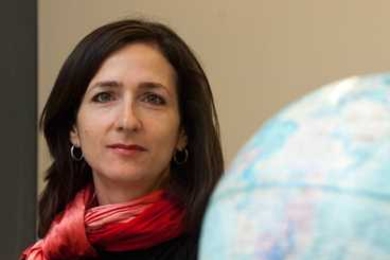
Now that an Earthlike planet has been discovered, the key to confirming that it can host life will be to study its atmosphere in detail
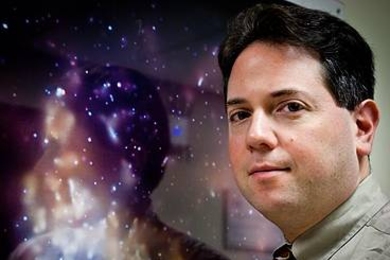
By studying how massive planets may have formed, MIT astrophysicist sets the stage for studying smaller, more Earthlike planets.
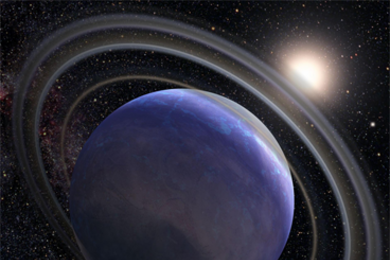
MIT researchers increase their odds of detecting an Earthlike planet by working on a combination of satellite missions.
