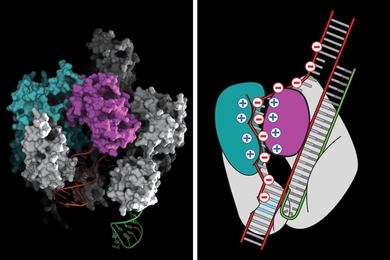
MIT, Broad scientists overcome key CRISPR-Cas9 genome editing hurdle
Team re-engineers system to dramatically cut down on editing errors; improvements advance future human applications.
Team re-engineers system to dramatically cut down on editing errors; improvements advance future human applications.

Chemistry major works to address social justice issues.
Professor of geophysics and co-director of the Lorenz Center at MIT honored with the 2016 American Mathematical Society Levi L. Conant Prize.
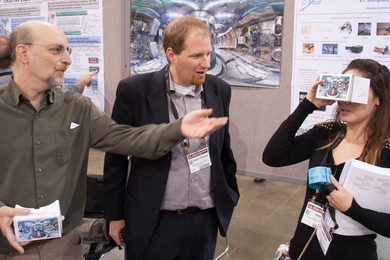
Members of MIT's Plasma Science and Fusion Center wow colleagues, students, and teachers with a 3-D tour of the Institute's nuclear fusion experiment.

![“I hope to embody the [Buddhist] values of compassion, mindfulness, and understanding in everything I do,” says Võ Tiến Phong, MIT’s newest Marshall Scholar.](/sites/default/files/styles/term_page__news_article/public/images/201511/MIT-Phong-Vo-01.jpg?itok=UYxewxs1)
MIT senior Võ Tiến Phong will study theoretical physics at Cambridge University.

New formula identifies limits to nanoscale heat transfer, may help optimize devices that convert heat to electricity.
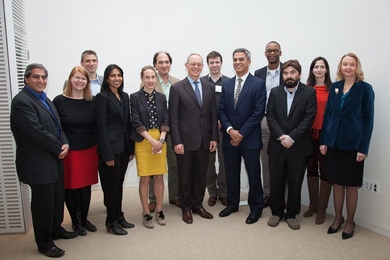
Four high-risk, high-reward projects launch with support from Professor Amar G. Bose Research Grants.
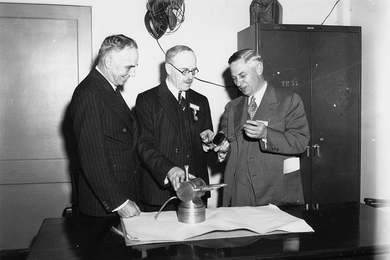
Seventy-five years ago, an international meeting of scientific minds changed forever how MIT and other research institutions develop new technologies.
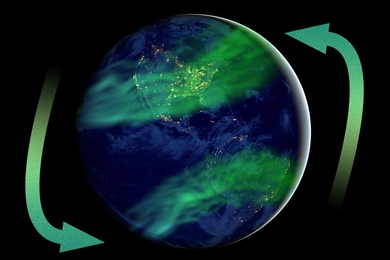
Researchers find geomagnetic field intensity is double the long-term historical average.
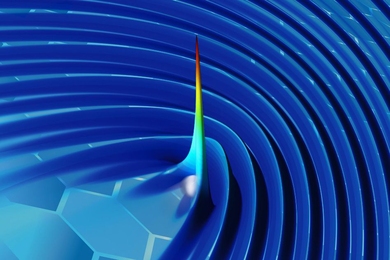
MIT researchers have found a phenomenon that might lead to more compact, tunable X-ray devices made of graphene.
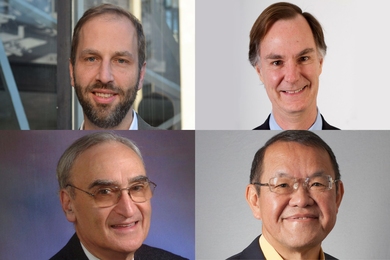
Berggren, Bertschinger, Fink, and Zue are among those recognized for efforts toward advancing science.
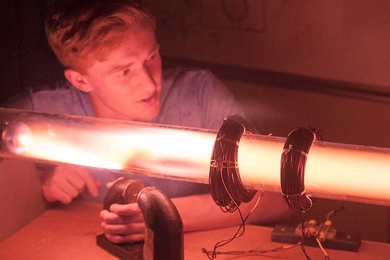
After starting his physics education with online courses, an MIT graduate student is now practicing cutting-edge research in nuclear fusion at MIT.
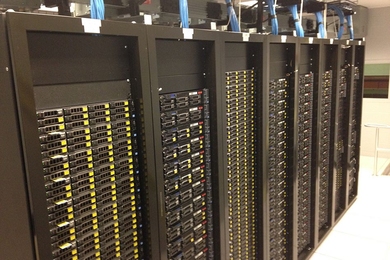
The MIT High Performance Research Computing Facility powers MIT research behind the scenes.