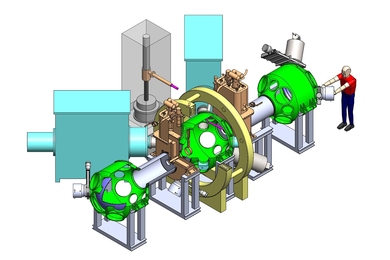
Plasma Science and Fusion Center receives $1.25M from ARPA-E to explore practical paths to fusion
MIT experience with heating plasmas will support novel and low-cost approaches to creating fusion energy.
MIT experience with heating plasmas will support novel and low-cost approaches to creating fusion energy.
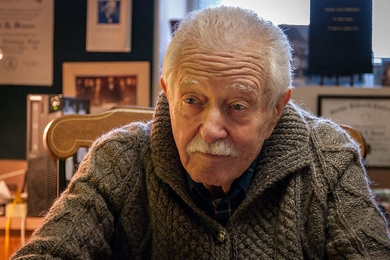
An eminent microbiologist, Demain conducted groundbreaking antibiotics research and mentored hundreds of young scientists.
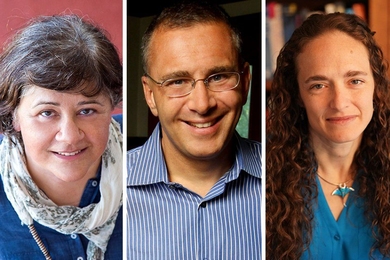
MIT professors Sabine Iatridou, Jonathan Gruber, and Rebecca Saxe have been selected to pursue their work “under the freest possible conditions.”
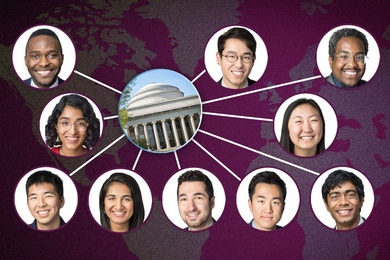
The $90,000 merit-based fellowship funds graduate studies for outstanding immigrants and children of immigrants.
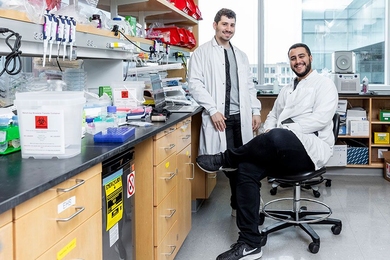
MIT scientists Omar Abudayyeh and Jonathan Gootenberg explain the current state of Covid-19 testing, and how a CRISPR tool may help solve the supply problem.
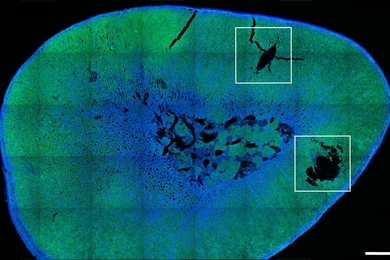
Using magnetic nanoparticles, scientists stimulate the adrenal gland in rodents to control release of hormones linked to stress.
Physicists’ discovery could lead to a new family of robust qubits for quantum computing.
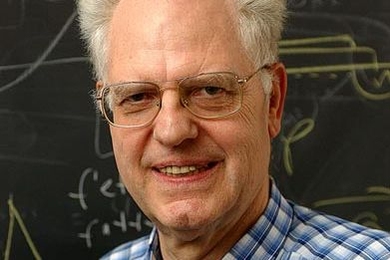
Longtime MIT physicist and mentor created instruments that advanced high-energy physics, including the Nobel Prize-winning discovery of the J particle.
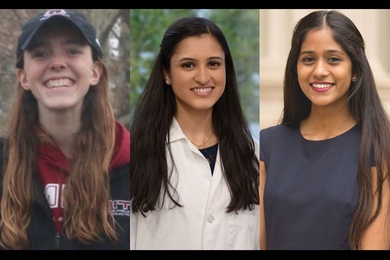
Three MIT undergraduates who use computer science to explore human biology and health honored for their academic achievements.
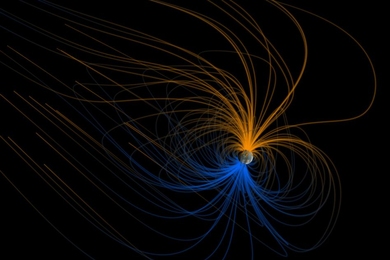
The existence of a magnetic field beyond 3.5 billion years ago is still up for debate.
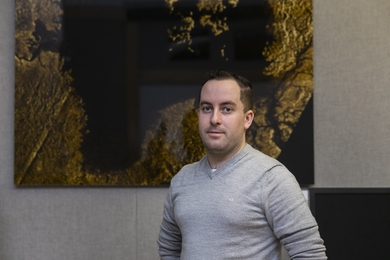
Samuel Birch, a new Heising-Simons Foundation 51 Pegasi b Fellow at MIT, will investigate the surfaces of outer solar system objects.
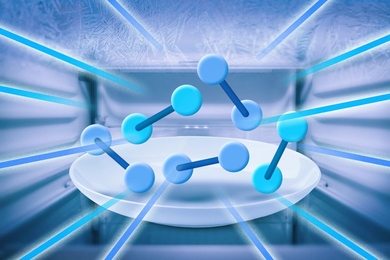
Technique may enable molecule-based quantum computing.
Nearly 300 students join an open course that applies data science, artificial intelligence, and mathematical modeling using the Julia language to study Covid-19.
Picower Institute researchers are advancing their work in many ways despite time away from the lab required to corral Covid-19.

Neurons that store abstract representations of past experiences are activated when a new, similar event takes place.