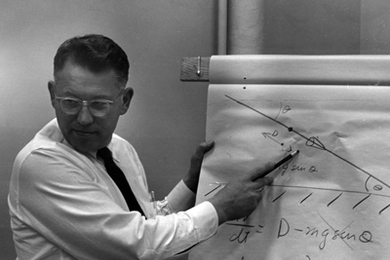
Scientist, engineer and presidential adviser H. Guyford Stever dies at 93
He headed two MIT departments, was president of Carnegie-Mellon University and directed the National Science Foundation.
He headed two MIT departments, was president of Carnegie-Mellon University and directed the National Science Foundation.
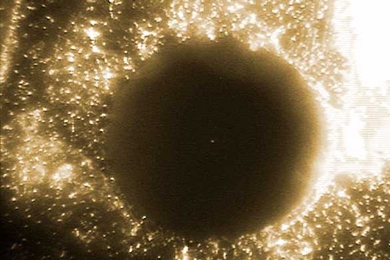
By building a six-dimensional motion sensor from a tiny metal bead in a tiny hole, MIT researchers introduce a new class of microdevice.

MIT tops several disciplines in U.S. News & World Report annual rankings
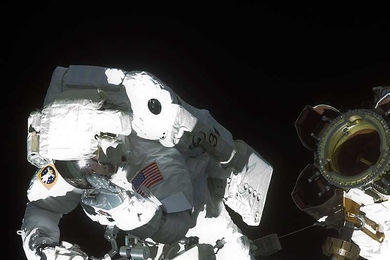
MIT researchers say a centrifuge on the International Space Station — hinted at in Obama’s NASA proposal — would be a boon for physiological research
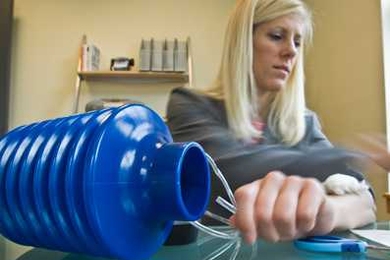
A streamlined version of 'negative-pressure' wound therapy is put to the test in Haiti — and could have 'enormous potential' across the developing world.
Will be used to examine globalization and regulatory compliance

Latest research shows that efficiency improves when multiple devices are charged at once.
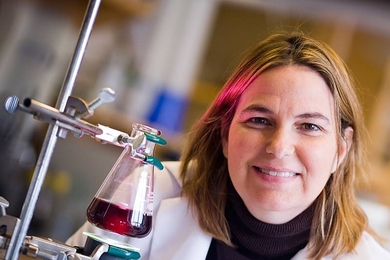
MIT team’s biologically based system taps the power of sunlight directly, with the aim of turning water into hydrogen fuel.
Made fundamental contributions in the field of laser science; applied physics to biomedical problems

3-D shapes covered in solar cells could produce more power than flat panels, MIT researchers find.
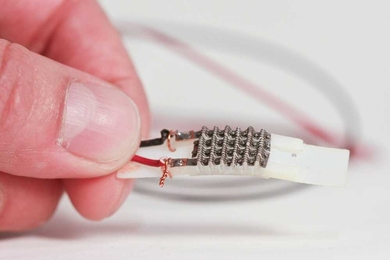
Shape-memory alloys yield mechanical devices that produce more torque but weigh much less than comparably sized electric motors.