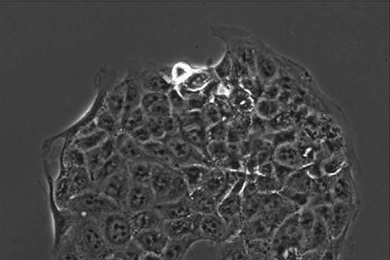
How cancer cells break free from tumors
New MIT study identifies adhesion molecules key to cancer’s spread through the body.
New MIT study identifies adhesion molecules key to cancer’s spread through the body.
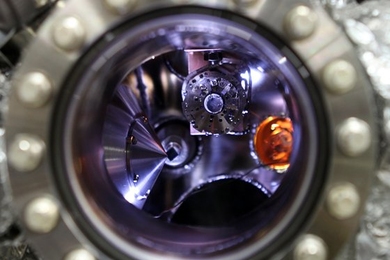
Fundamental reactions behind advanced battery technology, revealed in detail by advanced imaging method, could lead to improved materials.
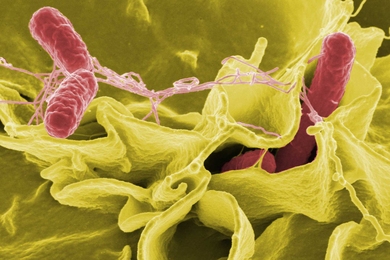
New sensor can detect four different molecules, could be used to program cells to precisely monitor their environments.

System Design and Management student aims to improve the world.

A new information-theoretical model of human sensory perception and memory sheds light on some peculiarities of the nervous system.
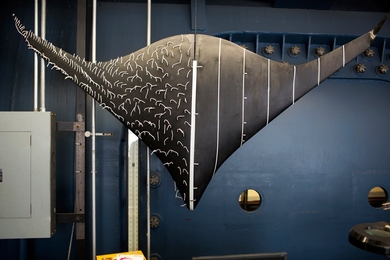
AeroAstro takes off in new directions — prompting a 50 percent spike in new undergraduate enrollments.
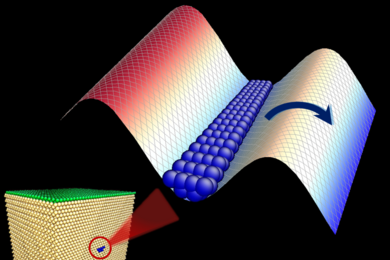
Analysis of molecular-level fracture and stress mechanisms could have broad implications for understanding materials’ behavior.
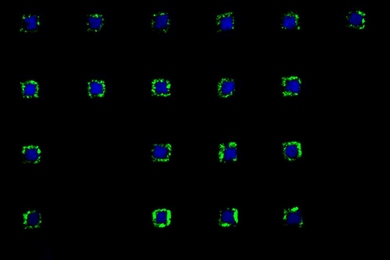
Research examines how to control spatial distribution of cells in microenvironments
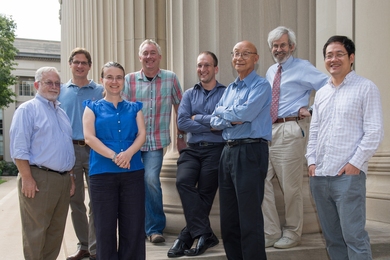
Department of Nuclear Science and Engineering takes an interdisciplinary approach
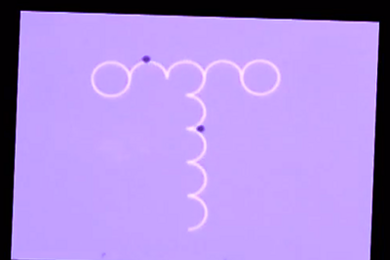
MIT team finds way to manipulate and measure magnetic particles without contact, potentially enabling multiple medical tests on a tiny device.

A prototype sensor array that can be worn on the chest automatically maps the wearer’s environment, recognizing movement between floors.

In his inaugural address, President L. Rafael Reif aims MIT on a course to shape new directions in education.

OttoClave aims to deliver world-class sterilization technology to rural health clinics.

Director of MIT's Office of Educational Innovation and Technology (OEIT) discusses some of the key concepts propelling the open education movement.