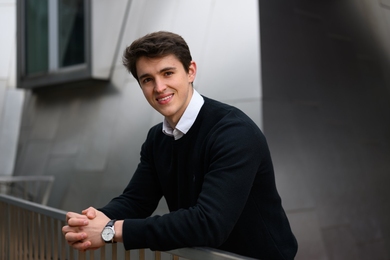
Enhancing maritime cybersecurity with technology and policy
Strahinja Janjusevic brings an international perspective and US Naval Academy education to his graduate research in the MIT Technology and Policy Program.
Strahinja Janjusevic brings an international perspective and US Naval Academy education to his graduate research in the MIT Technology and Policy Program.

By enabling two chips to authenticate each other using a shared fingerprint, this technique can improve privacy and energy efficiency.
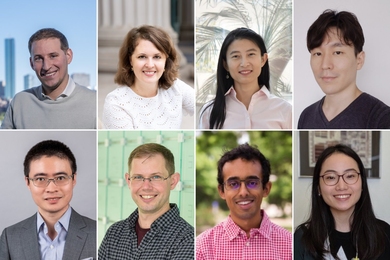
Annual award honors early-career researchers for creativity, innovation, and research accomplishments.
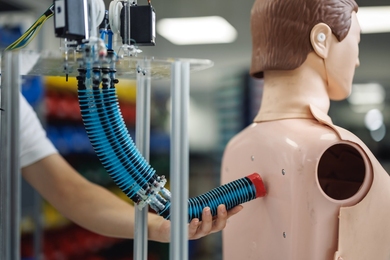
An AI control system co-developed by SMART researchers enables soft robotic arms to learn a broad set of motions once and adapt instantly to changing conditions without retraining.

By minimizing the need to drive around looking for a parking spot, this technique can save drivers up to 35 minutes — and give them a realistic estimate of total travel time.
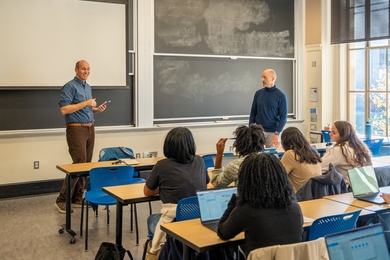
In STS.059 (The Bioeconomy and Society), students explore the social and political factors at work in the biology, biotech, and biological engineering sectors.

The context of long-term conversations can cause an LLM to begin mirroring the user’s viewpoints, possibly reducing accuracy or creating a virtual echo-chamber.
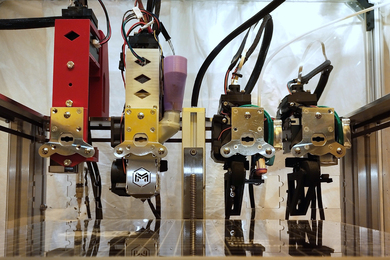
Overcoming challenges of 3D printing with multiple functional materials, MIT researchers fabricated an electric linear motor in hours.
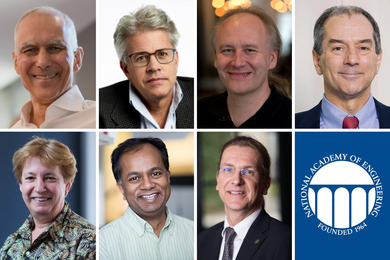
Seven faculty members, along with 12 additional alumni, are honored for significant contributions to engineering research, practice, and education.
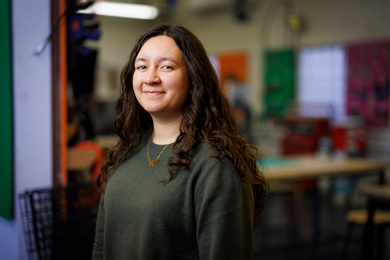
Through research with MIT D-Lab, MIT engineering student Kiyoko “Kik” Hayano worked with Keo Fish Farms to build a model for regenerative water systems.
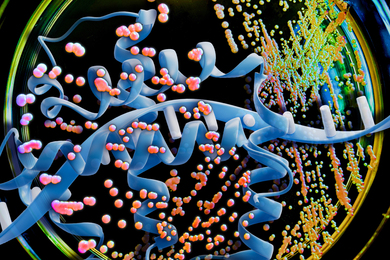
MIT researchers used a large language model to optimize the genetic sequences of proteins manufactured by yeast, making production more efficient.

Hertha Metals, founded by Laureen Meroueh SM ’18, PhD ’20, uses an electric arc furnace, powered by natural gas and electricity, to melt and reduce low-grade iron ore in a single step.
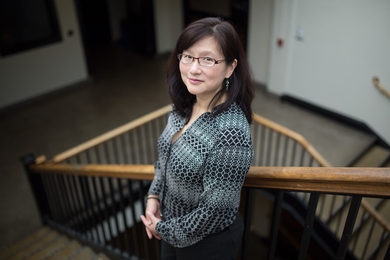
Design leader brings extensive interdisciplinary track record to key role supporting faculty across the Institute.
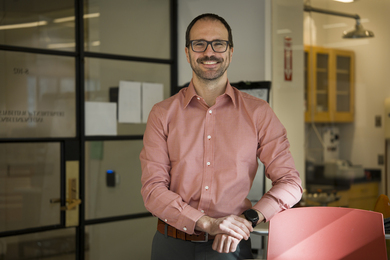
Associate Professor Rafael Gómez-Bombarelli has spent his career applying AI to improve scientific discovery. Now he believes we are at an inflection point.
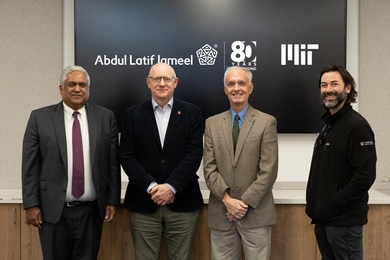
Driven by overuse and misuse of antibiotics, drug-resistant infections are on the rise, while development of new antibacterial tools has slowed.