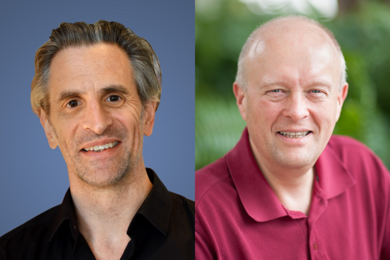
Eric Alm and Peter Dedon receive NIH Transformative Research Award
Award will support interdisciplinary research on the role of the human microbiome in health and disease.
Award will support interdisciplinary research on the role of the human microbiome in health and disease.
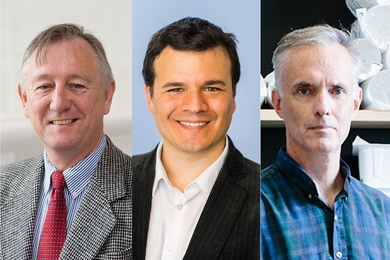
James Collins, Pablo Jarillo-Herrero, and Richard Milner have won top prizes for their work.
Revamped version of MITx MOOC includes new modules on nuclear security, nuclear proliferation, and quantum engineering.
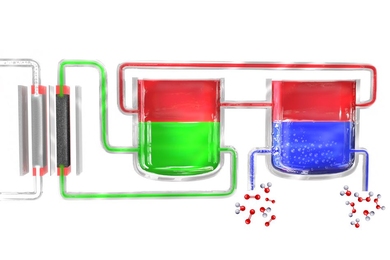
MIT-developed method may lead to portable devices for making the disinfectant on-site where it’s needed.
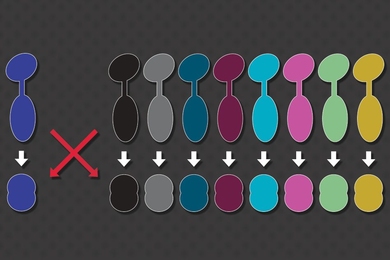
Engineered signaling pathways could offer a new way to build synthetic biology circuits.
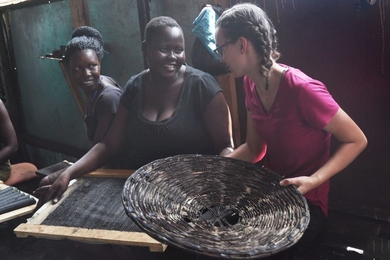
Mechanical engineering students in MIT D-Lab are working with collaborators in Uganda on a solution for the health hazards associated with wood-burning stoves.
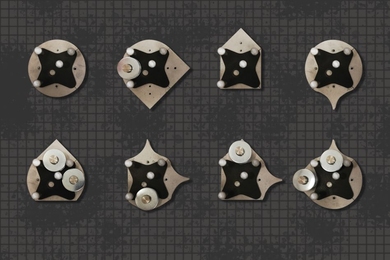
Systems “learn” from novel dataset that captures how pushed objects move, to improve their physical interactions with new objects.
Series featured five experts who played seminal roles in understanding the nanoscale.
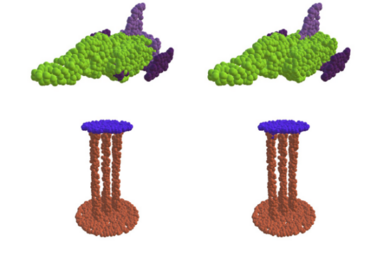
Research aims to make it easier for self-driving cars, robotics, and other applications to understand the 3D world.

Study shows tumors with softer, larger cells at their periphery are more likely to spread; may suggest new route for cancer therapy.
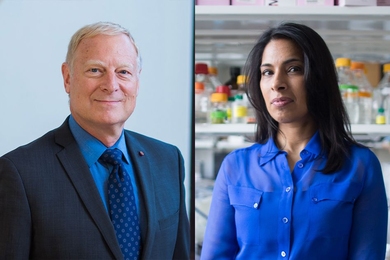
Sangeeta Bhatia and Richard Young recognized for their contributions to “advancement of the medical sciences, health care, and public health.”
![“The major research directions and technology platforms that [my] lab is known for today came out of this process where the students or I had a crazy idea, and then the lab executed on it, with all the twists and turns along the way,” says Paul Blainey, associate professor of biological engineering.](/sites/default/files/styles/term_page__news_article/public/images/201910/MIT-Blainey.jpg?itok=sTavLw_j)
His technology platforms have benefited genomics, diagnostics, and drug screening.

Report urges MIT community to openly share the products of its research and teaching.
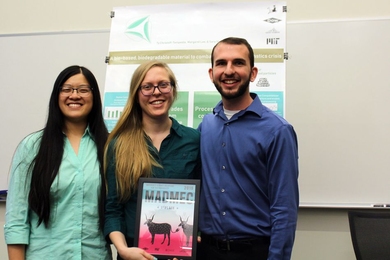
Finalists presented an alternative to nondegradable plastics, and an additive to help plastics decompose.
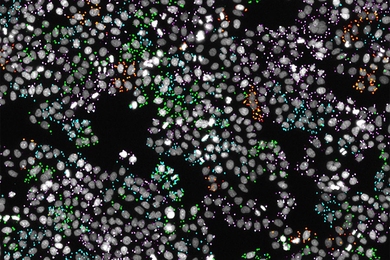
New image-based genetic screening method helps researchers identify key regulators of inflammation.