
3 Questions: A Web for everyone
Judy Brewer leads the Web Accessibility Initiative, which developed standards that help make the Web accessible to people with disabilities.
Judy Brewer leads the Web Accessibility Initiative, which developed standards that help make the Web accessible to people with disabilities.

Study: An expanded Heathrow Airport would lead to 100 more pollution-related early deaths annually in the U.K. by 2030.
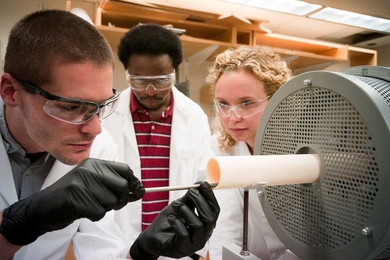
More MechE students choose to design their own education.
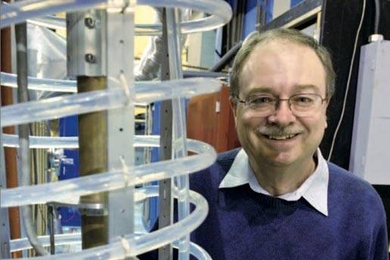

MIT team applies technology developed for visual ‘cloaking’ to enable more efficient transfer of electrons.

Several AeroAstro alumni return to campus to describe landing the Curiosity rover on Mars.

Will address major technical challenges facing wireless field, bring together academia and industry
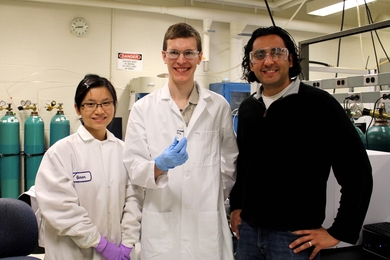
MIT team discovers an inorganic catalyst that could pave the way to a more robust synthesis of valuable rare sugars.

Working from the scale of atoms on up, he designs materials for future energy applications.
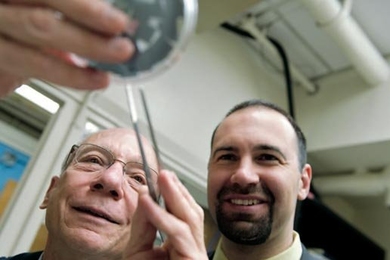

New MIT study identifies adhesion molecules key to cancer’s spread through the body.

Fundamental reactions behind advanced battery technology, revealed in detail by advanced imaging method, could lead to improved materials.

New sensor can detect four different molecules, could be used to program cells to precisely monitor their environments.

System Design and Management student aims to improve the world.

A new information-theoretical model of human sensory perception and memory sheds light on some peculiarities of the nervous system.