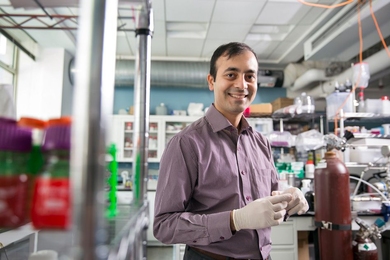
Rohit Karnik seeks sustainable solutions through nanotechnology
Engineer’s designs may help purify water, diagnose disease in remote regions of world.
Engineer’s designs may help purify water, diagnose disease in remote regions of world.
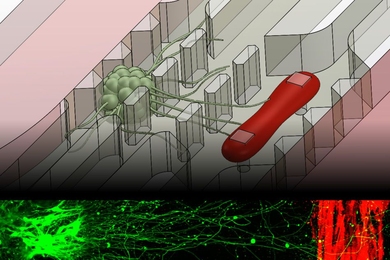
New chip could help test drugs for ALS, other neuromuscular disorders.
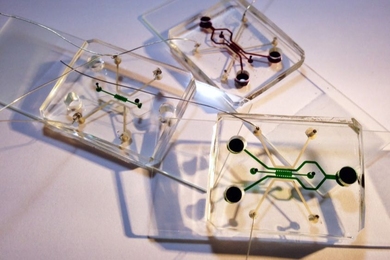
Low-intensity fields keep malignant cells from spreading, while preserving healthy cells.
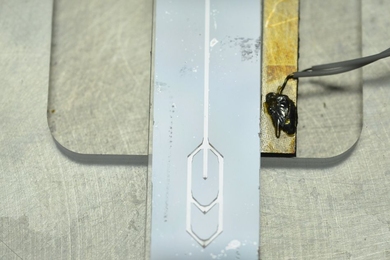
Microfluidic device distinguishes cells based on how they respond to acoustic vibrations.
The Tec de Monterrey and MIT Program fosters exchanges in nanotechnology and nanoscience, with the goal of helping the Tec to become a research university.
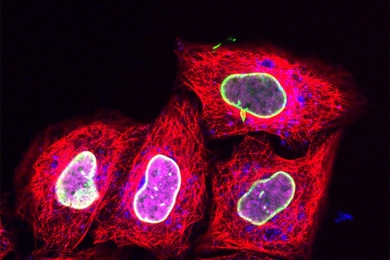
Compressing cells allows delivery of new fluorescent tags to track proteins in living cells.
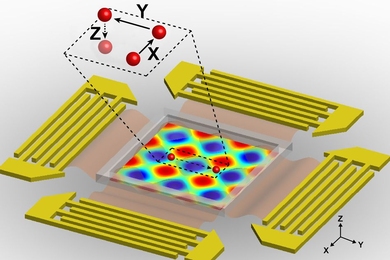
Technique could enable 3-D printing of cellular structures for tissue engineering.
Nanotube “forest” in a microfluidic channel may help detect rare proteins and viruses.
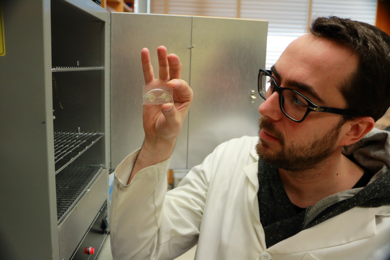
Microfluidic experiments show feldspar releases potassium at a higher rate than expected, suggesting new possibilities for using ground rocks in agriculture.
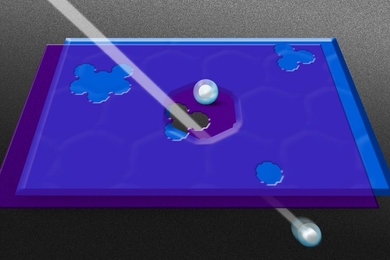
Like biological channels, graphene pores are selective for certain types of ions.
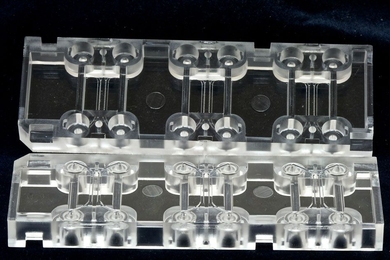
Spinout’s microfluidics device better models how cancer and other cells interact in the body.
Christopher Love uses microscale technology to isolate rare cells, yielding insight into human disease.
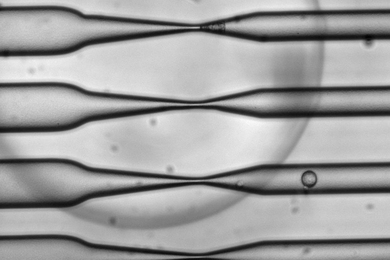
Microfluidic cell-squeezing device opens new possibilities for cell-based vaccines.
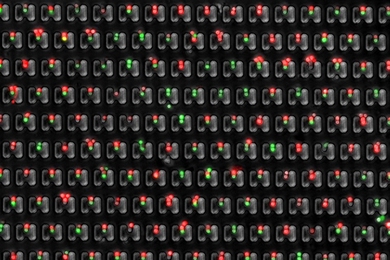
New device allows scientists to glimpse communication between immune cells.
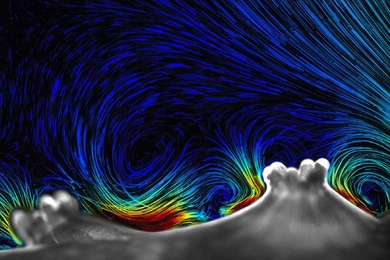
Coral organisms use minuscule appendages to control their environment, stirring up water eddies to bring nutrients.