
New sensors could offer early detection of lung tumors
Study shows that a simple urine test can reveal the presence of lung cancer in mice.
Study shows that a simple urine test can reveal the presence of lung cancer in mice.

James Collins, Pablo Jarillo-Herrero, and Richard Milner have won top prizes for their work.

Smart materials change properties in response to specific DNA sequences; could be used in a variety of devices.

Noninvasive device could benefit patients with kidney disease, congestive heart failure, or dehydration.

MIT spinoff is changing the way mosquito-borne illnesses are diagnosed and aims to influence how public health officials react to disease outbreaks.
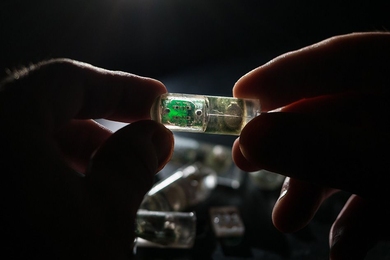
Ultra-low-power sensors carrying genetically engineered bacteria can detect gastric bleeding.
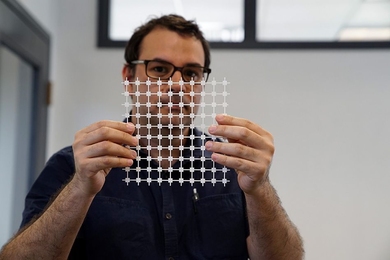
Modular blocks could enable labs around the world to cheaply and easily build their own diagnostics.

Study at MIT Medical finds most parents are capable of performing the test.

Hadley Sikes is bridging the gap between engineering and public policy to solve big social problems at home and abroad.

Lincoln Laboratory researchers propose an alternative to expensive microfluidics fabrication facilities.

Public Event on Dec. 8 will explore hacks for rapid diagnostic devices.

MIT researchers team up with Boston Medical Center and Philips to test a noninvasive way to measure intracranial pressure.

Team from MIT's Computer Science and Artificial Intelligence Lab detects dementia using AI and a digital pen.

Acoustic device can rapidly isolate circulating tumor cells from patient blood samples.

By analyzing carbon dioxide in the breath, an algorithm could help determine how to treat patients.