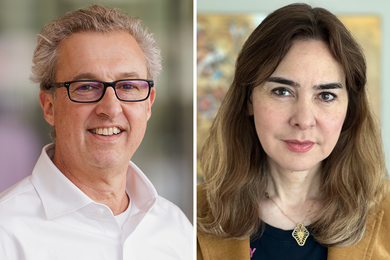
Five with MIT ties elected to National Academy of Medicine for 2025
Professors Facundo Batista and Dina Katabi, along with three additional MIT alumni, are honored for their outstanding professional achievement and commitment to service.
Professors Facundo Batista and Dina Katabi, along with three additional MIT alumni, are honored for their outstanding professional achievement and commitment to service.
MIT physicist seeks to use award to study magnetoelectric multiferroics that could lead to energy-efficient storage devices.
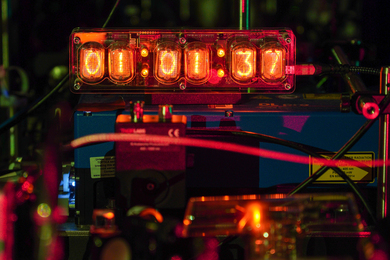
A new method turns down quantum noise that obscures the “ticking” of atoms, and could enable stable, transportable atomic clocks.
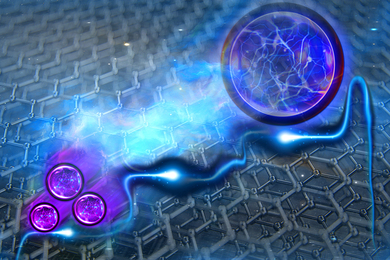
Jiaqi Cai and Zhengguang Lu independently discovered that electrons can become fractions of themselves.
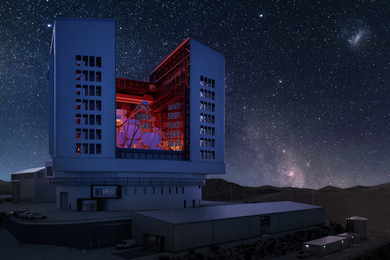
The major public-private partnership is expected to strengthen MIT research and US leadership in astronomy and engineering.
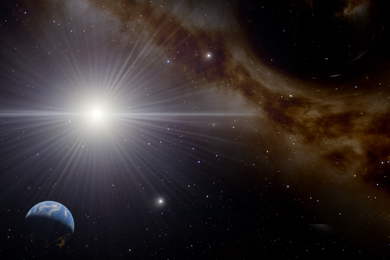
If a new proposal by MIT physicists bears out, the recent detection of a record-setting neutrino could be the first evidence of elusive Hawking radiation.
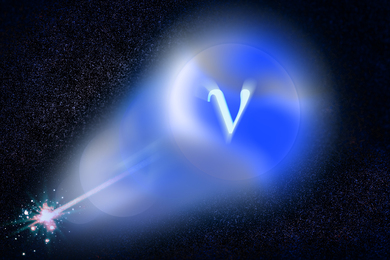
Super-cooling radioactive atoms could produce a laser-like neutrino beam, offering a new way to study these ghostly particles — and possibly a new form of communication.
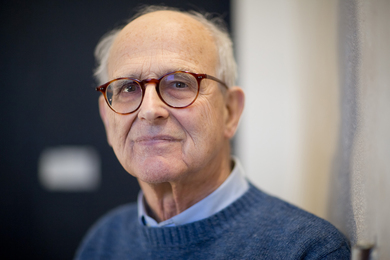
The longtime MIT professor shared a Nobel Prize for his role in developing the LIGO observatory and detecting gravitational waves.
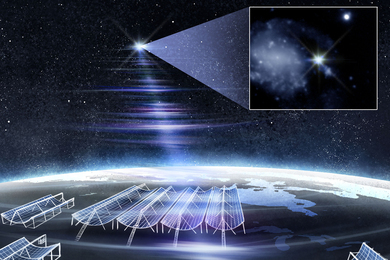
The dazzling “RBFLOAT” radio burst, originating in a nearby galaxy, offers the clearest view yet of the environment around these mysterious flashes.
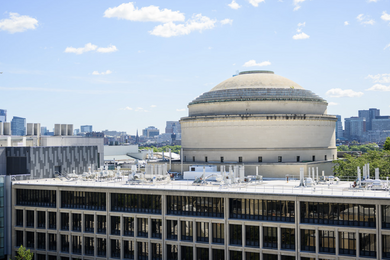
The MRL helps bring together academia, government, and industry to accelerate innovation in sustainability, energy, and advanced materials.
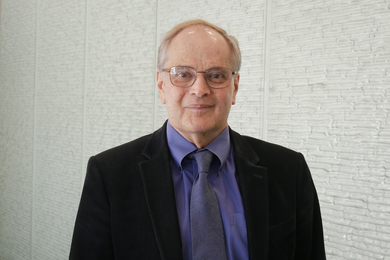
Over 50 years at MIT, the condensed-matter physicist led the development of photonic crystals, translating discoveries into wide-ranging applications in energy, medicine, and defense.
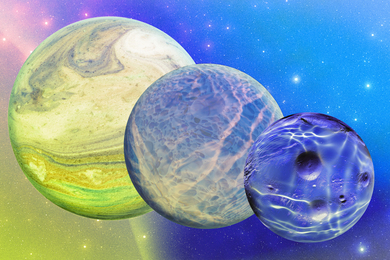
Lab experiments show “ionic liquids” can form through common planetary processes and might be capable of supporting life even on waterless planets.
Nanophotonic devices developed at MIT are compact, efficient, reprogrammable, adaptive, and able to dynamically respond to external inputs.
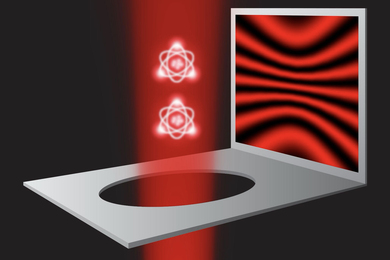
MIT physicists confirm that, like Superman, light has two identities that are impossible to see at once.
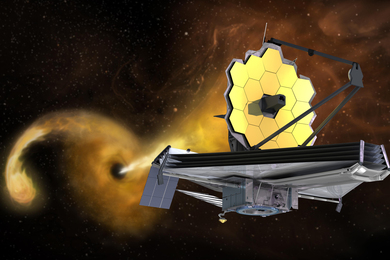
Unlike active galaxies that constantly pull in surrounding material, these black holes lie dormant, waking briefly to feast on a passing star.