
Toward cheaper, cleaner hydrogen production
Co-founded by Dan Sobek ’88, SM ’92, PhD ’97, 1s1 Energy has developed a filtration material for hydrogen electrolyzers that it says reduces energy use by 30 percent.
Co-founded by Dan Sobek ’88, SM ’92, PhD ’97, 1s1 Energy has developed a filtration material for hydrogen electrolyzers that it says reduces energy use by 30 percent.
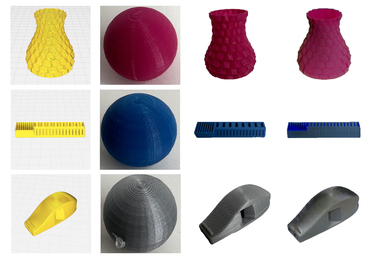
By quickly generating aesthetically accurate previews of fabricated objects, the VisiPrint system could make prototyping faster and less wasteful.

A new model measures defects that can be leveraged to improve materials’ mechanical strength, heat transfer, and energy-conversion efficiency.
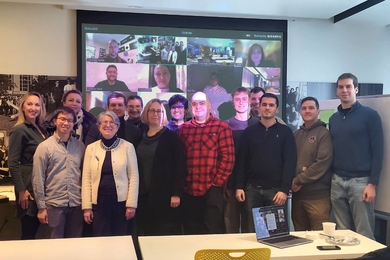
Build for Ukraine 2.0 united students, researchers, and Ukrainian collaborators to prototype solutions shaped by wartime conditions.
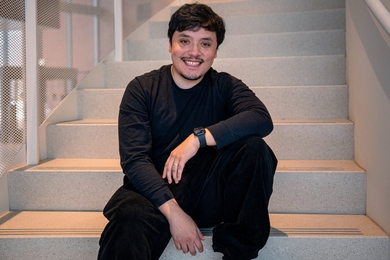
Mariano Salcedo ’25, a master’s student in the new Music Technology and Computation Graduate Program, is designing an AI to visualize and express music and other sounds.
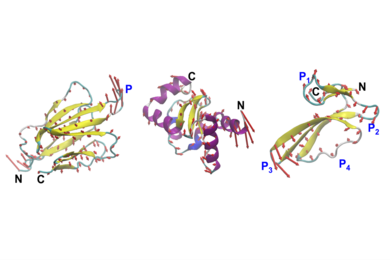
An AI model generates novel proteins based on how they vibrate and move, opening new possibilities for dynamic biomaterials and adaptive therapeutics.
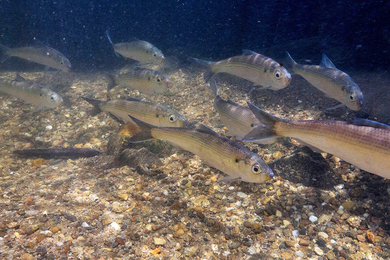
MIT Sea Grant works with the Woodwell Climate Research Center and other collaborators to demonstrate a deep learning-based system for fish monitoring.
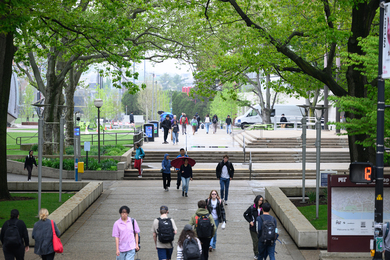
The Institute also ranks second in seven subject areas.
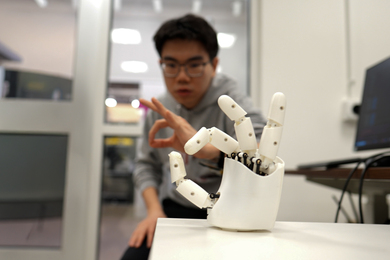
By moving their hands and fingers, users can direct a robot to play piano or shoot a basketball, or they can manipulate objects in a virtual environment.
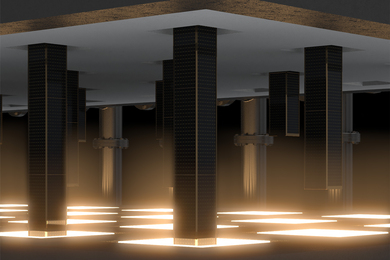
Fourth Power, founded by Professor Asegun Henry, is developing thermal batteries for efficiently storing excess electricity from utility grids and power producers.

Academia-industry relationship is an early-stage accelerator, supporting professional progress and research.
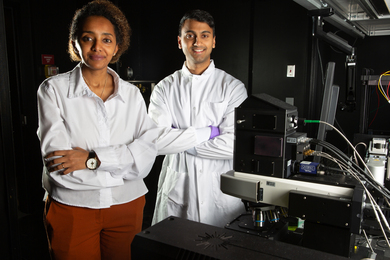
The technology could enable fast, point-of-care diagnoses for pneumonia and other lung conditions.

MIT professors Amos Winter and Nikolai Zeldovich are honored for exceptional undergraduate teaching.
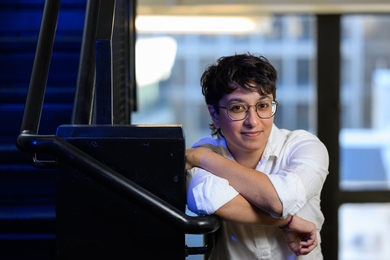
Using boron nitride nanotubes, mechanical engineering doctoral student Palak Patel develops materials for space that block dangerous ionizing radiation.
Faculty members and researchers were honored in recognition of their scholarship, service, and overall excellence.