
MIT projects selected for funding under US Department of Energy’s Genesis Mission
Initial research projects advance national priorities across natural resources, manufacturing, nuclear physics, and more.
Initial research projects advance national priorities across natural resources, manufacturing, nuclear physics, and more.
“Scientific American” showcases the history and future of America’s scientific engine, highlighting promising young scientists and icons at MIT and beyond.
Ranking at the top for the 15th year in a row, the Institute also places first in 12 subject areas.
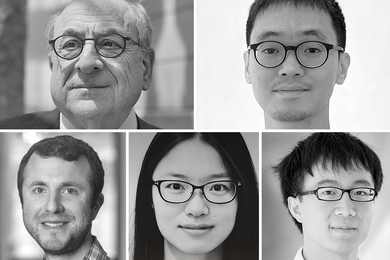
Faculty member Shu-Heng Shao, in addition to four MIT alumni, are honored by the Breakthrough Prize Foundation.

IAIFI enters its second phase with increased funding, broader ambitions, and a growing community at the frontier of AI and fundamental physics.
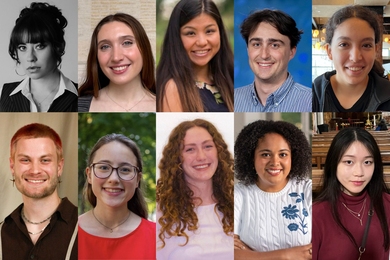
This year, over half of MIT’s Fulbright applicants won awards. The current students and alumni will embark on research projects and teaching abroad in 2026-27.
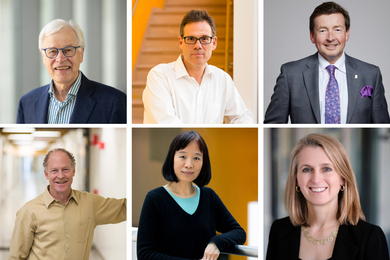
Six MIT faculty, along with 10 additional alumni, are recognized by their peers for their outstanding contributions to research in the natural and social sciences.

Computational neuroscientist Sven Dorkenwald and cell biologist Whitney Henry, along with two MIT alumni, are recognized for their exceptional early-career research contributions.
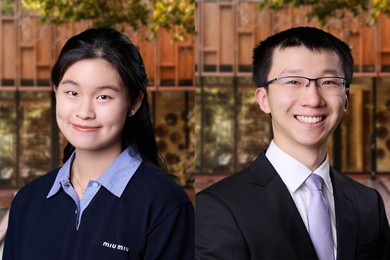
The prestigious fellowship funds graduate studies at Stanford University.
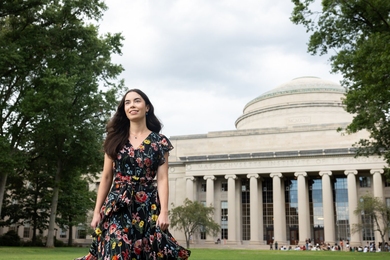
Mathematician Amanda Burcroff is developing frameworks for understanding algebraic and geometric spaces in science as part of the School of Science Dean’s Postdoctoral Fellowship.
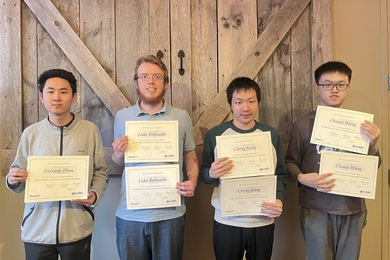
The undergraduate team topped the scoreboard for the sixth year in a row and also took the Elizabeth Lowell Putnam Prize again.

The prestigious honor society honors four MIT faculty and 13 additional MIT alumni among more than 250 new members.
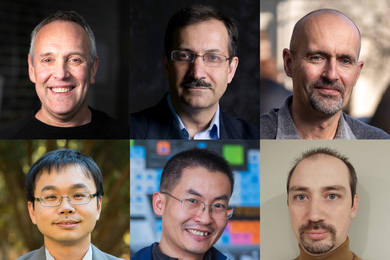
Two faculty and six additional alumni win top APS awards and prizes; four faculty and 12 additional alumni named APS Fellows.
The Institute also ranks second in seven subject areas.
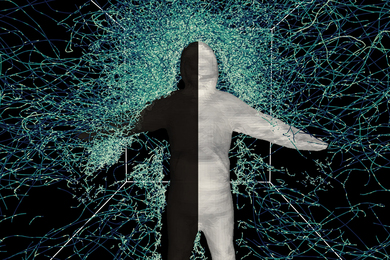
Their flight patterns change in response to different sensory cues, a new study finds. The work could lead to more effective traps and mosquito control strategies.