
Probing the mysteries of cracks and stresses
Analysis of molecular-level fracture and stress mechanisms could have broad implications for understanding materials’ behavior.
Analysis of molecular-level fracture and stress mechanisms could have broad implications for understanding materials’ behavior.

Department of Nuclear Science and Engineering takes an interdisciplinary approach

MIT team finds way to manipulate and measure magnetic particles without contact, potentially enabling multiple medical tests on a tiny device.

In a yearlong residency, the musician and instrument designer will build a glass orchestra with MIT students.

Institute’s undergraduate engineering program is again ranked No. 1; undergraduate business program is No. 2.

MIT-led research team finds that protein significantly reduces infected cells’ ability to squeeze through tiny channels compared to healthy cells.

Method developed by MIT researchers could produce materials with exceptional strength and other properties.
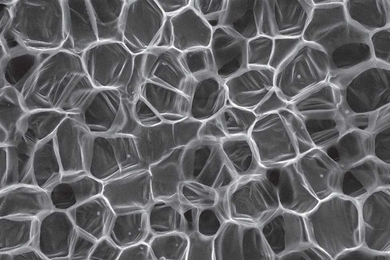
Biological structures may help engineers design new materials.

New technique allows production of complex microchip structures in one self-assembling step.

Researchers find new method for making spherical particles, from nanoscale to pinhead-sized — including complex beach-ball-like shapes.
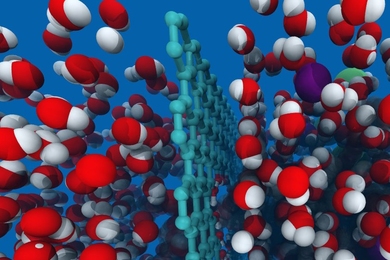
Graphene sheets with precisely controlled pores have potential to purify water more efficiently than existing methods.
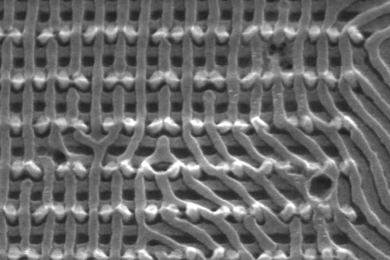
MIT researchers produce 3-D configurations that could lead to new microchips and other devices.

Making proteins stand in line could lead to more lifelike lab tests.

Black, Boyd and Shaner among 31 recipients

Materials science and engineering professor studies nanophotonics and electronics.