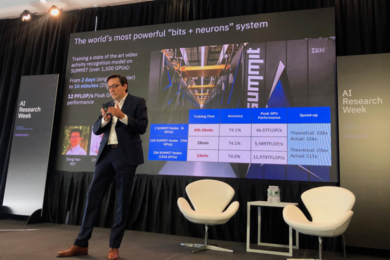
Faster video recognition for the smartphone era
MIT and IBM researchers offer a new method to train and run deep learning models more efficiently.
MIT and IBM researchers offer a new method to train and run deep learning models more efficiently.
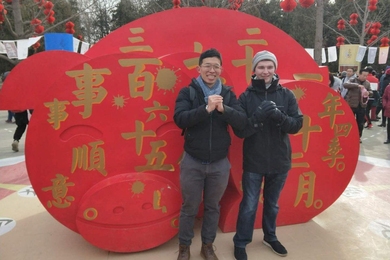
MIT senior's longstanding passion for Mandarin leads to a hands-on taste of the complexities of functioning in a Chinese business context.
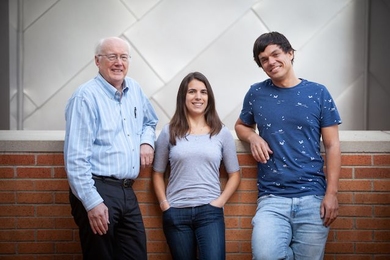
Model from the Computer Science and Artificial Intelligence Laboratory identifies “serial hijackers” of internet IP addresses.

Ultrathin coating could protect 2D materials from corrosion, enabling their use in optics and electronics.
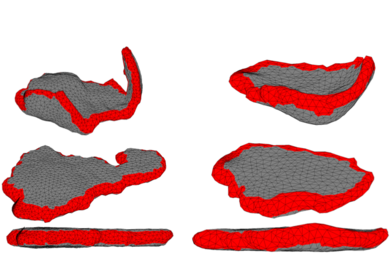
New technique stretches out MRI scans of placentas so they can be more accurately analyzed, and shows the potential of MRI for pregnancy monitoring.

Five software and hardware projects will launch the MIT.nano Immersion Lab Gaming Program.

Algorithm enables one audio signal to glide into another, recreating the “portamento” effect of some musical instruments.
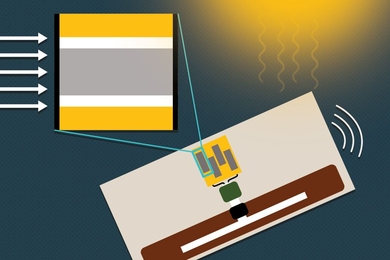
RFID-based devices work in indoor and outdoor lighting conditions, and communicate at greater distances.

Study offers models for preserving the privacy of citizens while using their data to improve government services.
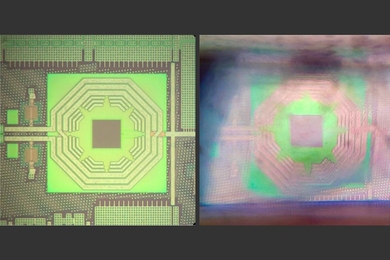
Researchers integrate diamond-based sensing components onto a chip to enable low-cost, high-performance quantum hardware.

Research shows that, contrary to accepted rule of thumb, a 10- or 15-year lifetime can be good enough.
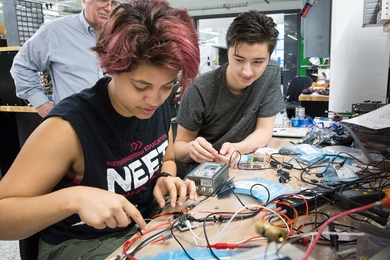
Students on UROP teams agree that teamwork speeds up the research.
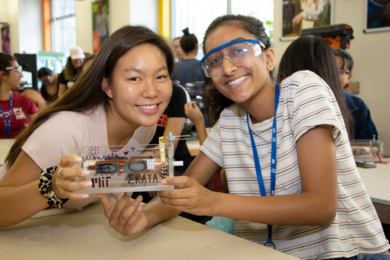
Materials Research Laboratory’s Materials Research Science and Engineering Center sponsors a motor-building workshop.

Commercial cloud service providers give artificial intelligence computing at MIT a boost.
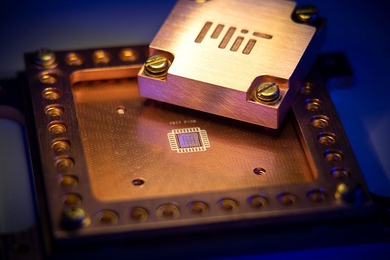
New detection tool could be used to make quantum computers robust against unwanted environmental disturbances.